
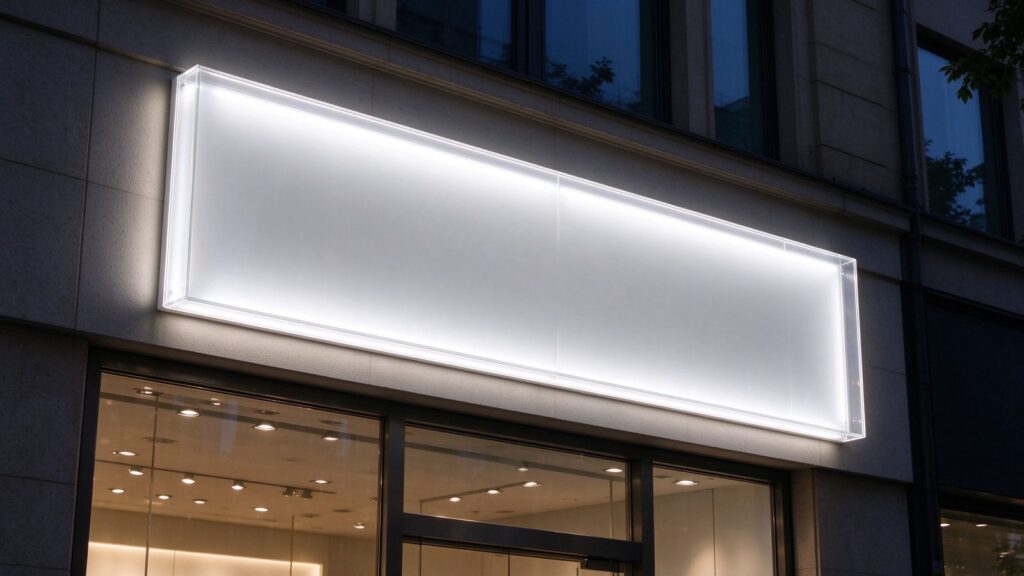
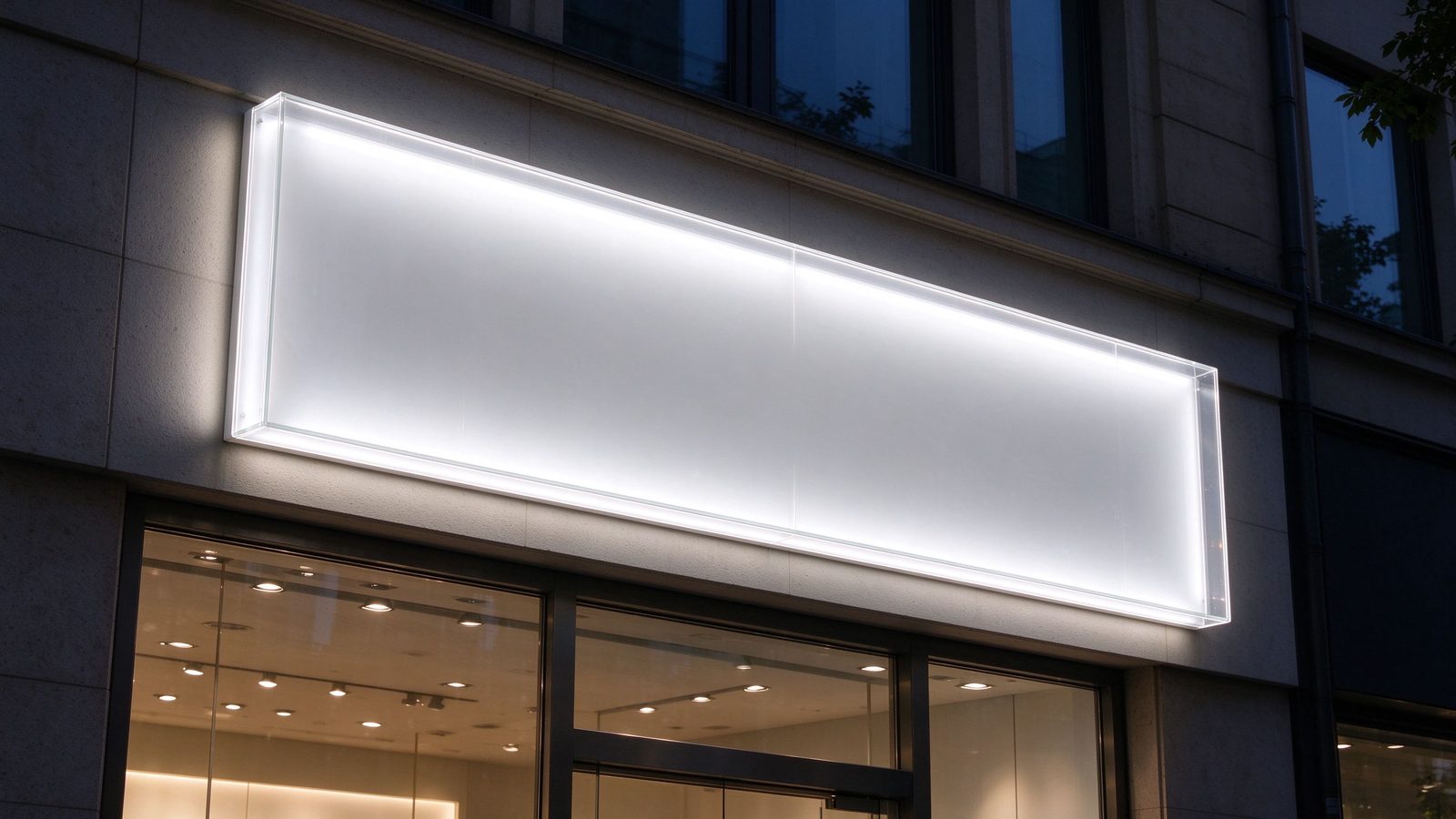
Building a durable acrylic light box is about picking the right sheet, not just the brightest LEDs. The acrylic light box sheet has to diffuse light evenly, stay white and fade-free for years, and take clean printing and edge work. This guide is written from a sign fabricator’s seat: what to specify, what most buyers get wrong, and how a sheet manufacturer like RP River People supports it.
Thank you for reading this post, don't forget to subscribe!A case worth reusing: the nationwide retail rebrand
Consider a chain rebranding every storefront. Each store needed a backlit acrylic light box, around 3 m by 1 m, glowing evenly white day and night. The spec settled on 6 mm white translucent cast acrylic, edge-lit with an LED module tray, with the graphic face-printed on a vinyl applied to the diffuser. Because the light box acrylic was specified with the right translucency and thickness up front, there was no hotspotting and no yellowing within the warranty period.
Why acrylic for light boxes
- Even diffusion – translucent white cast acrylic spreads LED light without bright spots.
- Fade resistance – cast grades stay whiter longer under continuous backlight.
- Print-friendly – face and second-surface printing both hold well on the sheet.
- Light and machineable – CNC, laser, routing and drilling are clean and precise.
- Glare and heat – correct thickness keeps surface cool and readable outdoors.
What to specify: thickness, translucency, print and edge
- Thickness: 3-6 mm is the working range for typical boxes; larger outdoor signs move to 6-10 mm for stiffness.
- Translucency: white or opal sheet diffuses best; clear needs a diffuser film.
- Print: face-print or second-surface UV, plus vinyl for graphics.
- Edge: polish or matte per design; use UV-stable adhesive for lamination.
- Size: boxes are custom-cut to the cabinet footprint, not off-the-shelf stock.
Fabrication notes from the shop floor
- Cut with controlled feed to avoid melted, cloudy edges; edge-polish the visible rim.
- Keep masking film on until install so the diffuser arrives scratch-free.
- Drill LED module holes before printing to keep alignment true.
- Use gaskets so panels do not sit tight against metal frames – heat expansion is real.
- Seal the edge where water can pool on outdoor boxes.
Market pain points – and our solution
Buyers sourcing light box acrylic keep hitting the same walls: the sheet yellows within months, light hot-spots across the face, the diffuser arrives scratched, or the thickness can’t hold size on a large outdoor sign. RP River People, as a sheet manufacturer, removes those at the source. We supply white translucent and clear acrylic light box sheet in the thickness and size you need, hold tight thickness and size tolerances, keep surfaces clean and masked for export, and give a straight answer on translucency grade, sample lead time and volume pricing.
Frequently Asked Questions
Q: What thickness of acrylic should I use for a light box?
3-6 mm suits typical boxes; larger outdoor signs use 6-10 mm for stiffness. The exact figure depends on the sign size and how it is framed.
Q: Does acrylic light box sheet yellow over time?
Quality cast grades resist yellowing far better than cheap extruded sheet. Specify cast or UV-stable grades for long outdoor life.
Q: Can you cut acrylic light box sheet to my sign size?
Yes. We supply light box acrylic cut to your exact dimensions, in white, opal or clear, with clean edges and export-grade masking and packing.
If you are specifying acrylic light box sheet guide for a project, send us your sizes and requirements. Contact us for a quote and we will confirm grade, thickness, tolerance and lead time: oversales@rpplexiglass.com.