
Language
River People supplies custom cell-cast acrylic aquarium panels and viewing windows for aquarium builders, contractors and project owners. Our services include panel supply, custom fabrication, engineering calculations, installation guidance and on-site installation, with scope agreed for each project.
Send your aquarium drawings for a quotation. For transparent swimming pool walls and windows, visit our acrylic swimming pool panels page.

Example applications
These examples illustrate the types of aquarium fabrication River People presents. Final dimensions, thickness and structural design should be confirmed for the specific installation.
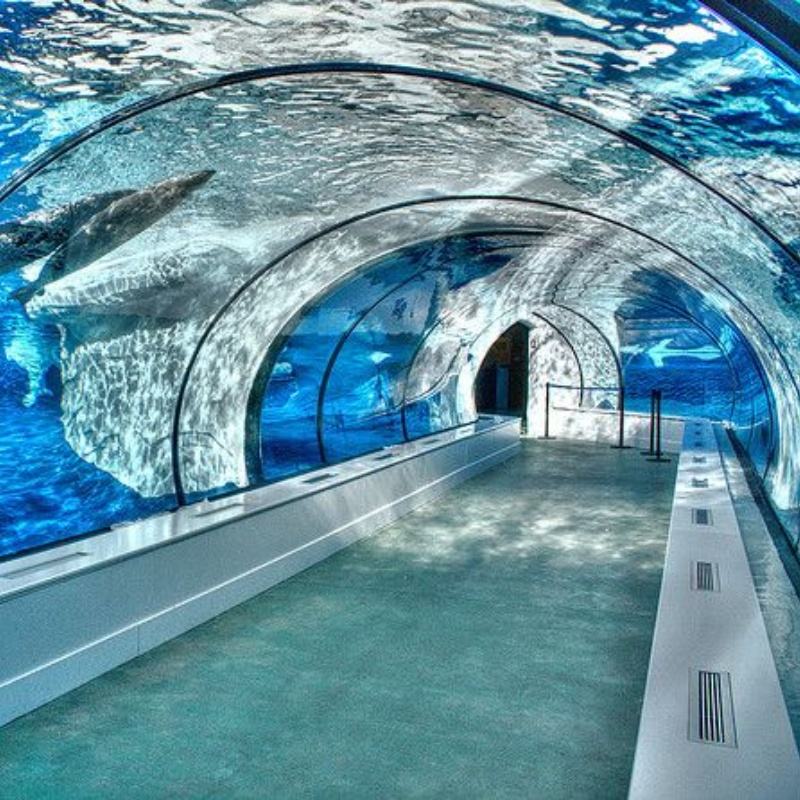
Shopping-mall reef tank — example application. Cast acrylic viewing windows can be configured for large display tanks. Panel dimensions, thickness, bonding and structural suitability must be confirmed for the actual water depth, opening size, support and installation conditions.
| Application reference | Information required |
|---|---|
| Hotel lobby cylinder | Diameter, height, water depth, joint and base support details. |
| Restaurant viewing wall | Opening dimensions, curvature, water depth and perimeter supports. |
| Custom enclosure | Intended use, geometry, access openings and fabrication requirements. |
| Residential aquarium | Tank geometry, support arrangement, water depth and engineering specification. |
RP cast acrylic (PMMA) aquarium panels are the clear structural walls behind home aquariums, restaurant tanks, shopping-mall exhibits, and themed attractions. Cell-cast PMMA is widely used for aquarium viewing panels because it offers high optical clarity, good polishability, and the ability to fabricate thick and curved sections. Material selection and panel thickness should be confirmed against the tank geometry, water depth, support conditions, and applicable engineering requirements.
Cell-cast acrylic for aquarium viewing windows
- Large-format viewing panels. Cell-cast acrylic can be considered for thick and large-format viewing windows. Feasible monolithic dimensions, bonding requirements and fabrication method should be confirmed for each project.
- Optical requirements. Agree transmission, haze, distortion and edge-finish criteria for the selected material grade, thickness and panel geometry.
- Weight and handling. Acrylic has a lower material density than glass, but aquarium windows are not compared at equal thickness because required thickness depends on geometry, water depth, support and structural design. Shipping and support loads should be calculated for the actual panel configuration.
- Bonded construction. Joint design, adhesive or bonding process, curing, inspection and long-term performance require review for the complete panel system.
- Structural review. Panel failure can create serious hazards. Material selection, loading, supports, joints and inspection must be assessed for the actual installation.
Product range
| Type | Thickness | Typical use |
|---|---|---|
| Flat clear cast panel | Project-specific | Home and commercial aquarium windows, reef tanks and restaurant tanks; thickness should be engineered for the actual opening and water depth. |
| Curved / bent panel | Project-specific | Cylindrical tanks, corner viewing and rounded exhibit walls; forming feasibility depends on geometry, radius, thickness and fabrication method. |
| Underwater tunnel section | Project-specific | Tunnel walls and dome roofs for public aquariums; structural design, laminate/bonding configuration and fabrication feasibility require project review. |
| Aquarium box / cylinder | Bespoke | Fully fabricated bonded tank — flat-pack or installed |
| Colored / frosted accent panel | 5 – 50 mm | Backgrounds, signage, decorative features |
Technical specifications
| Material | Cell-cast PMMA grade and material traceability to be agreed for the project. |
| Light transmission | Confirm measured transmission for the selected grade, thickness, surface finish and test method. |
| Material density | Depends on the selected PMMA grade; use grade-specific technical data for structural and shipping calculations. |
| Monolithic thickness | Available thickness depends on panel dimensions, casting capability, optical requirements and project specification; confirm before design or ordering. |
| Panel size | Available monolithic dimensions and bonded-panel options depend on thickness, geometry, fabrication method and project requirements; confirm before design or ordering. |
| Water-service suitability | Material grade, bonding system and complete panel construction should be selected and verified for the intended freshwater or seawater service conditions. |
| UV resistance | For outdoor / sunny lobbies — UV-stabilized grades available |
| Fabrication | CNC cutting, diamond edge polishing, hot bending, solvent bonding, drilling, countersinking |
| Surface finish | Masked both sides; optional scratch-resistant hard coat |
Typical applications
- Home and reef aquarium windows (cast-to-size)
- Restaurant / hotel lobby cylindrical tanks
- Shopping mall and themed-attraction exhibits
- Reptile and vivarium enclosures
- Merchandise and museum display tanks
How we quote an aquarium panel
Send us (1) tank dimensions and water depth, (2) whether the panel is flat, curved, or a tunnel, (3) thickness from your engineer or proposed configuration, and (4) edge finish and mounting detail. We can review the geometry, water depth, support conditions and proposed configuration, then confirm the panel and fabrication requirements for quotation.
Share your tank sketch or drawing. We can review the project information and prepare a thickness/configuration recommendation and quotation based on the stated requirements.
Send Your Aquarium Project Drawings or email oversales@rpplexiglass.com. Price, availability, delivery and return terms are confirmed in the written quotation.
Aquarium viewing panel or complete acrylic tank?
Specify whether you need a replacement viewing panel, a set of panels for a tank builder, or a complete fabricated acrylic aquarium. These orders need different drawings, joint details, inspection records and installation responsibilities. This page focuses on custom aquarium panels and viewing windows; a stock sheet specification alone is not a complete tank design.
For a flat viewing window, provide the clear opening, maximum water depth and support details. For curved panels or cylindrical tanks, add the radius, panel layout and joint arrangement. Confirm who owns the structural design and whether fabrication, delivery, installation guidance or on-site installation belongs in the quotation.
For public exhibits with curved tunnel sections and multiple joints, see acrylic aquarium tunnels and oceanarium windows. For an outdoor pool installation, review acrylic swimming pool windows and walls. Our fabrication and project support services explain the scope to agree before ordering.
From cell-cast sheet to finished aquarium panel
Compare cell-cast acrylic sheet options when defining the material supply, then review the thick cast acrylic viewing-panel product for a fabricated panel enquiry. Confirm the grade, traceability, optical acceptance criteria, dimensions and permitted fabrication against the approved project drawings.
For public exhibits, coordinate the panel schedule with the oceanarium tunnel and window project scope. Material purchasing, structural design and installation should have clearly assigned responsibilities.
Frequently Asked Questions
Q: What type of acrylic do you use for aquarium panels?
We use cell-cast PMMA (cast acrylic), which offers high optical clarity, good polishability and dimensional stability — ideal for the viewing panels of home tanks, restaurant tanks, hotel exhibits and mall reef displays.
Q: Can panels be made in custom shapes such as cylinders, curved or flat?
Flat, curved and cylindrical configurations may be reviewed from project drawings. Feasible dimensions, radius, thickness, joints and fabrication method depend on the complete installation and must be confirmed before ordering.
Q: How thick can the panels be?
There is no universal panel thickness for an aquarium. Thickness and construction must be determined for the actual geometry, water depth, loading, support, joints and material data by the responsible project engineer.