
Language
River People supplies transparent acrylic noise barrier panels for highway, railway, bridge, residential and industrial projects. Our scope covers panel supply, custom fabrication, engineering calculations, installation guidance and on-site installation, with the scope agreed for each project. We serve project buyers in the United States, Europe, the Middle East, Southeast Asia and South America.
Request a noise barrier project quotation with your drawings, panel schedule, destination and acoustic specification.

Noise barrier application gallery
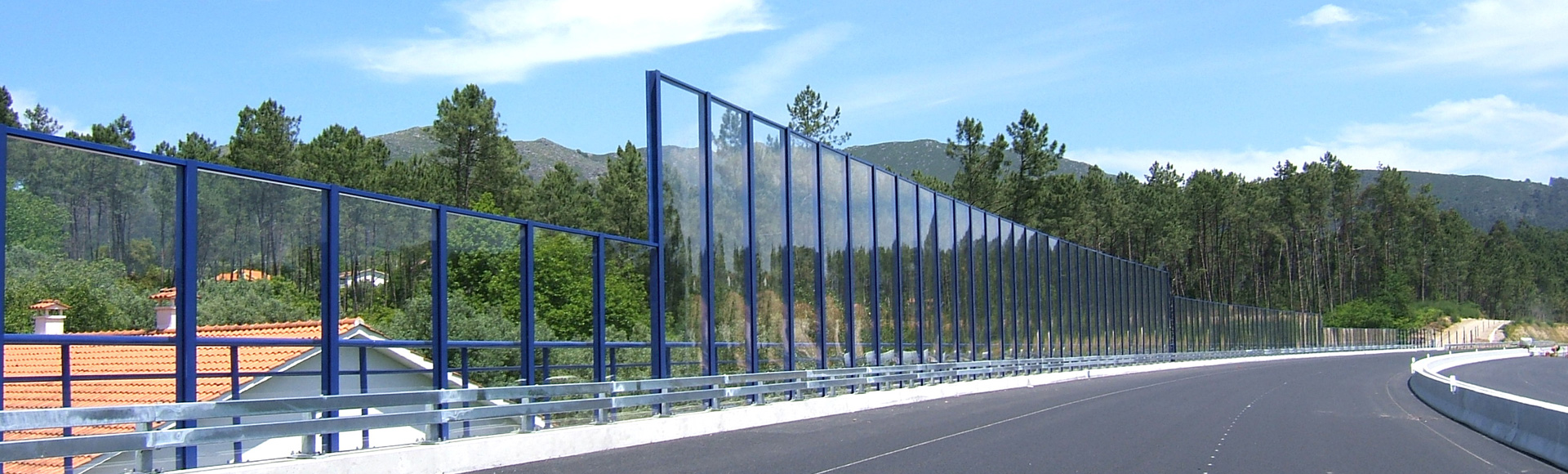
Urban expressway transparent section — example application. Transparent acrylic noise-barrier panels can be configured with fragment-retention features and bird-visibility markings where required. Panel construction, thickness, retention performance and marking pattern should be selected against the applicable project specification and authority requirements.
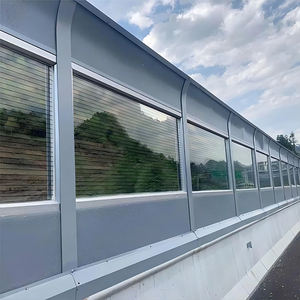
Residential boundary noise screen — application example. Select panel construction, thickness and outdoor-weathering requirements against the site design. Request evidence for the proposed grade; this example is not a verified completed-project reference.
| Project | Location | Specification | Quantity |
|---|---|---|---|
| Coastal viaduct barrier | Example application | Transparent acrylic with outdoor-weathering requirements | Project-specific |
| Railway viaduct enclosure | Example application | Transparent acrylic panel system; shape and thickness by engineering requirements | Project-specific |
| Industrial equipment noise screen | Example application | Transparent acrylic panel system | Project-specific |
RP transparent acrylic sound barrier panels are used on highways, bridges, railways, residential enclosures, and plant fences. Transparent sections can preserve views and daylight. Acoustic performance depends on the complete barrier design, joints, height, installation and tested panel construction.
Product series
| Construction option to discuss | Requirements before selection |
|---|---|
| Cast or extruded acrylic | Confirm grade, process, thickness and available dimensions. |
| Fragment-retention construction | Specify retention tests and approval requirements for the complete system. |
| Bird-visibility markings | Confirm pattern, spacing, durability and authority requirements. |
| Outdoor exposure | Request relevant weathering data and agree warranty terms. |
Why RP acrylic sound barrier
- Sound insulation. Solid acrylic panels can contribute to airborne-noise control. Actual transmission loss depends on thickness, panel construction, mounting, frequency range and the complete barrier system; project-specific acoustic data should be verified from the tested construction.
- Transparent, no tunnel effect. Road designers get an open look; residents keep natural light and views.
- Weather and UV performance. A co-extruded UV cap can be specified for outdoor exposure; service life, color stability and warranty terms depend on the selected grade, exposure conditions and project specification.
- Handling and support loads. Use the specified grade density, thickness and assembly details when calculating weight, lifting and support requirements.
- Fragment retention. Where required, specify tested retention performance and supporting evidence for the complete proposed construction; material choice alone does not establish bridge approval.
- Bird-visibility options. Discuss visibility markings and their durability against the applicable project requirements; no marking guarantees prevention of all bird strikes.
Technical data
| Item | Requirements to confirm |
|---|---|
| Material | Confirm PMMA grade, cast or extruded process and batch documentation. |
| Optical properties | Agree transmission, haze, thickness and test method; request measured grade-specific data. |
| Dimensions and tolerances | Confirm availability, span, support details, thermal movement and transport limits. |
| Temperature and weathering | Specify actual exposure and request relevant material and weathering data. |
| Acoustic performance | Require test evidence for the selected construction and complete-system assessment. |
| Mechanical safety | Define wind, impact, retention, fire and mounting requirements with the project authority. |
| Surface and fabrication | Confirm masking, finish, machining, forming and marking options in the quotation. |
Applications
- Highway and expressway transparent noise barriers
- Railway and metro viaduct enclosure walls
- Bridge transparent noise-wall sections, subject to project-specific structural and retention approval
- Residential and commercial building fence screens
- Plant and equipment enclosures (compressors, HVAC, generator rooms)
- Sports field and outdoor venue wind / noise panels
Project quotation checklist
| Application | Information needed before recommending thickness |
|---|---|
| Highway or railway | Design noise assessment, panel layout, acoustic requirements and authority specification |
| Bridge or viaduct | Structural loads, fragment retention, fixing design and any required secondary protection |
| Residential boundary | Receiver locations, barrier height, gaps, appearance and weather exposure |
| Industrial enclosure | Source spectrum, ventilation, access and full-system acoustic requirements |
Request a project quotation. Send location, drawings, panel dimensions, quantity, acoustic specification and mechanical-safety requirements through our quotation form or email oversales@rpplexiglass.com. Material availability, test documents and supply scope will be confirmed after review.
Compare acrylic sound barrier supply packages
A transparent noise barrier quotation should identify both the panel construction and the work included. A panel-only order covers a different scope from a fabricated panel package or an installed barrier. Agree who supplies the posts, frames, fixings and seals, who reviews the acoustic and structural design, and who accepts the completed installation.
For acrylic panel procurement, compare material grade, dimensions, tolerances, edge work, visibility markings and the documents available for the quoted construction. Ask for a panel schedule and a written list of exclusions so offers can be compared on the same basis. The appearance of a transparent panel does not establish the noise reduction achieved by a complete roadside barrier.
Review our acrylic sound barrier panel range, discuss custom fabrication and installation services, or read about River People before submitting your project package.
Frequently Asked Questions
Q: What thickness and construction are available?
Thickness and construction depend on panel span, supports, wind load, acoustic requirements and available material grade. Confirm dimensions and any retention or visibility features for the proposed order.
Q: Are the panels suitable for outdoor and weathering?
Outdoor suitability depends on the selected grade, exposure and design. Request relevant weathering and optical data and agree maintenance and warranty terms before specification.
Q: Do you support engineering and specification?
Yes. Panel construction, thickness, retention performance and marking pattern are selected against the applicable project specification and authority requirements. We work with you from engineering review through delivery.
From panel supply to project installation
Choose the support your project needs: acrylic panel supply, cutting and fabrication, engineering calculations, installation guidance or on-site installation. Confirm the panel system, fixing interfaces, documentation, site responsibilities and installation scope during quotation.
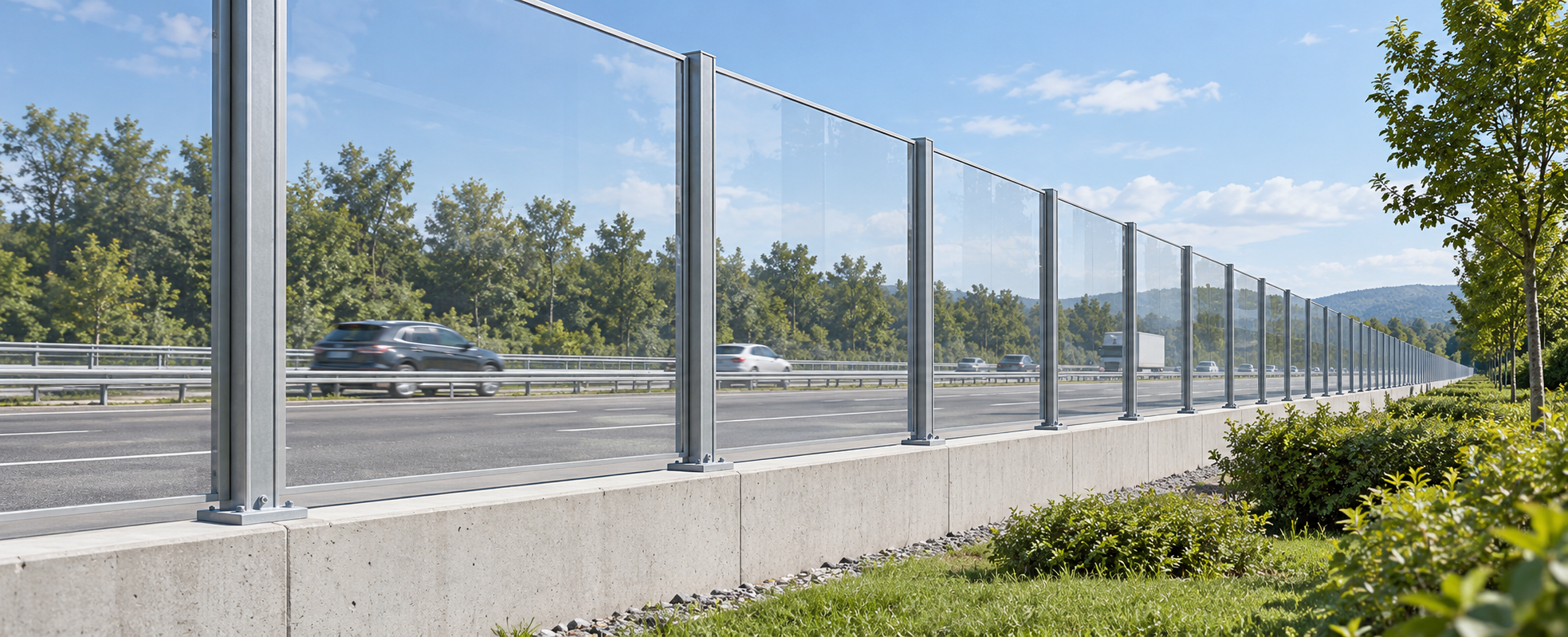
Application concept visualization
Technical Resources
Technical specification guide
Download the US & European specification guide (PDF)
Specification and evidence guidance; not a laboratory test report or product certification.
Test submission checklist & blank report template
Download the European checklist & blank report template (PDF, 4 pages)
Non-official template – not a test report. Results, ratings and laboratory authorization are not supplied. The laboratory must confirm applicable scope, standard editions and specimen requirements.
Product-specific test documentation
Send your acoustic specification, panel construction, thickness and mounting requirements so our team can identify applicable documents. Confirm the laboratory, report number, specimen construction, results and scope before specification.