
A cut-to-size order fails in one of two places: the drawing, or the packing. The cutting itself is rarely the problem. Here is the sequence that keeps a mixed panel list from coming back.
Step one: give a drawing, not a description
“About 600 by 900” produces a panel that fits nothing. A usable cutting list carries for each piece: width × height in millimetres, quantity, thickness, colour, edge finish and hole positions with diameter and coordinates. A DXF is better than a PDF, because the CNC tool path can be checked against it directly.
Step two: agree the tolerance before cutting
- Dimensional tolerance: ±0.5 mm on cut panels up to 1 m; ±1 mm on larger pieces.
- Thickness tolerance: cast sheet is normally ±0.3 mm at 5 mm and ±5% above 25 mm.
- Kerf: allow 3–5 mm between adjacent parts on the nest, or the second piece loses its dimension.
- Squareness: ±1 mm over 1 m; a skewed panel shows at the corner joint.
Step three: state the edge and the masking
A flame-polished edge on a display panel and a matt sawn edge on a hidden partition are different line items. Say which edges are visible. Masking matters too: cut panels shipped with paper masking left on for months can bond to the sheet in humid weather, and the buyer spends a day peeling it off.
Step four: pack for the panel, not the pallet
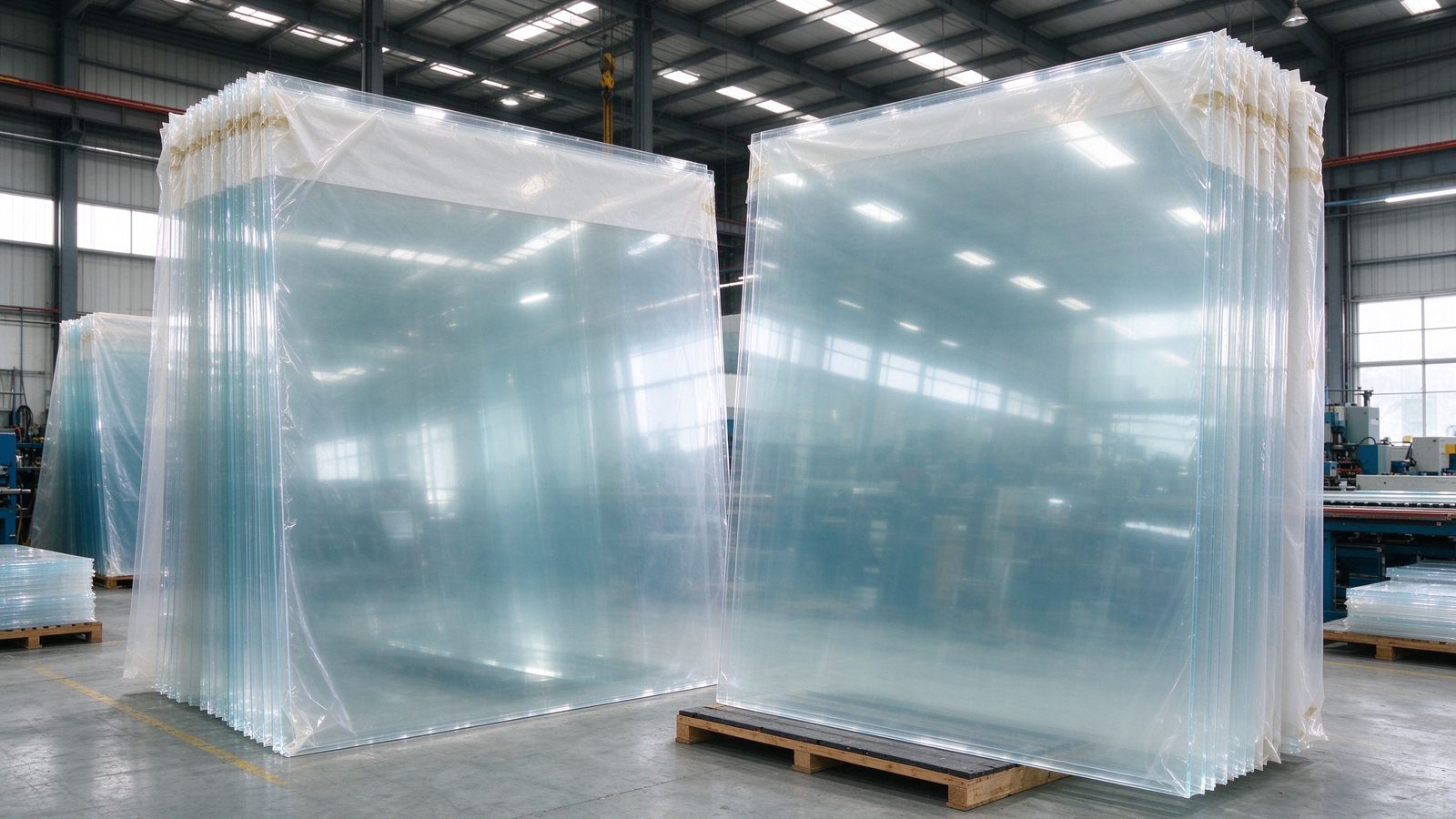
Mixed-size panels must be packed in ascending size with edge protection, or the largest piece takes the load. Flat-stacked acrylic in a container bows under its own weight over a long sea leg; upright crates with a slight lean are the safer standard for anything over 6 mm.
Custom sizes beyond stock are covered in custom size acrylic sheets supplier, and the container loading side in acrylic sheet container order.
Frequently Asked Questions
Q: What tolerance should I expect from an acrylic cut-to-size service?
A:±0.5 mm on panels up to 1 m and about ±1 mm on larger pieces, with squareness near ±1 mm per metre. Cast sheet thickness itself varies ±0.3 mm at 5 mm and up to ±5% above 25 mm.
Q: Why do cut acrylic panels arrive the wrong size?
A:Usually because the order was given as approximate dimensions, or because kerf was not allowed between nested parts. A DXF with exact widths, hole coordinates and edge finish removes both causes.
For a cut-to-size or stock-sheet quotation, send the panel list, thickness and destination port to oversales@rpplexiglass.com.