
A fabrication shop once ordered 20 mm acrylic sheet, and when the panels arrived the actual gauge measured between 18.5 mm and 21.5 mm across the batch. The frames were machined to 20 mm, half the panels would not seat, and every seal leaked. That is acrylic sheet thickness tolerance in action: the gap between what you ordered and what the sheet actually is.
Where thickness tolerance bites
Extruded sheet, pushed through a die, drifts in thickness more than cell cast sheet, which is set by a mould. When you build a frame, gasket or rebate to a nominal gauge, a sheet that runs thin loses structural margin and a sheet that runs thick will not fit. For structural panels, glazing rebates and bonded joints, the tolerance matters as much as the nominal number.
What tolerance can you expect
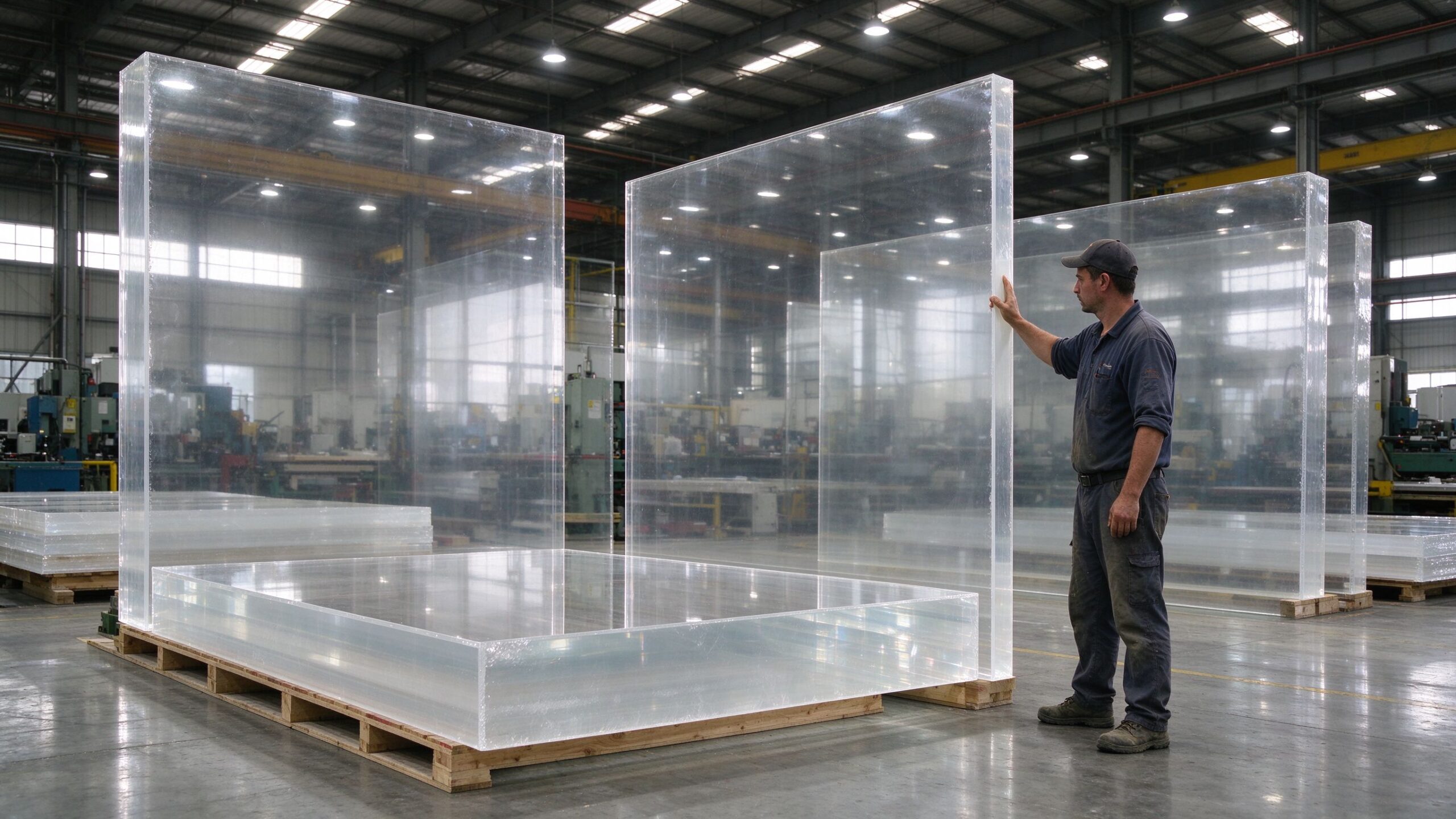
Cell cast sheet holds its nominal thickness within a tighter band than extruded, and large custom-cast panels can be specified to a tight tolerance because the mould gap is controlled. When you order, ask for the thickness tolerance in writing and design your frames and seals around the worst case, not the nominal.
For how to order the right gauge and size, see our custom size acrylic sheets guide and the thicker structural range in custom thickness cast acrylic sheets.
Frequently Asked Questions
Q: How much can acrylic sheet thickness vary?
A: Extruded sheet drifts more than cell cast. Cast sheet holds its nominal gauge within a tighter band; always confirm the tolerance in writing for your project.
Q: Does thickness tolerance matter for non-structural use?
A: For signage and displays it matters less, but for frames, glazing rebates, bonded joints and any load-bearing panel, tolerance is critical because a thin spot is a weak point.
For a project-specific quotation on thick cast acrylic sheets, email oversales@rpplexiglass.com with your thickness, sheet size and quantity.