
Acrylic underwater tunnel sections are the giant, transparent shells visitors walk through in public aquariums and oceanariums. Unlike a flat viewing window, a tunnel segment has to carry deep water pressure over a curved, long-span structure while staying optically clear. That makes it the highest-specification job in cast acrylic – and it is exactly where engineering, not guesswork, decides whether a tunnel works or leaks.
Thank you for reading this post, don't forget to subscribe!A Real Project: Supplying Tunnel Sections for a Public Oceanarium
An oceanarium building an underwater walk-through tunnel needed curved acrylic tunnel sections with a wall thick enough for the design water depth, manufactured and joined to hold pressure across long spans.
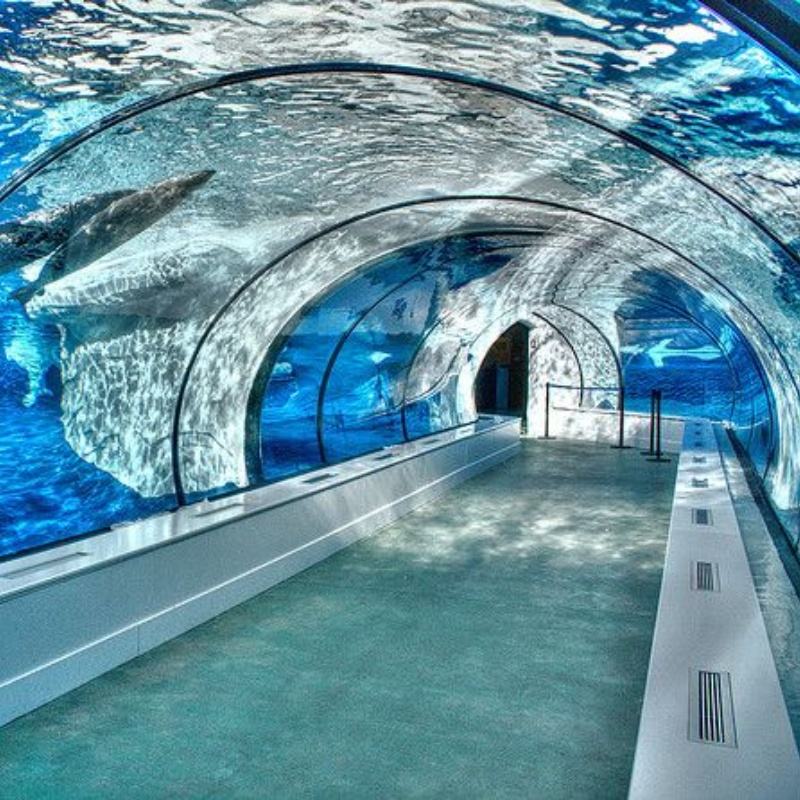
- Material: cast (cell-cast) acrylic, chosen because cast sheet keeps the deep-clear optical quality and strength needed for pressure glazing.
- Thickness: sections engineered in the 100-300mm range for the tunnel’s water depth, radius and span.
- Forming: tunnel panels thermoformed to the project’s radius so curved segments match the walk-through geometry.
- Joining: segments bonded with structural acrylic adhesive and finished for a continuous, leak-free optical surface; large pieces can be made single-segment to cut on-site seams.
Specifying Tunnel Sections That Hold Pressure
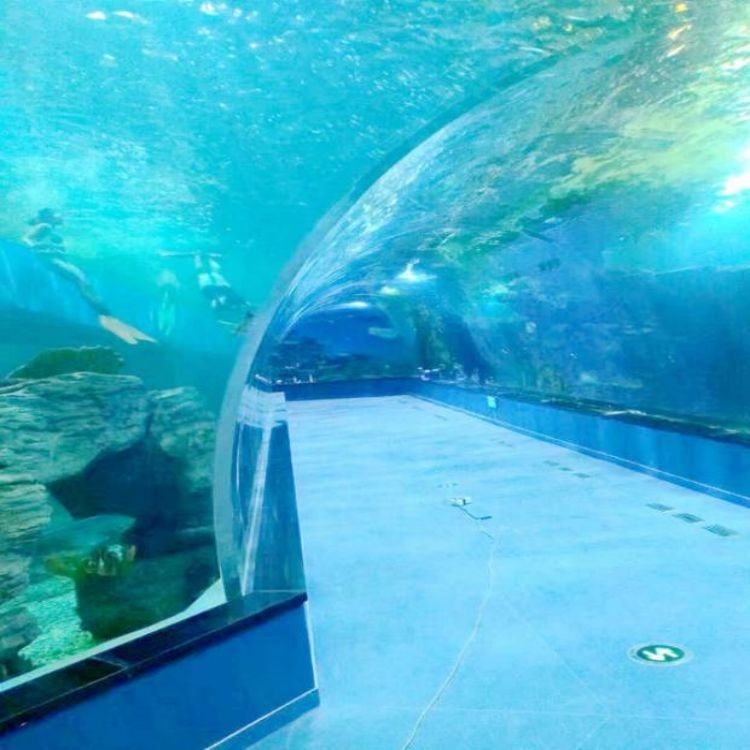
A tunnel is a pressure vessel in clear. The specification is driven by the water depth at the base of the section, the span and the radius, which together set the wall thickness, the forming, and how the segments join.
- Depth and pressure: wall thickness comes from the hydrostatic load at the lowest point – deeper water means thicker cast wall.
- Curvature and span: the tunnel radius and span set how the panel is thermoformed and whether segments need internal support.
- Joining: specify the bonding method and the seam finish so the tunnel stays pressure-tight and optically continuous.
- Supply: cast, formed and joined sections from a single supplier with aquarium-grade material and project drawings.
The Two Mistakes That Sink an Aquarium Project
- Undersizing the wall thickness for the real water depth. If the thickness is not engineered to the hydrostatic load, the panel can deflect or fail – thickness must come from the depth calculation, not a rule of thumb.
- Buying flat sheet for a curved tunnel. A tunnel needs formed, curved sections matched to its radius; forcing flat panels into a curved structure risks poor joints and optics.
Frequently Asked Questions
How thick are acrylic underwater tunnel sections?
Tunnel panels are thick, cell-cast acrylic built to carry deep water pressure over long spans – typically in the 100-300mm range depending on water depth, tunnel radius and span. Wall thickness is calculated from the hydrostatic load, not guessed.
How are tunnel sections joined on site?
Cast acrylic tunnel sections are bonded together using adhesives engineered for structural acrylic joints, then finished to give a continuous optical surface. Large tunnel segments can also be produced as single pieces to minimise on-site seams.
Can tunnel sections be curved?
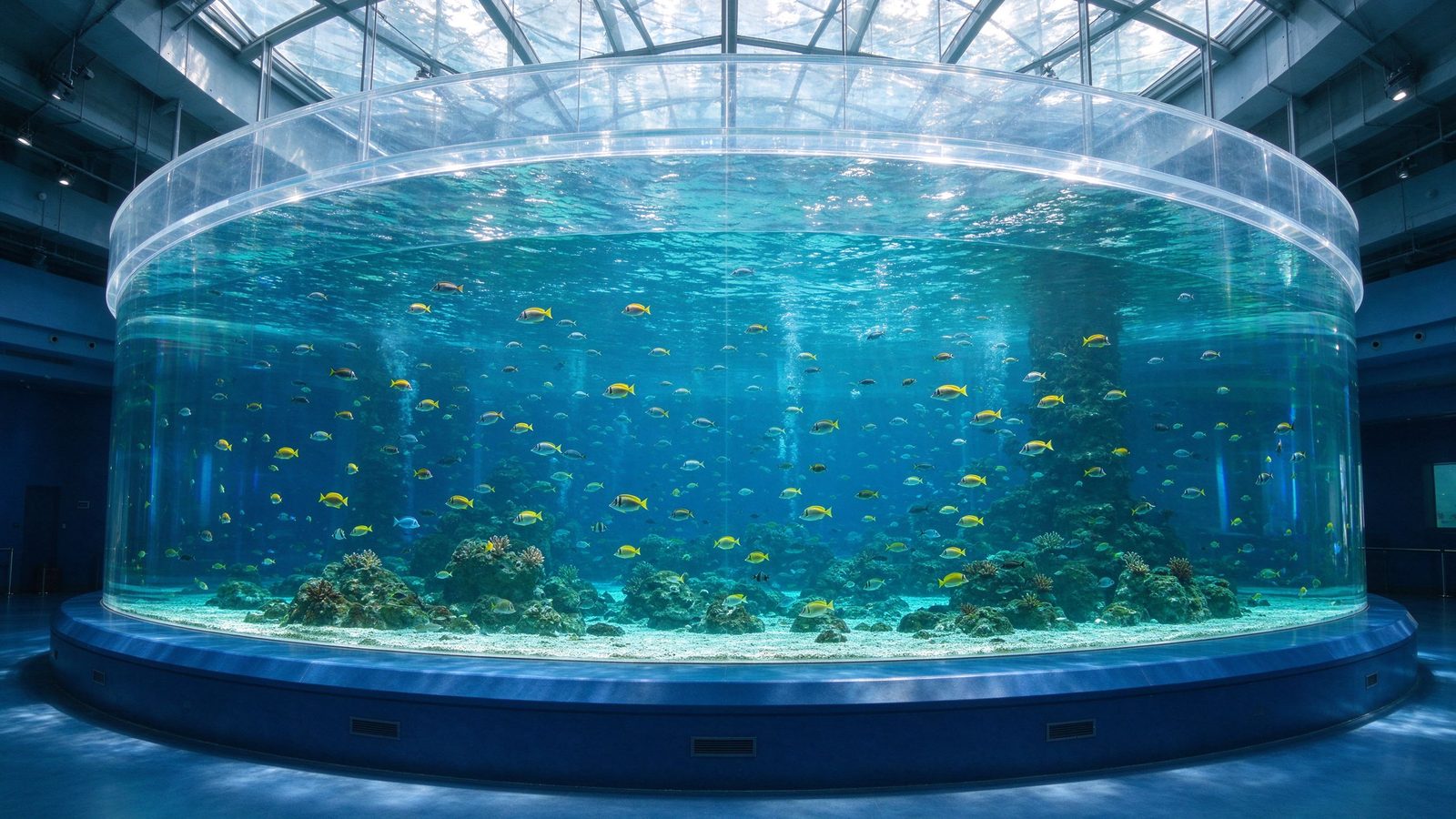
Yes. Tunnel panels are thermoformed to the project’s radius and can be supplied as curved sections, plus flat viewing windows and cylinders, matched to the tunnel geometry.
Contact RP River People Plexiglass at oversales@rpplexiglass.com for a fast, spec-first quotation.