
Straight tunnels are the easy half of an oceanarium. The part that impresses visitors – and worries engineers – is the bend, where curved acrylic tunnel sections turn the run around a corner while the wall keeps holding the same water load without a discontinuity.
How the curve is made
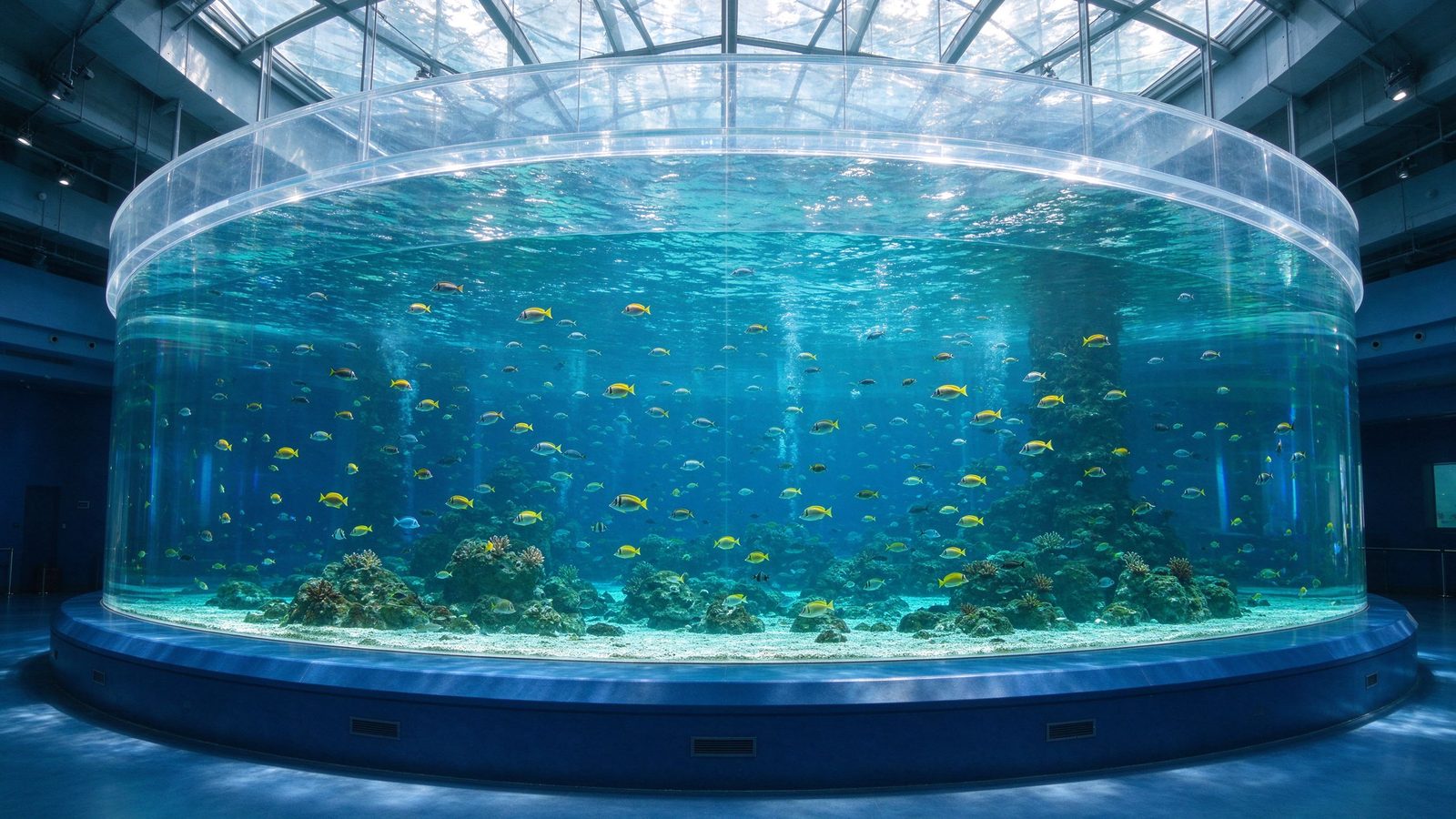
Curved acrylic tunnel sections are cast or thermoformed from PMMA to a specified radius, then held true so the curvature does not drift across the section. The radius matters structurally: a tighter bend puts more membrane stress in the shell, so the wall thickness is checked against the corner geometry, not just the depth. Once formed, the mating faces are machined so the bend joins the straight sections with the same edge register as any other seam.
Joining the bend to the run
The bend is bonded to neighbouring straight sections with solvent polymerisation, and the complete curve is treated as one structural element. RP River People machines the corner faces, supplies the assembly sequence, and keeps the optical clarity intact through the bend so the view stays clean. The same casting and bonding discipline is detailed in acrylic underwater tunnel sections.
Frequently Asked Questions
Q: Does a curved section need to be thicker than straight?
A: Not always thicker, but the wall thickness is checked against the corner radius and depth; tighter bends put more stress in the shell.
Q: Can curved sections match straight ones in appearance?
A: Yes, with controlled forming and polishing the bend reads as a seamless extension of the run.
Q: How is the bend bonded to the straight tunnel?
A: Mating faces are machined and the joint is solvent-bonded to the same rated standard as straight-to-straight seams.
For a project-specific quotation on cast acrylic panels, email oversales@rpplexiglass.com with your opening size, water depth, support layout and drawing.