
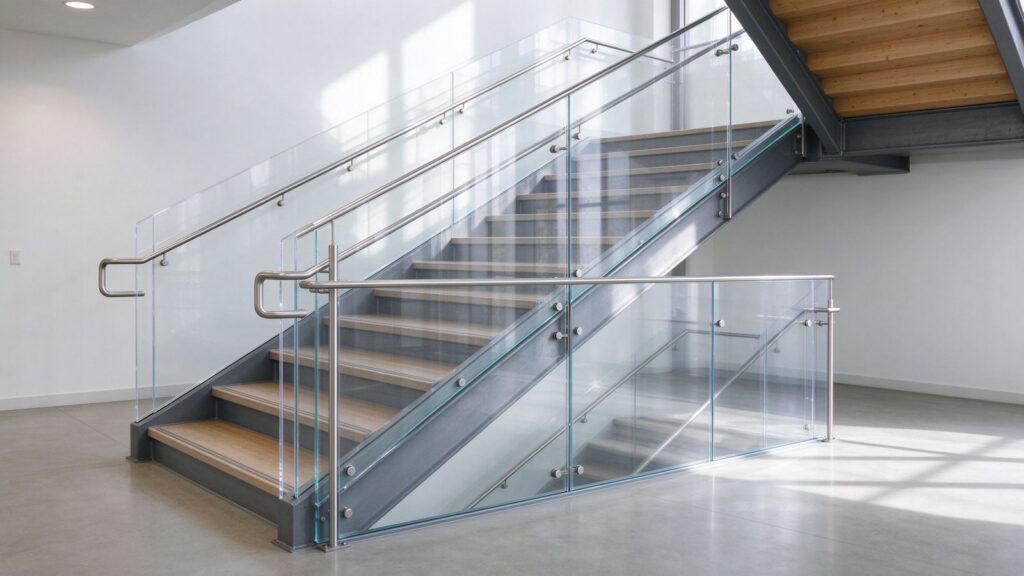
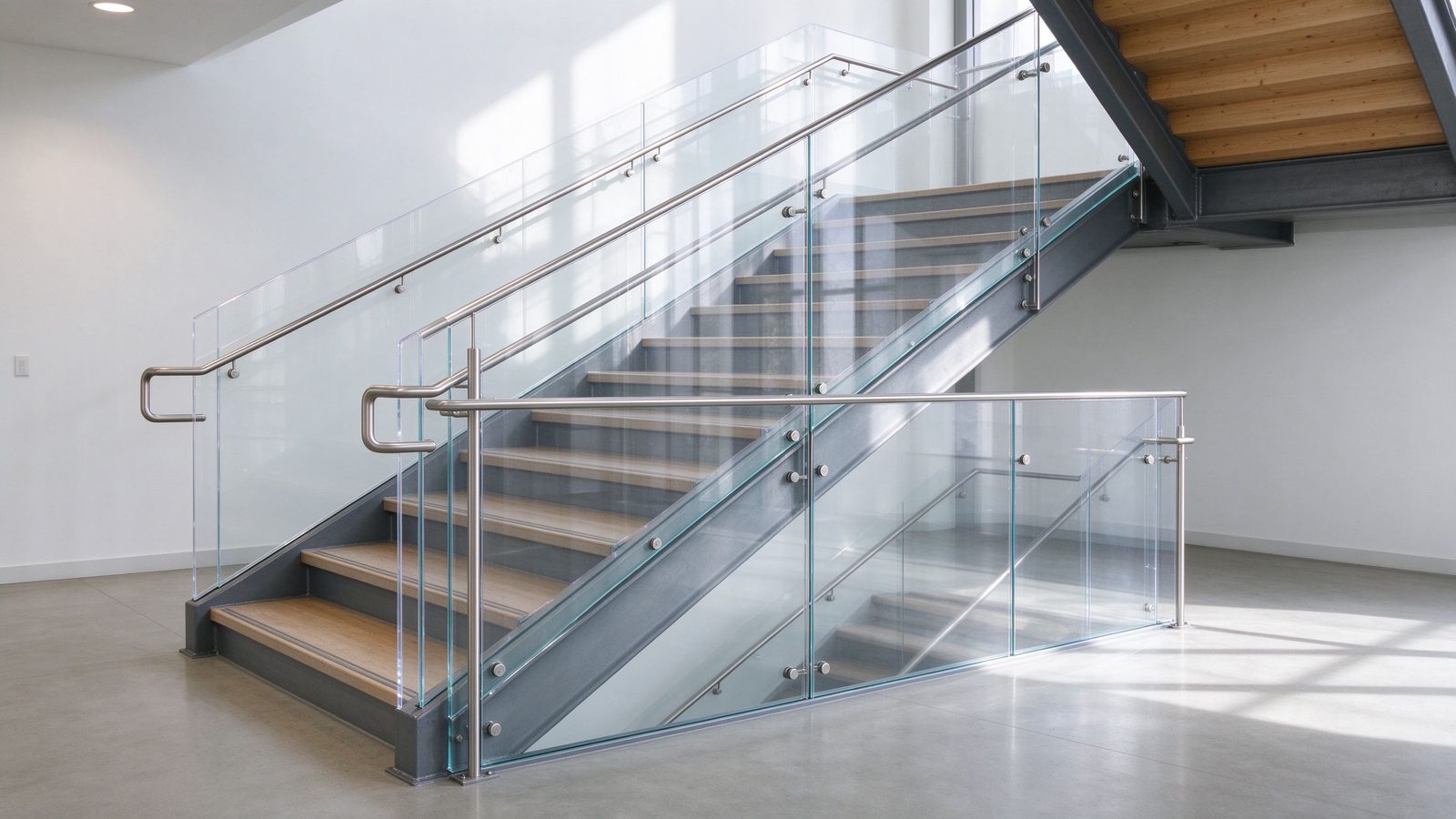
A glass-looking balustrade that can’t shatter is the reason polycarbonate is increasingly specified for stairs, balconies and landings. Polycarbonate balustrade glazing combines safety glass’s look with far higher impact resistance and lower weight. This guide covers the real parameters for PC guardrail glazing, and how RP River People supplies balustrade panels.
Thank you for reading this post, don't forget to subscribe!A case worth following: the stairwell and terrace upgrade
An office refurb replaced its tempered glass balustrades with polycarbonate on the stairwell and the rooftop terrace. The spec used 10 mm solid sheet with a co-extruded UV layer, fixed with concealed stainless clamps and a channel base. Because the balustrade polycarbonate was impact-resistant and UV-protected, the barriers stayed clear, safe and code-compliant through years of daily use and sun.
Why polycarbonate for balustrades
- Impact resistance – withstands abuse that shatters glass; safe in public and high-traffic space.
- UV protection – co-extruded UV layer stops yellowing of the sheet.
- Light and strong – panels are lighter than glass, easier to handle and span longer.
- Safety – no dangerous shards; ideal for stairs, balconies and childcare settings.
- Machineable – cut, drilled and edge-finished to the rail system’s tolerance.
What to specify: sheet type, thickness and fixing
- Sheet type: solid sheet for clear barriers; twin-wall where a textured, insulated look is wanted.
- Thickness: solid 8-12 mm for guardrail glazing; confirm with span and height code.
- UV layer: always co-extruded on the exposed face, not a peelable film.
- Finish: clear, frosted or tinted; matte or hardcoat where marking is a concern.
- Size: cut to the balustrade opening with allowance for channel and clamp fixing.
Installation notes for a code-compliant rail
- Confirm the local railing height and loading code before specifying thickness.
- Use channel bases and concealed clamps so the panel is captured, not just edge-pinned.
- Leave a small expansion allowance – PC moves with temperature.
- Orient the UV-coated face outward where exposed to sun.
- Edge-polish or cap cut edges for safety and a finished look.
Market pain points – and our solution
Contractors get burned by PC that yellows fast, panels that arrive scratched or undersized against the rail system, UV layers on the wrong side, and no straight answer on code suitability. RP River People, as a polycarbonate sheet manufacturer, supplies solid and twin-wall polycarbonate balustrade glazing with co-extruded UV protection, in the thickness, finish and size your rail drawings need, cut cleanly and packed for safe site handling.
Frequently Asked Questions
Q: What thickness of polycarbonate for a balustrade?
Solid sheet 8-12 mm is typical for guardrail glazing; confirm with the span, height and the loading code that applies to your site.
Q: Does balustrade polycarbonate yellow?
Quality PC with a co-extruded UV layer resists yellowing for many years. The UV face must face outward.
Q: Do you supply polycarbonate balustrade panels cut to size?
Yes. We supply solid and twin-wall polycarbonate balustrade glazing in the thickness, finish and size you need, cut cleanly and export-packed.
If you are specifying polycarbonate balustrade guide for a project, send us your sizes and requirements. Contact us for a quote and we will confirm grade, thickness, tolerance and lead time: oversales@rpplexiglass.com.