
Polycarbonate drying is the step that decides whether a formed part is clear, and it is usually the step left out. A forming shop running 6 mm polycarbonate machine guards changed dryers and lost a week of output. The new unit reached 120 degrees Celsius on the display but circulated poorly, so the sheet core stayed wet while the surface dried. Every part came out with a faint silver streak that only appeared after the trim.
Polycarbonate drying schedule by thickness
Polycarbonate absorbs about 0.15 to 0.35 per cent moisture at ambient humidity. When the sheet is heated to forming temperature, that water vaporises. Because the sheet is softening, the vapour cannot escape, so it expands into bubbles and leaves the silver streaks that formers call splay.
The threshold is low: 0.2 per cent produces visible defects in thick sheet, and 0.4 per cent produces scrap.
- Thickness up to 3 mm: 4 hours at 120 degrees Celsius
- 4 to 6 mm: 6 to 8 hours at 120 degrees Celsius
- 6 to 10 mm: 12 hours at 120 degrees Celsius
- Above 10 mm: 24 hours, and consider a desiccant dryer
These are minimums at sea-level humidity. In a tropical plant, add 30 per cent.
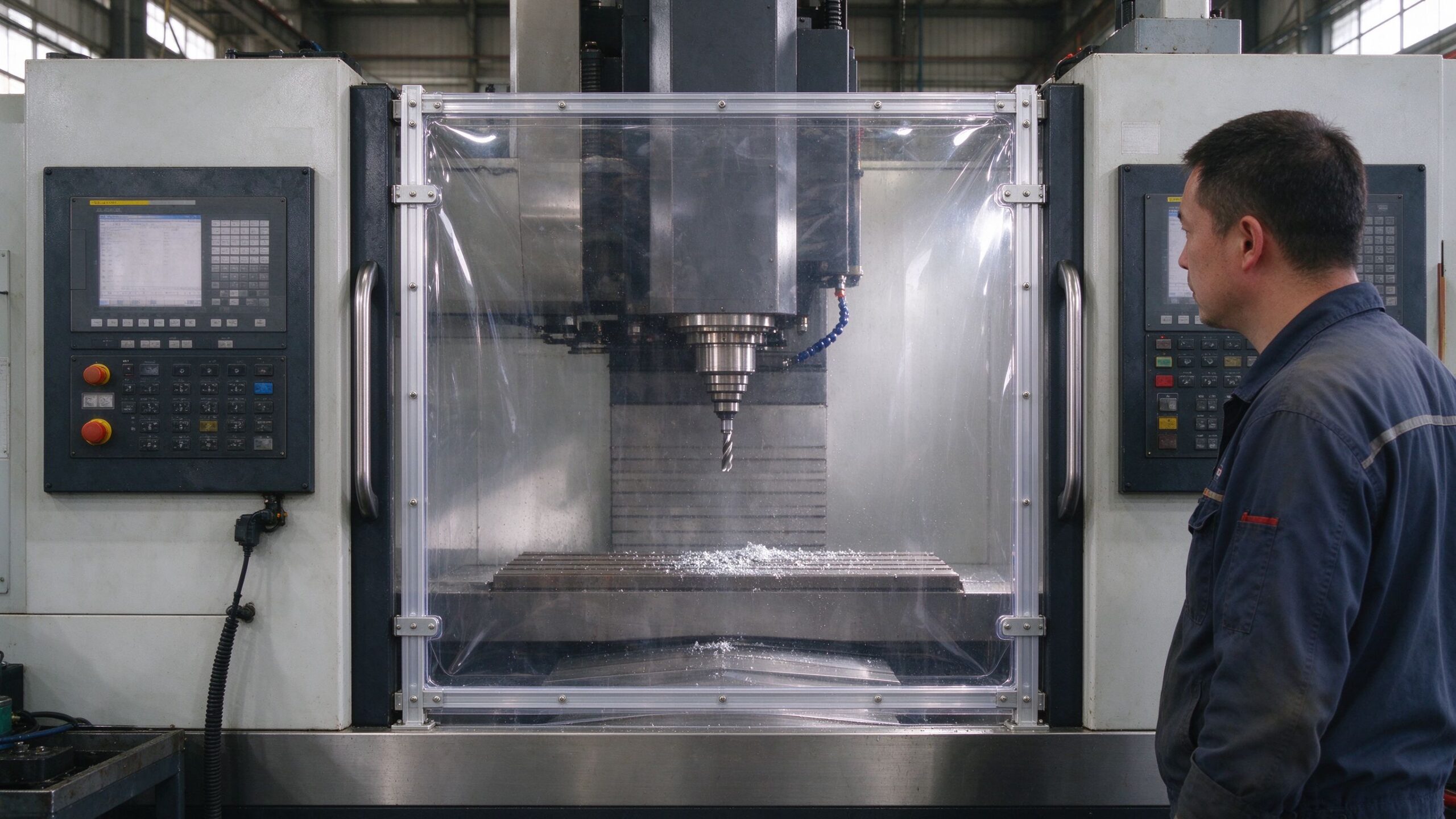
How polycarbonate drying actually works
A circulating air oven at 120 degrees Celsius works by keeping the surface dew point low enough that moisture diffuses out of the sheet. If air circulation is poor, the sheet reaches a local equilibrium and stops drying even though the thermometer reads correctly.
A desiccant wheel dryer holds the dew point at minus 20 or lower and dries in half the time. That is the practical upgrade for a shop forming thick sheet daily.
Stacking and the spacing rule
Sheets must be spaced so air passes between them: 20 to 30 mm gaps on a rack, not a stack on a shelf. A stack dries from the outside in and the middle sheets stay wet, which is exactly the failure that looks like a material defect.
Never dry a sheet with its protective film on. The film traps moisture and its adhesive can transfer to the surface at 120 degrees Celsius.
Keeping it dry after the oven
A dried sheet reabsorbs moisture in about 20 minutes on a humid shop floor. The window between dryer and former is short, and handling it in a humid space undoes the whole schedule.
Move the sheet directly from dryer to oven on a covered trolley. If the shop is air-conditioned at 45 per cent relative humidity, the window extends to about an hour; in an open shed in summer it does not exist.
A short troubleshooting matrix
- Bubbles in the centre only: insufficient dry time, core still wet
- Silver streaks near the edges: draught from an open door during heating
- General haze: drying temperature too low or dew point too high
- Surface marks on one face: sheet touched a hot shelf in the dryer
Each of those is a drying problem, not a forming problem, which is why adjusting the forming cycle rarely fixes them. The thickness selection guide covers the other half of the specification, and the scratch resistance note explains why handling after forming matters as much as the drying itself.
Forming problems that persist after drying? Send your cycle and sheet spec to oversales@rpplexiglass.com for a process review.
Frequently Asked Questions
How long should polycarbonate be dried?
Four hours at 120 degrees Celsius for sheet up to 3 mm, six to eight hours at 120 for 4 to 6 mm, and proportionally longer above that. A desiccant dryer is better than a circulating oven.
What happens if polycarbonate is not dried?
Moisture vaporises inside the sheet during heating and leaves bubbles, silver streaks or a general haze. The effect appears at 0.2 per cent moisture and is obvious above 0.4.
Can polycarbonate be dried at a higher temperature to save time?
Not safely. Above about 125 degrees Celsius the sheet begins to soften and sag in the dryer, and the surface can mark where it touches a shelf.