
Two ABS quotes, same thickness, same size, 14% apart. Neither supplier was cheating. One quoted 1.05 g/cm³ and the other 1.08, and on a 40-sheet order that density difference moves the load by 90 kg and the price by exactly the gap.
The density range, and where it comes from
General-purpose ABS sits around 1.05 g/cm³. Grades loaded with flame retardant or mineral filler run to 1.08 and sometimes 1.10, because the additive is heavier than the polymer. Textured or embossed sheet can read slightly lighter per unit area because the roll compresses. So a single “ABS density” figure is a fiction unless the grade is stated.
Sheet weight at 1.05 and at 1.08
- 1.5 mm — 4.7 kg / 4.8 kg per 1220 × 2440 sheet
- 2 mm — 6.2 / 6.4 kg
- 3 mm — 9.4 / 9.6 kg
- 4 mm — 12.5 / 12.8 kg
- 5 mm — 15.6 / 16.1 kg
- 6 mm — 18.7 / 19.3 kg
- 8 mm — 24.9 / 25.7 kg
- 10 mm — 31.2 / 32.1 kg
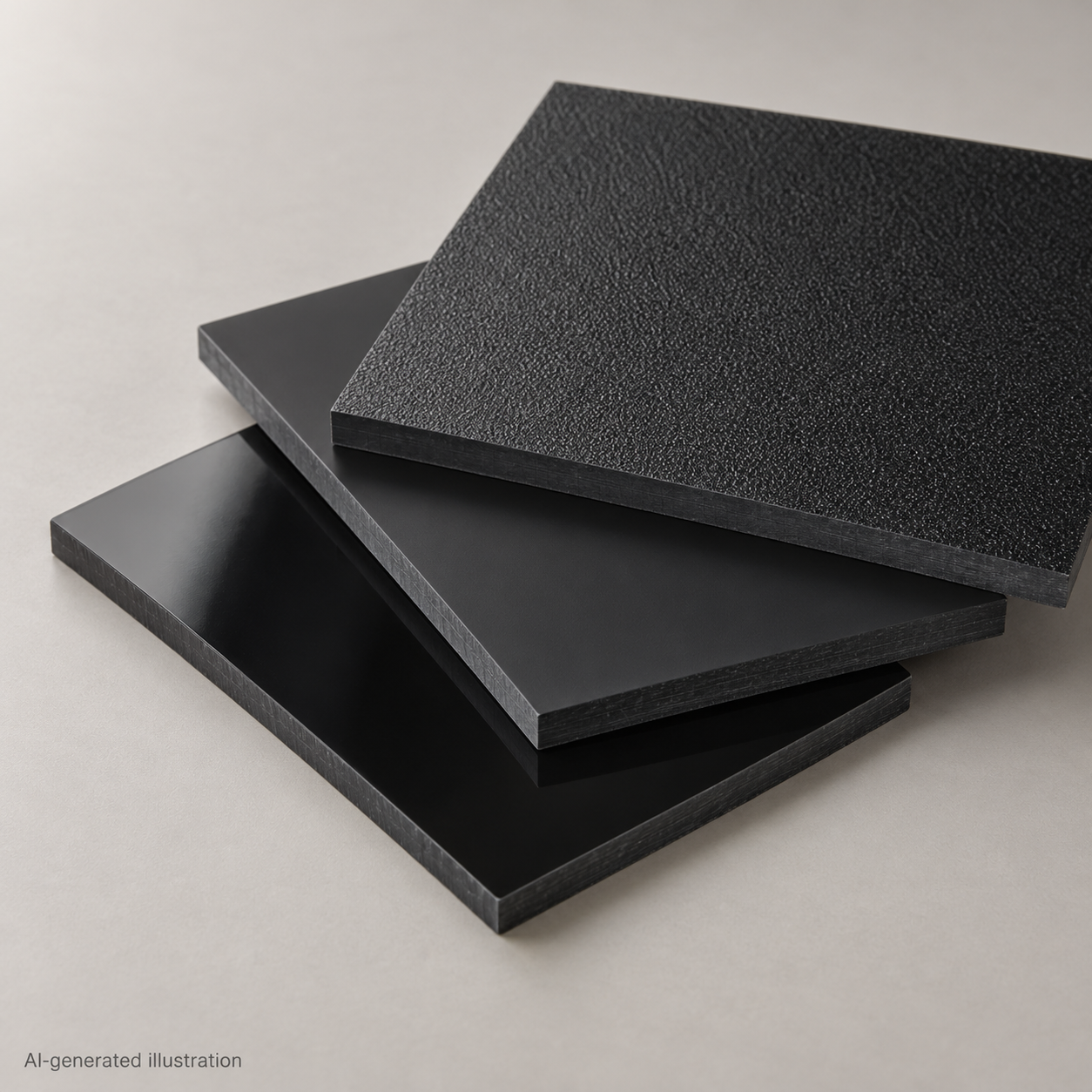
Why kilogram pricing removes the argument
ABS is traded as a commodity resin more than as a branded sheet, so the honest quote is per kilogram plus a conversion charge. When both suppliers quote per kilogram at the same density assumption, the comparison becomes about gauge control rather than about arithmetic. Ask for the measured weight of one sheet from the actual lot, and weigh it. A 3 mm sheet that arrives at 8.6 kg is a 2.75 mm sheet with a friendly label.
What changes at packing
ABS is lighter than polycarbonate by roughly 12% and lighter than acrylic by about 11%, so a container of ABS cubes out before it weighs out at every thickness below 8 mm. The packing consequence: cartons stack higher before compression marks appear, and pallet height rather than weight becomes the planning constraint. Where the comparison matters, the standard sizes and thickness guide gives the acrylic and PC equivalents on the same sheet footprint.
Textured ABS behaves differently from smooth sheet at the packing stage. The embossed surface traps air between stacked sheets, so a pallet of textured ABS is slightly taller for the same weight. That matters when a container is planned to the last centimetre, and it is the reason two shipments of the same nominal tonnage can load differently.
One practical check on receipt: weigh one sheet and compare against the density stated on the mill certificate. A 10 mm sheet at 1.05 should land near 31.2 kg; anything under 29 kg is a thinner gauge or a lighter formulation, and both change what the part will do in service more than they change the invoice.
Cut-to-size orders change the arithmetic. Once a sheet is cut into blanks, the offcut weight still belongs to the order and still appears in the packing list, so a buyer pricing by finished-part weight will under-order by 10–20% on a nest with awkward shapes. Price the blanks from the sheet, and plan the nest before confirming the tonnage.
Send your ABS sheet schedule with thickness and colour to oversales@rpplexiglass.com and we will return kilograms, carton count and a loading plan.
Purchasing tends to raise three questions when ABS is quoted by weight.
Frequently Asked Questions
Q: What is the density of ABS sheet?
A: About 1.05 g/cm³ for general purpose and 1.08–1.10 for flame-retardant or filled grades. The grade, not the material family, sets the number.
Q: How much does a 3 mm ABS sheet weigh?
A: 9.4 kg at 1.05 g/cm³ and 9.6 kg at 1.08 on a 1220 × 2440 mm sheet. Weighing one sheet from the lot is the only reliable check.
Q: Why is ABS quoted per kilogram?
A: Because it trades as a resin. Per-kilogram quotes at a stated density make gauge control the real variable instead of hiding it inside a per-sheet price.