
Two reef builds in the same season gave opposite outcomes from the same design, and the difference was one number on an acrylic aquarium overflow box: the weir tooth depth. The tank that worked ran a 5 mm tooth at 6 mm pitch. The tank that flooded ran a 3 mm tooth, which passed less water than the return pump delivered, and the display level rose until the sump ran dry.
This page sets out the geometry that decides whether a box keeps up.
Weir teeth, head and the acrylic aquarium overflow box flow
- Tooth depth: 5 mm at 6 mm pitch, 8 mm for pumps above 4,000 l/h
- Weir length: sized from the pump curve at the real discharge head
- Box wall: 8 mm cast, cemented with a 4 mm fillet inside
- Bulkhead: 1 inch for up to 3,000 l/h, 1.5 inch above
- Box depth: 150 mm below the weir crest for surge capacity
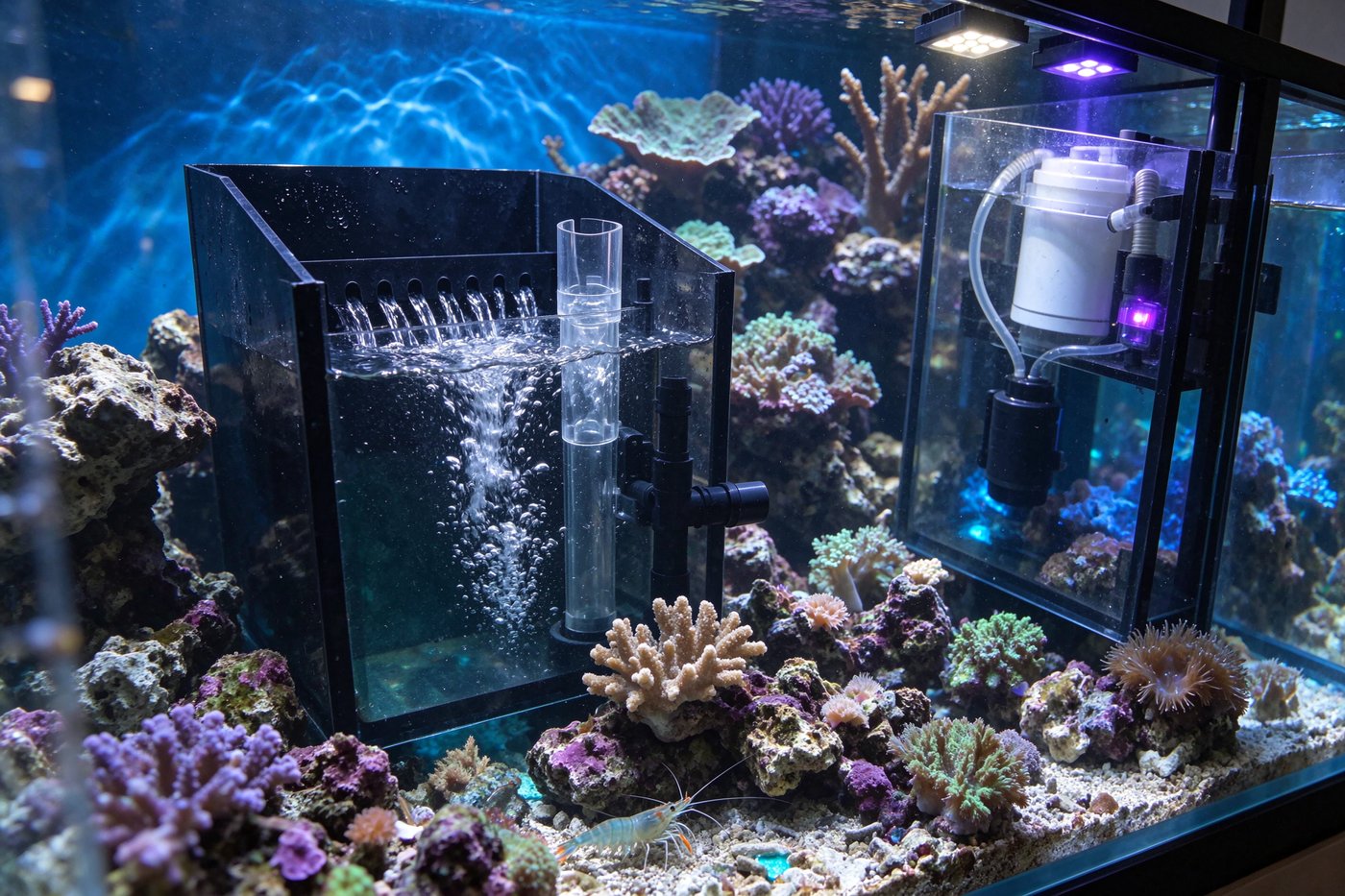
The flow a weir passes depends on the head over the crest, and the head is set by the return pump. A pump rated 4,000 litres per hour at zero head might deliver 2,600 at the 1.2 m a real installation imposes. Size the weir from that number, then add 20 percent, because a clogged tooth reduces the open area and a box that is exactly sized becomes the bottleneck.
Priming and the acrylic aquarium overflow box failure
Siphon boxes fail in a way that is dramatic and entirely predictable. Air enters at the weir, the U tube breaks siphon, the return pump keeps running, and the display drains into the sump until the pump runs dry. A drilled tank with a standpipe does not have that failure, which is why a new build should be drilled even though a hang-on box needs no tank modification.
Noise, algae and the acrylic aquarium overflow box in service
A durso standpipe with an air valve quiets a drilled overflow, and the box should be deep enough that the falling water does not splash. Algae grows on the inner faces because light reaches the teeth, so a box is cleaned with a soft brush on a maintenance cycle. Opaque black acrylic is a legitimate choice for a box because it blocks light and stops algae at the source, at the cost of not being able to see the water level.
Boxes are cut with weir teeth on a CNC and cemented watertight, then pressure checked for 24 hours before dispatch.
Send tank volume, target turnover and sump layout to oversales@rpplexiglass.com for an overflow box drawing.
The overflow sets the water level and the sump baffles set the flow path, so the two are specified as a pair, and the baffle article covers the compartment heights. acrylic sump baffles for reef sumps covers that part of the specification.
Frequently Asked Questions
How much flow per inch of weir?
A tooth profile at 6 mm pitch passes roughly 1.5 to 2 litres per minute per inch at a 5 mm head. Compute from the pump curve at the actual head, not from the pump label.
Why 8 mm cast and not 5 mm?
An overflow box holds a head of water permanently and it is cemented to a tank wall. At 5 mm the box bows outward under that head and the cement seam takes the load.
How does a box lose prime?
A U tube overflow that ingests air at the weir top breaks siphon and the return pump empties the display. A drilled bulkhead with a durso standpipe cannot lose prime in the same way, which is why drilled tanks are preferred for a new build.