
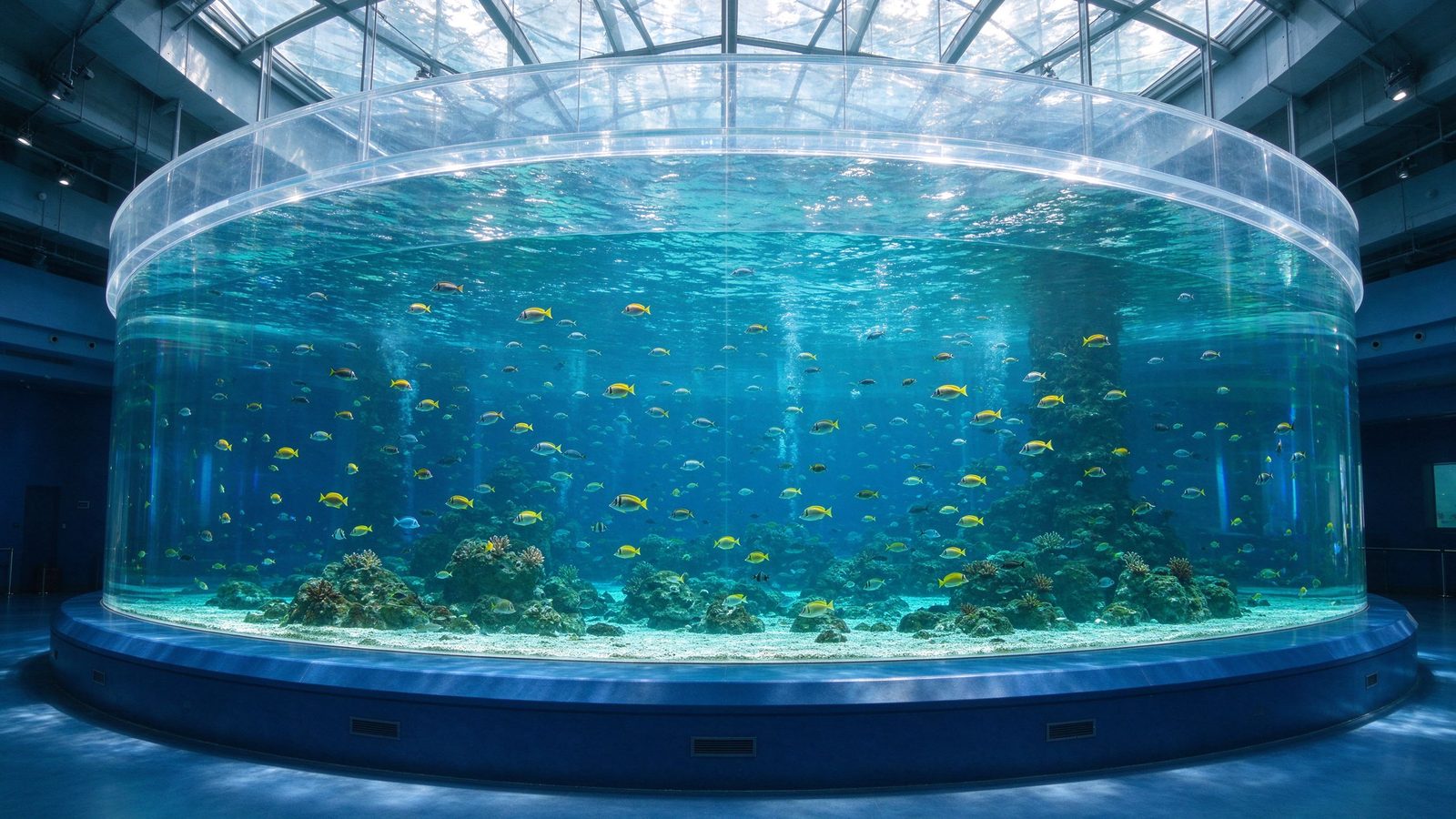
An acrylic aquarium tank panel is the building block of every modern display. Panels form the viewing faces and the structural walls, and their quality decides both the clarity of the display and whether the tank holds water for the life of the exhibit.
What a tank panel has to deliver
- Thickness for the load – set by depth and span, often 50 to 150 mm for tanks.
- True edges – machined square so the bond line is even and rated.
- Low internal stress – cast material so the panel does not craze under load.
- Clear optics – polished faces so the view is undistorted.
How the panels become a tank
RP River People casts the acrylic aquarium tank panels to the engineered thickness, machines and polishes the edges, and bonds adjacent panels edge to edge under controlled conditions. The assembled envelope is pressure-proofed so the tank arrives as a tested watertight unit. For the thickness logic and the same seam discipline on tunnels, see acrylic underwater tunnel sections.
Frequently Asked Questions
Q: What thickness should tank panels be?
A: It is set by water depth and unsupported span, commonly 50 to 150 mm for display tanks; submit your tank for a calculation.
Q: Are panels bonded or framed?
A: Panels are bonded edge to edge and the envelope is proofed; framing carries the support loads.
Q: Can you supply matched panels for one tank?
A: Yes, panels are cast as a matched set with consistent thickness and optics.
For a project-specific quotation on cast acrylic panels, email oversales@rpplexiglass.com with your opening size, water depth, support layout and drawing.