
A large acrylic aquarium is a watertight structure first and a display second. When the tank runs several metres across and several metres deep, the panel thickness is an engineering number that comes from water depth, unsupported span and how the frame holds the acrylic – and it is routinely in the 75 to 150 mm class for a public display tank.
Why cell cast for a large tank
A large acrylic aquarium is built from cell cast PMMA because casting produces a homogeneous panel with low internal stress and predictable creep under continuous water load. Extruded sheet drifts in thickness and carries locked-in stress; for a tank that has to hold tonnes of water for decades, cast is the only sane choice. The panels are machined true, bonded edge to edge, and the whole envelope is proofed before filling.
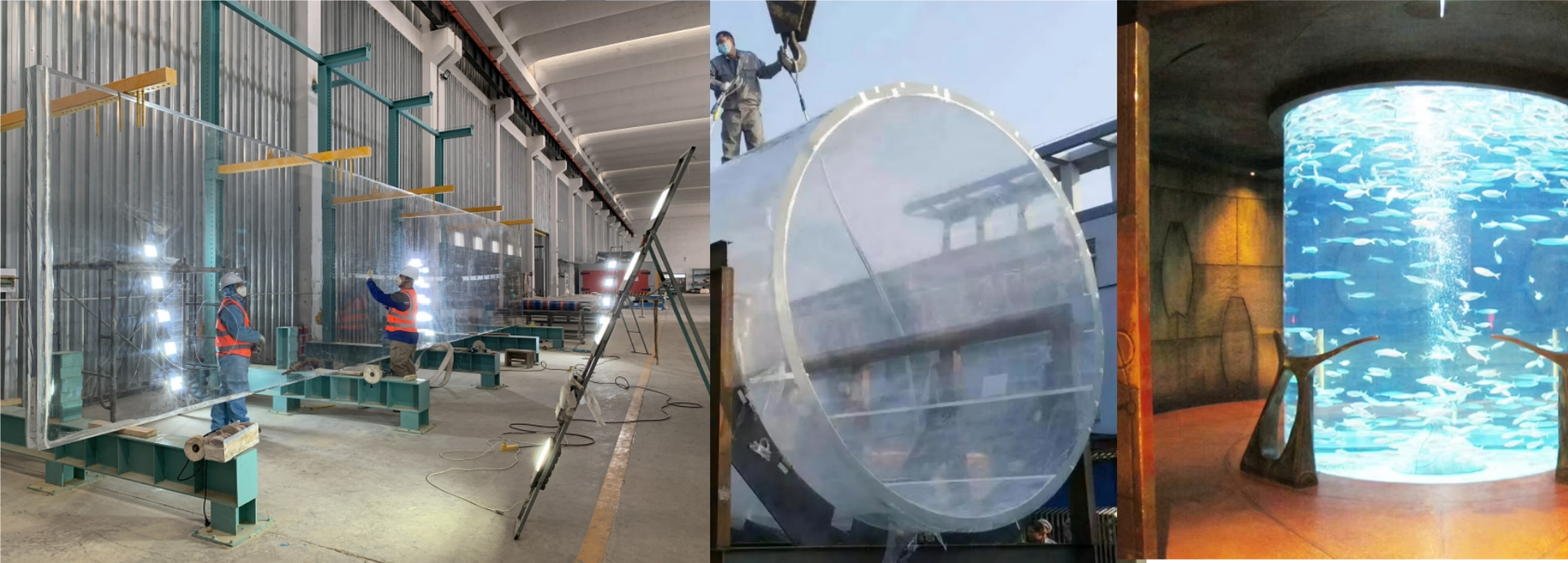
What sets the thickness
Three inputs decide the panel: the water depth at the panel base, the longest unsupported span, and the edge restraint. Increase the depth from 2 m to 5 m and the same span wants substantially thicker acrylic. RP River People supplies large acrylic aquarium panels with the engineered thickness, machined mating faces and the seam-bonding method so the tank assembles to drawing.
For the viewing-panel numbers behind a public tank, our guide on large acrylic aquarium viewing panels covers the span, depth and thickness logic in detail.
Frequently Asked Questions
Q: How thick is a large public aquarium panel?
A: Public display tanks commonly use cast acrylic in the 75 to 150 mm class, engineered from depth, span and support.
Q: Why not extruded sheet?
A: Cast PMMA is homogeneous with low internal stress and predictable creep, which is essential for continuous water load.
Q: Are the seams bonded or mechanical?
A: Panels are bonded edge to edge with solvent polymerisation, then the envelope is proofed before filling.
For a project-specific quotation on cast acrylic panels, email oversales@rpplexiglass.com with your opening size, water depth, support layout and drawing.