
Acrylic awards are the one product where the buyer looks at the edge before the logo. A 20 mm cast block with a machined and flame-polished edge reads as glass; the same block with a sanded edge reads as plastic, and no amount of engraving compensates.
In a recent run for an events supplier in Dubai, 240 acrylic awards were ordered in three sizes: 120 x 180 mm plaques at 15 mm, 180 x 250 mm standing pieces at 25 mm, and a single 40 mm signature trophy for the headline category. The specification that caused the argument was not the shape. It was whether the 40 mm piece could be cut from one block or bonded from two 20 mm sheets.
Acrylic awards: block thickness and edge treatment
Bonded blocks always show a line, because the solvent joint refracts differently from the parent sheet. At 40 mm the line is visible from two metres under stage lighting. Cast blocks up to 60 mm are produced in one piece, so the correct answer was a single cast block, sawn oversize, machined to profile, then polished in three stages: 400 grit, 800 grit, then flame.
- 15 mm: flat plaques, desk awards, engraved infill
- 25 mm: standing trophies with a machined bevel
- 40 mm and above: carved or sculpted pieces, single cast block
- Edge: machined square, 1 mm chamfer, flame polished
Flame polishing is a skill, not a setting. Oxy-hydrogen at low pressure, torch speed constant, and the panel pre-warmed to 40 C: too much heat and the edge ripples; too little and the machining marks stay. The tell-tale is a wave pattern on the edge that only shows when the trophy is tilted.
The other hidden cost is stress. Machining removes material unevenly and leaves a stressed skin. If the piece is polished immediately, the release of stress can pull a hairline crack from the engraved area weeks later. Our line anneals at 80 C for one hour per 6 mm of thickness and cools at 5 C per hour before the final polish. If you are comparing CNC acrylic machining suppliers, ask whether annealing is in the routing or offered as an extra.
Engraving, infill and the freight question
Awards that travel by air need two things: no sharp internal corners, and packing that keeps the polished edge off any hard surface. We bag each piece, then suspend it in a foam cradle so the edge touches nothing. Buyers who skip this step usually find the damage on the base, where the trophy rested on a carton wall.
A practical note on acrylic sheet thickness tolerance: award blocks are usually sawn from cast sheet with a nominal tolerance of plus or minus 5 percent, then machined to an exact figure. Quote the finished dimension, not the sheet callout, or the trophies arrive at 24 mm when the brief asked for 25.
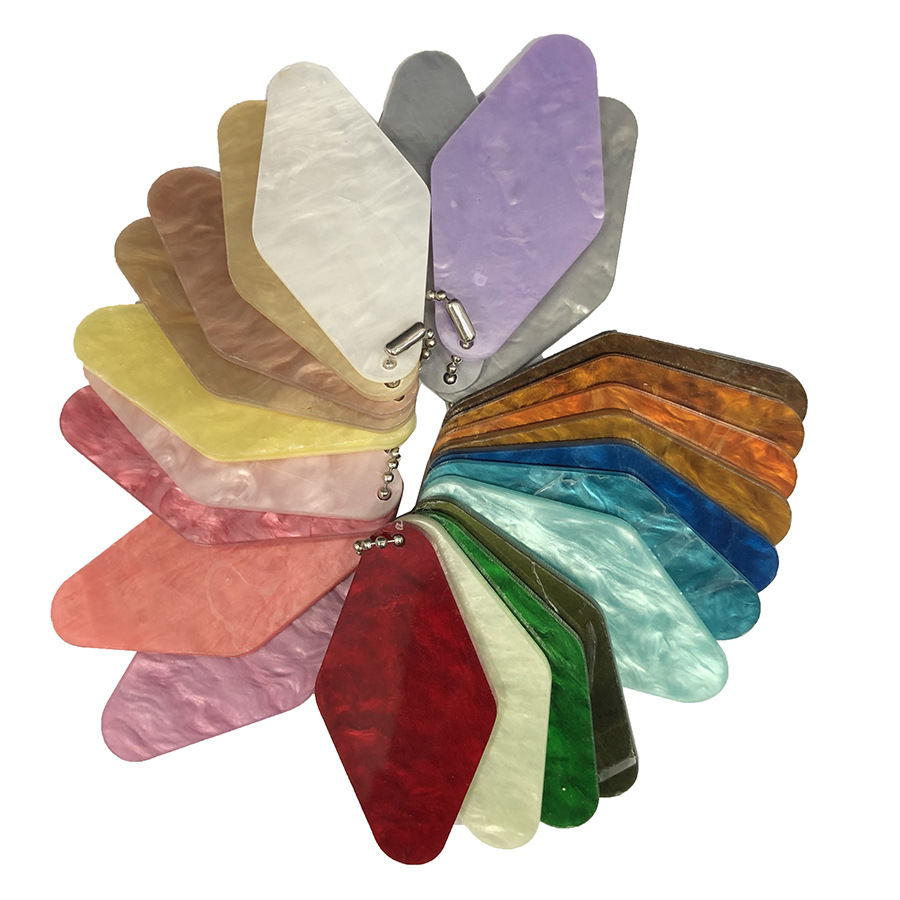
Colour is the last variable that surprises buyers. A tinted award needs the same cast batch for all pieces in a category, because a 3 percent amber tint reads differently across two production lots. We hold a colour block from the first casting and match the rest of the order against it.
Send your award drawing, thickness and quantity to oversales@rpplexiglass.com and we will quote cast acrylic blocks with polished edges and matched colour.
Frequently Asked Questions
Can acrylic awards be made from extruded sheet?
Only for flat, thin plaques. Extruded sheet carries higher internal stress and machines with hazy edges, so a 20 mm trophy block should be cast. Cast blocks polish to an optical edge and hold fine engraving without chip-out.
How thick should an acrylic trophy block be?
Most standing awards sit between 15 mm and 30 mm. A 40 mm block is used when the design is carved or when the award must read as glass. Below 12 mm the base looks thin and the weight feels wrong in the hand.
What causes cracking around engraved text?
Deep engraving with a blunt cutter, or laser power set too high, leaves a heat-affected zone that opens later. Two passes at lower power, plus annealing before polishing, removes most of that risk.