
The kitchen manager at a hospital staff cafeteria had a number she could not explain: 40 forks missing per week. Counting showed the forks were not lost, they were buried. The replacement was an acrylic cutlery tray with four compartments, a sloped floor and drainage, and the weekly loss fell to single figures in the first month.
Compartment layout in an acrylic cutlery tray
- Body: 5 mm cast acrylic, cemented dividers
- Compartments: 90 mm wide, four across a 400 mm tray
- Floor: 3 degree slope toward a drain corner
- Drainage: four 8 mm holes at the low point
- Rim: 20 mm upstand, flame polished
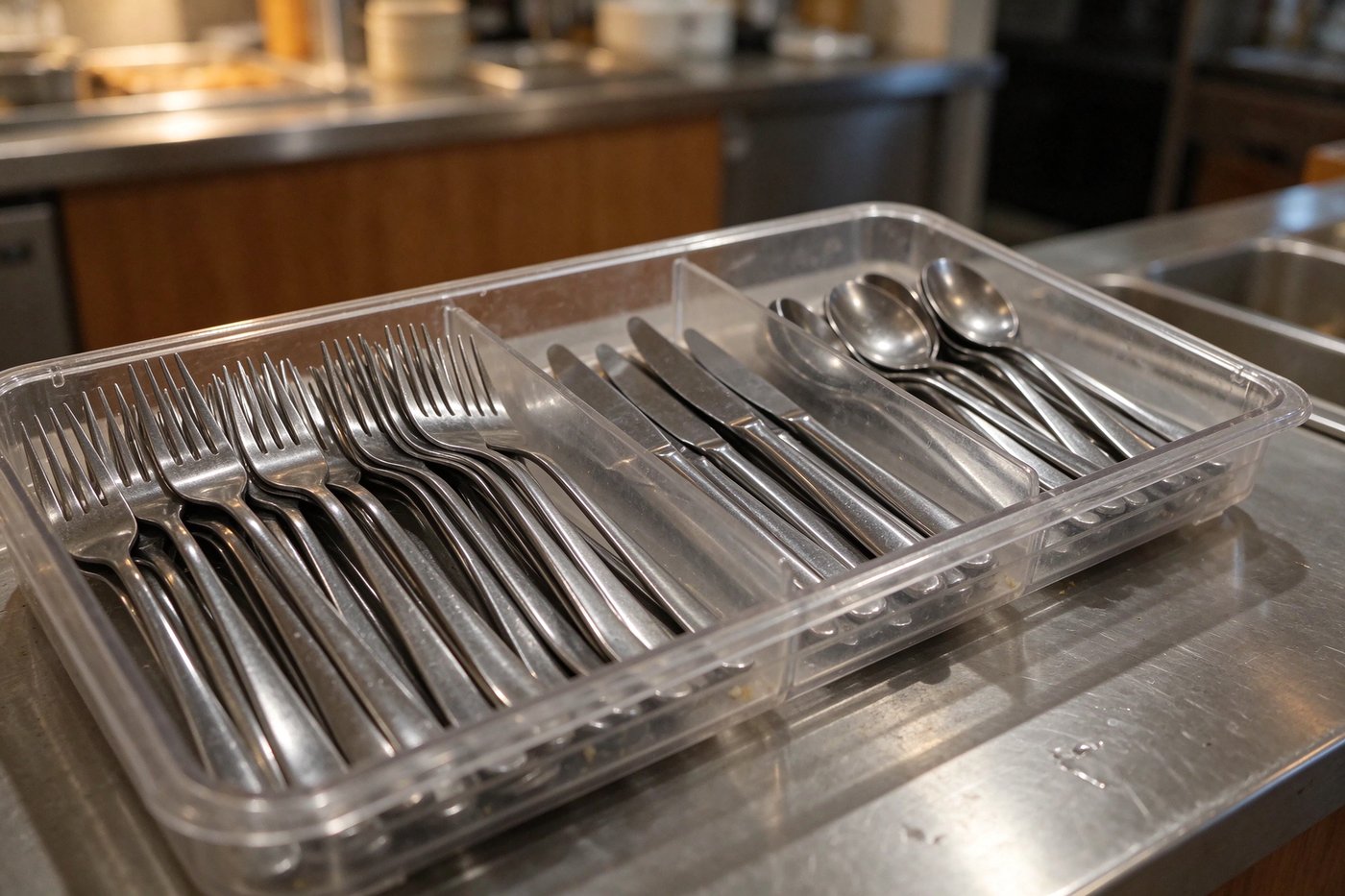
Four compartments is the practical maximum for a 400 mm tray that a person carries one handed. Forks, knives, spoons and a mixed slot is the usual split, and the mixed slot is where the odd items go rather than being dropped in with the forks.
Wash cycle and the acrylic cutlery tray
The tray lives in a machine, so the sheet has to match the machine. A 60 C wash and a 70 C rinse are within the working range of cast acrylic at 5 mm. A tray run through a 75 C rinse cycle every day will bow along the dividers within six months, and that is a specification mistake rather than a material failure.
Two habits shorten tray life more than temperature. Stacking wet trays, which traps water against the compartment base, and using a scouring pad on the rim, which leaves a scratched edge where crazing begins. A cloth and a neutral detergent are enough.
Trays are supplied to the cutlery mix and tray count of a service line, with optional colour tint per compartment so a station can be restocked by a single person.
Send cutlery mix, tray count and dishwasher temperature to oversales@rpplexiglass.com for a quote.
Back of house storage has a companion problem in paper handling, covered in the paper tray guide covers that part of the specification.
Frequently Asked Questions
Why a sloped compartment floor?
Cutlery settles flat and a customer takes the top piece, leaving the rest. A 3 degree slope keeps handles toward the front, so the tray presents one clean row instead of a pile.
Will it survive a commercial dishwasher?
At 5 mm cast acrylic and a wash cycle at 60 C, yes. Above 70 C the sheet softens and the tray distorts, which is why the tray is specified against the machine, not against a generic standard.
Should the tray have drainage holes?
Yes, four 8 mm holes at the low corner. Wet cutlery in a tray smells within an hour, and standing water at the compartment base is where crazing starts.