
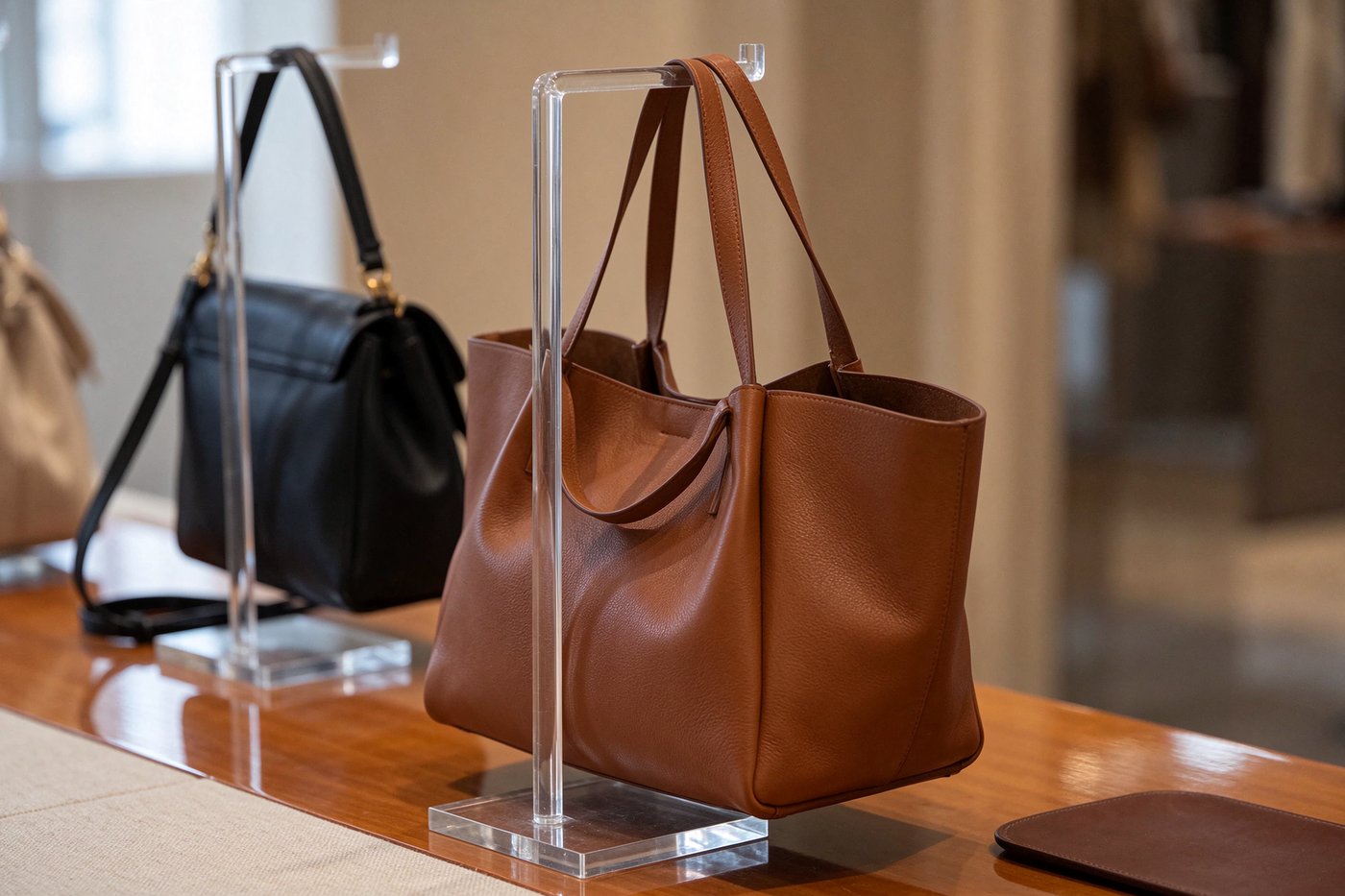
A luxury reseller in Dubai sent a photograph rather than a specification: three acrylic handbag display stands on a counter, one cracked at the base after a customer lifted a structured tote by the handle. The cause was not the acrylic. It was a 6 mm base with a 300 mm rod and no counterweight, so every lift loaded the bond line instead of the base plate.
The rebuild moved to 10 mm cast acrylic for the base, a 25 mm cast rod, and a 15 mm setback from the base edge. That geometry is the difference between a display that survives a season and one that does not.
Load path in an acrylic handbag display stand
A tote with a chain strap can weigh 2.5 kg empty and 4 kg merchandised. Pulling it off a T-stand applies a moment at the rod root roughly equal to the bag weight times the rod height. At 400 mm, that is a 16 Nm moment on a joint that a 6 mm base cannot spread.
- Base plate: 10 mm cast acrylic, 200 x 200 mm minimum, 250 x 250 mm above 400 mm height.
- Rod: 25 mm cast acrylic, solvent bonded into a 26 mm bored socket, not surface bonded.
- Interface: 2 mm wool felt under the base, which also stops the plate scratching lacquered counters.
- Setback: 15 mm from plate edge to rod centre, so the moment arm stays inside the base outline.
Security, cleaning and the details buyers notice
Boutiques that leave stands on open counters need a tamper path. A 4 mm stainless cable through a 6 mm hole drilled 40 mm from the rod, anchored to the counter, keeps the stand in place without a visible padlock. The hole must be drilled at low speed with a backing board; acrylic cracks if the bit grabs.
The visible details matter just as much. A rod polished to optical clarity against a clear base shows a bright joint line; a flame-polished base edge and a 45 degree chamfer read as a finished product rather than a cut sheet. For dark counters, black cast acrylic hides the felt and the cable entirely.
What River People can hold to
River People bonds rods into bored sockets on a jig, not on the bench top, and checks each stand for squareness before packing. Runs from 50 to 500 units ship in 18 to 22 days, with base plates nested on a CNC bed so the 200 x 200 mm footprint repeats within 0.4 mm.
Tell us your bag weights and counter height at oversales@rpplexiglass.com and we will confirm base size, rod diameter and cable drilling.
Where the counter is low, a stepped riser does the same job with less rod height; the acrylic display riser guide sets out the step heights.
Frequently Asked Questions
Can the stand be made in coloured acrylic?
Yes. Black, white and smoke cast sheet are standard, and a 3 mm colour cap bonded to a clear base gives a two-tone look without losing the polished rod. Colour matching is done against a physical swatch, not a screen.
Will a 10 mm base scratch a wooden counter?
Not with the felt interface. Without it, grit under the plate will mark both the lacquer and the acrylic within weeks.
What height is practical for a handbag display?
300 to 400 mm for shoulder bags, 450 to 500 mm for totes that need the strap to hang clear. Above 500 mm the base should go to 12 mm.