
The curator of a university collection had a straightforward question: three drawers of pinned beetles had been reduced to antennae and dust, and the wooden cabinet was only four years old. Dermestid larvae had entered through the drawer runners. The rebuild used a sealed acrylic insect display case, and the specification below is what came out of that project.
Sealing an acrylic insect display case
- Body: 5 mm cast acrylic, solvent cemented corner joints
- Seal: 4 mm EPDM gasket in a machined channel, 2 mm compression
- Drawer height: 60 mm internal, 40 mm pin clearance
- Stack: 12 drawers, 12 mm base and top rail
- Front: 3 mm sliding pane with a finger notch
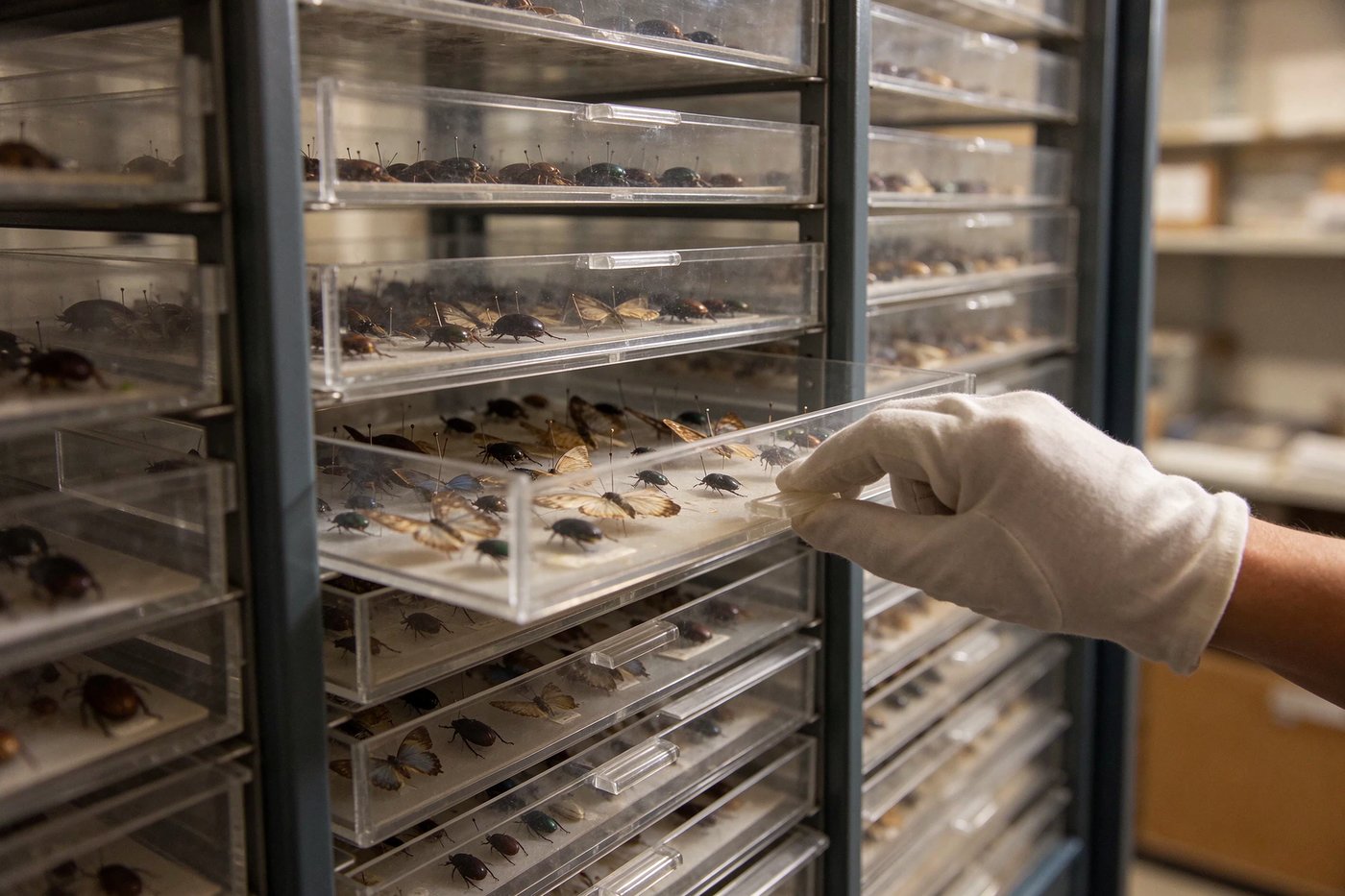
A gasket only works if it is compressed evenly. The channel is machined 2 mm shallower than the gasket section, so closing the drawer loads the seal along its whole length instead of at two corners. That single detail is the difference between a case that keeps dermestids out and one that looks sealed.
Light, colour and the acrylic insect display case
Acrylic transmits ultraviolet unless it is filtered. For a display wall facing a window, a UV-absorbing grade below 390 nm slows the fade of pigment in wing scales, and it costs less than replacing type specimens. The same sheet also removes the green cast that standard acrylic shows under fluorescent tubes.
Stack height is a structural decision, not a cosmetic one. Twelve drawers of pinned specimens weigh around 28 kg, and a 5 mm body carries that load comfortably because the weight passes through the rails. A fifteen drawer stack does not, and we recommend an aluminium frame at that point rather than thicker acrylic.
Cases are built to a cabinet footprint the institution already owns, or as a standalone unit with a lockable front pane.
Tell us drawer count, specimen height and cabinet footprint at oversales@rpplexiglass.com and we will quote the case build.
Specimen storage and specimen display share one problem, and the specimen display guide covers that part of the specification.
Frequently Asked Questions
Why acrylic rather than a wooden cabinet?
Wood and its adhesives release acetic acid, which corrodes pinned specimens and softens labels. Cast acrylic is inert, and a gasketed acrylic insect display case can be sealed against dermestids without fumigation.
What pin clearance is needed?
Large saturniids sit on pins up to 40 mm above the drawer floor. A 60 mm internal height with a 40 mm pin clearance keeps the tallest specimen clear of the lid and of the drawer above.
Can the case be stacked?
Yes, up to twelve drawers on a 5 mm body with a 12 mm top and base rail. Beyond that the stack needs an aluminium frame, because acrylic creeps under sustained load at room temperature.