
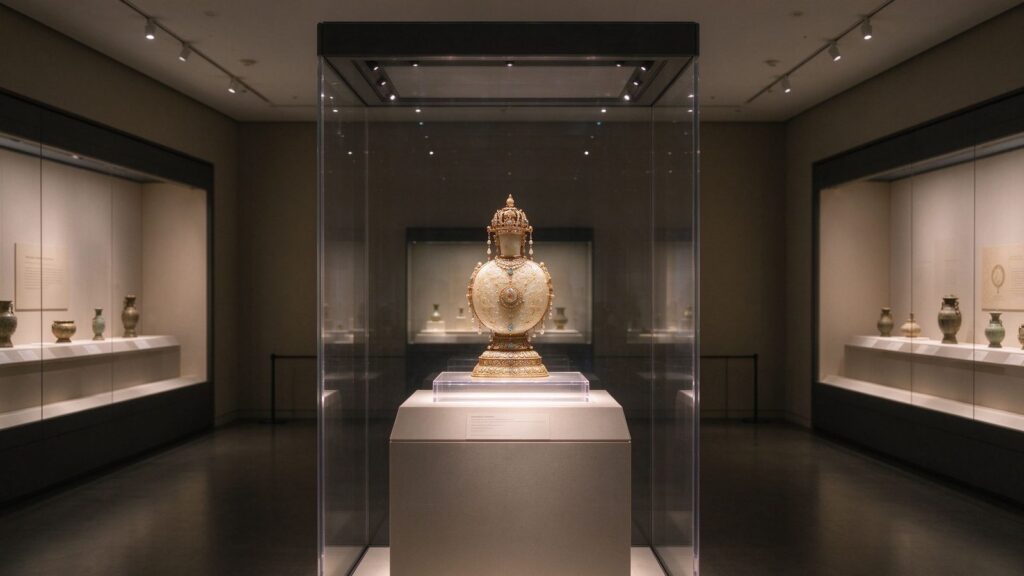
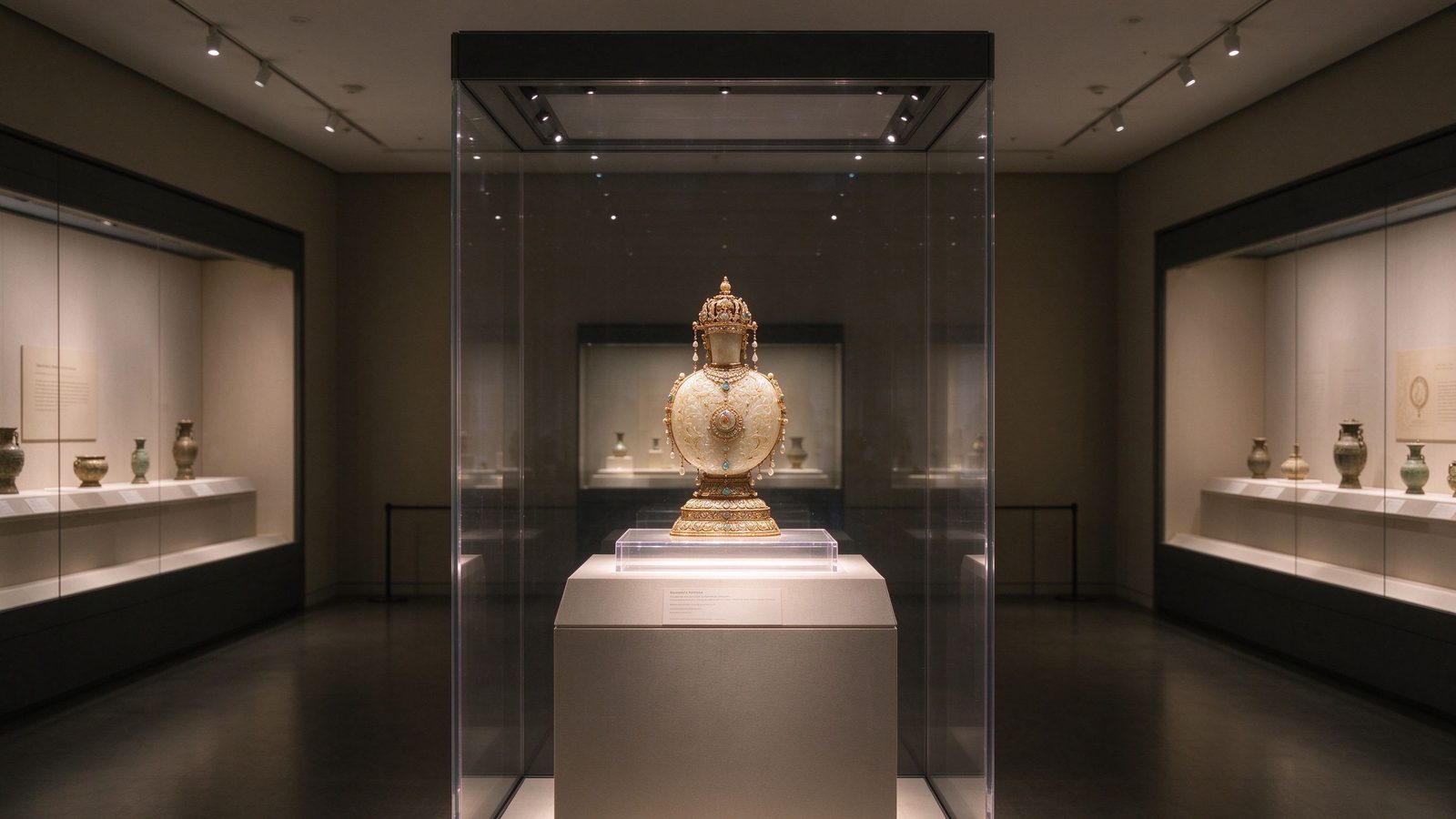
Choosing the acrylic for museum display cases is a conservator-grade decision, not a glazing afterthought. One poor sheet can fade a two-thousand-year-old textile, or put a distracting reflection between a visitor and a masterpiece. For exhibition fit-outs and museum projects, the material most often specified is optical-grade cast acrylic with UV blocking and an anti-glare finish. This guide covers what to look for in a museum display case acrylic, the real parameters behind it, and how a manufacturer such as RP River People delivers it.
Thank you for reading this post, don't forget to subscribe!A case worth copying: the permanent textile gallery
Consider a permanent gallery that must hold a collection of silk robes and watercolours. Daylight from a glazed roof, plus a bank of spotlights, makes ultraviolet and heat the two biggest killers of the objects. The specification team chose cast acrylic for every display case lid and vertical panel: 6 mm water-white sheet in a UV-blocking grade that filters roughly 95% of UV-A and UV-B, with an anti-glare surface on the viewing face. The silk and paper stayed stable, and visitors saw the exhibits almost reflection-free – the reason this museum acrylic has become a reference fit-out for later galleries.
Why acrylic for museum display cases
- UV protection built into the sheet – the blocking lives in the material, not in a film that can fade or peel.
- Optical clarity – water-white cast grades keep haze low and let the exhibit read true.
- Safer and lighter than glass – shatter-resistant for public spaces and easier for installers to handle.
- Machineable to tight cabinet tolerances – lids, curved fronts and multi-panel cases all made from one material.
What to specify: thickness, UV block, anti-glare and clarity
- Thickness: typically 3-10 mm for display cases; floor-mounted or freestanding cases move to thicker sheet.
- UV block: UV-blocking grades filter roughly 95% or more of UV-A and UV-B.
- Anti-glare / low-reflection: an anti-glare finish on the viewing face cuts reflections for angled viewing.
- Clarity: water-white cast acrylic with low haze and roughly 92% light transmission.
- Size: custom-cut to your cabinet dimensions rather than relying on off-the-shelf panels.
Fabrication details that protect the collection
For museum-grade sheet, how it is finished matters as much as the material itself. Confirm the following with your supplier:
- Precision cutting and clean edge polishing so panels sit flush in the frame.
- Anti-static treatment to reduce dust attraction on the viewing face.
- Masking film kept on until installation so the optical surface is never scratched in transit.
- Sealed frames and controlled humidity in the case, with openings only where the design specifies.
- Reinforcement and gasket details agreed from your cabinet drawings before cutting.
Market pain points – and our solution
Buyers sourcing museum acrylic run into familiar frustrations: UV protection supplied as a peeling film, glare that makes the case hard to read, sheets that arrive not flat, undersized against the drawing, or a supplier who cannot cut anti-glare sheet to a custom footprint. This is where RP River People comes in. As a manufacturer of cast acrylic sheet, we supply water-white, UV-blocking and anti-glare museum display case acrylic in custom size and thickness, hold tight tolerances through cutting and finishing, protect surfaces with masking film and export-grade packing, and support you from sample and grade confirmation through clear RFQ responses.
Frequently Asked Questions
Q: What thickness should I use for a museum display case acrylic?
Most display case glazing is 3-10 mm cast acrylic; freestanding or floor-mounted cases carrying more load move to thicker sheet. The exact figure depends on the panel size and how the lid and panels are framed, and we recommend a thickness after seeing your cabinet drawings.
Q: Does cast acrylic block UV on its own?
Only UV-blocking grades do, and they block roughly 95% or more of UV-A and UV-B in the sheet itself. If your supplier quotes a plain clear sheet, ultraviolet reaches the exhibit – so specify the UV-blocking grade rather than relying on a film that can fade or peel.
Q: Can you supply custom-cut anti-glare acrylic for our display cases?
Yes. We custom-cut museum display case acrylic to your exact dimensions, offer anti-glare (low-reflection) and UV-blocking options, and finish edges cleanly with masking film kept on until installation.
If you are specifying a museum display case acrylic – UV-blocking or anti-glare panels, custom-cut lids, or a full exhibition fit-out – send us your cabinet dimensions and target performance. Contact us for a quote and we will respond with a grade recommendation, a price and a realistic lead time: oversales@rpplexiglass.com.