
An acrylic pantry door panel is a moving insert, not a fixed glazed pane, and it needs room to breathe.
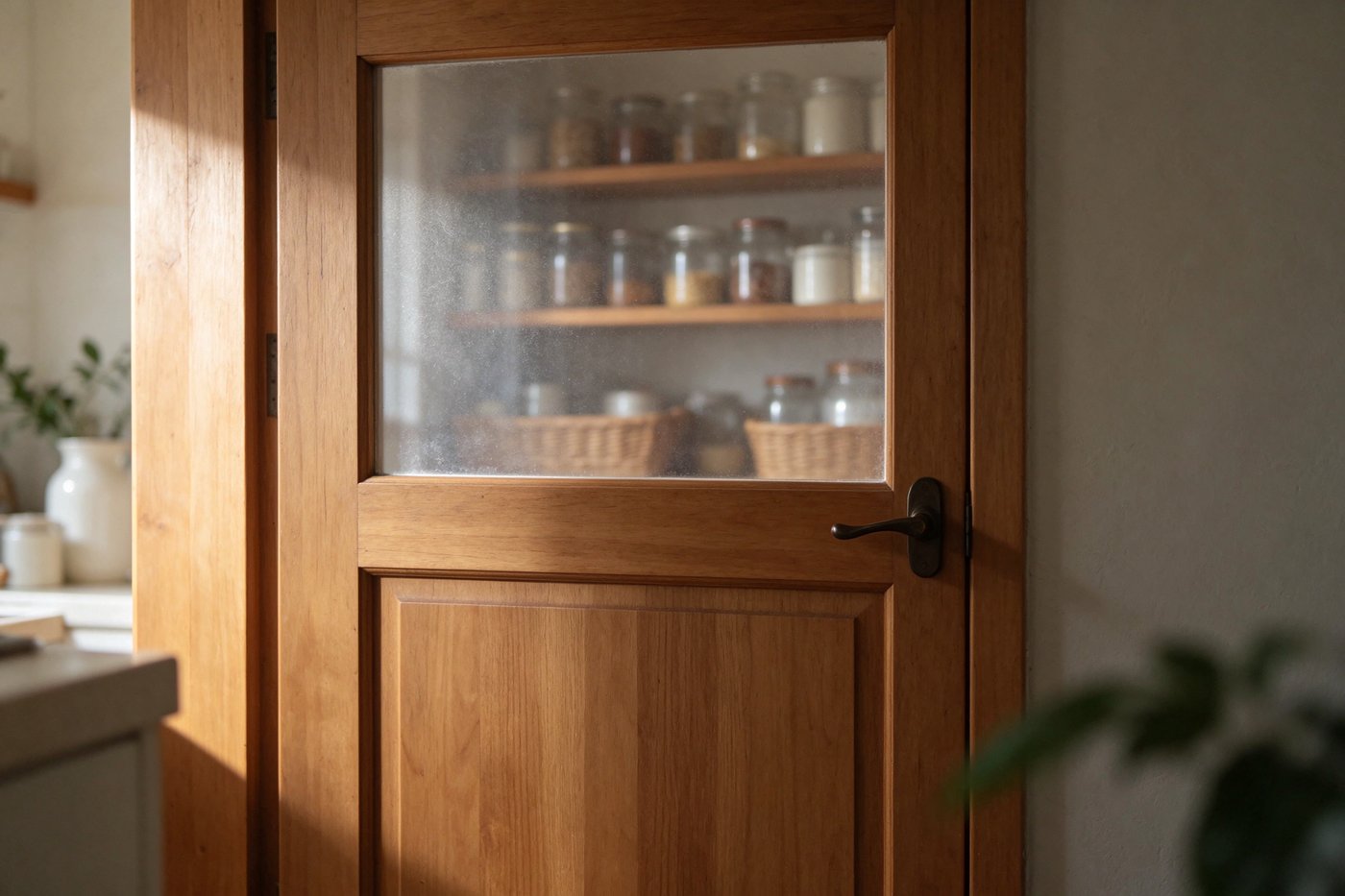
A kitchen fitter in Rotterdam replaced eleven pantry doors in one project with 4 mm acrylic inserts and had two complaints within a month: one panel bowed out of its rebate, and one shattered at a corner when the door was slammed. Both failures came from the same cause. The rebate had been cut for a 4 mm glass pane, and the acrylic was fitted with the same zero clearance.
An acrylic pantry door panel is not glass. It expands roughly seven times as much over the same temperature swing, it is softer at the edge, and it needs a little room to move. Once that is designed in, a 4 mm insert gives a pantry that reads as open shelving without the dust, and it costs far less than a glazed door.
The rebate and the clearance rule
For a 4 mm cast panel, allow 2 mm of clearance on each side inside the rebate and 3 mm at the bottom of a sliding door. The panel should sit on a rubber or EPDM bead, not directly on the timber, and the retaining bead should press on the face rather than the edge. Where the door is a slider, the panel must not carry the door load: the stiles do that, and the acrylic floats.
If the pantry door is hinged and will be slammed, a 4 mm panel in a 500 mm wide leaf is close to the limit. Either go to 5 mm or fit a soft-close hinge. A slam sends a shock wave through the stile and concentrates it at the corner of the insert, which is exactly where the Rotterdam panel failed.
Frosted, clear or tinted: choosing the look
- Clear 4 mm shows every shelf and every jar, which suits a styled pantry and a tidy household
- Frosted or satin 4 mm hides clutter and still passes about 70 percent of the light, and it is the usual choice for a working kitchen
- A bronze or grey tint cuts glare from a south-facing kitchen and reads warmer against timber stiles
- Textured surfaces hide fingerprints better than polished ones, at the cost of a slightly softer image
Colour and finish should be approved on a physical sample under the kitchen lighting, not on a screen. Frosted panels vary noticeably between suppliers, and two deliveries of the same nominal grade can differ enough to be seen side by side on adjacent doors.
Fitting sequence that avoids the two classic mistakes
Cut the panel 3 mm under the rebate size, polish all edges, fit the rubber bead dry, then insert the panel and check it can move a fraction with hand pressure before the retaining bead goes on. Do not seal the panel into the rebate with silicone: it locks the sheet and turns every temperature cycle into stress at the edge.
RP River People Plexiglass supplies pantry inserts cut to the door schedule, with polished edges, frosted or tinted options and a sample approved before the run. Send the stile rebate dimensions and the finish you want quoted.
Email the door schedule and the finish to oversales@rpplexiglass.com for a cut-to-rebate quotation with a physical sample before production.
Cabinets built around an acrylic insert usually need internal dividers as well, and the thickness rules in our acrylic shelf divider guide follow the same logic.
Frequently Asked Questions
Can I use 3 mm instead of 4 mm in a pantry door?
In a small fixed panel with a full frame, 3 mm works. On a hinged door that gets closed firmly, or a panel wider than about 450 mm, 3 mm bows and rattles. Four millimetre is the sensible minimum for a working kitchen.
Will a frosted panel still let enough light through?
A satin or frosted 4 mm panel passes roughly two thirds of the light, which is enough to light a pantry interior from a bright kitchen. If the pantry has no other light, specify clear instead and rely on tidy shelving.
How do I stop the panel rattling in a sliding door?
Fit a continuous EPDM bead on both faces and leave 2 mm side clearance. A panel held tight in a dry rebate will rattle as the door moves; a panel with a compliant bead sits still without being pinched.