
Walk any luxury pool project and you will find the owner’s first question is not about the pump or the lining; it is about the transparent wall. The choice of an acrylic swimming pool panel shapes the whole structural envelope, because the glazing must carry water load, resist chlorine and UV, and still look flawless after years of chemical exposure.
The selection order that works
- Define the span and water depth first – these set the thickness, not the look.
- Choose cell cast over extruded – cast PMMA holds dimension and clarity under load and chemical exposure.
- Confirm chemical compatibility – pool chemicals attack some plastics; cast acrylic is chlorine-tolerant when joints and edges are properly finished.
- Plan the machining – holes for skimmers, returns and fittings must be drilled before edge polishing, not after.
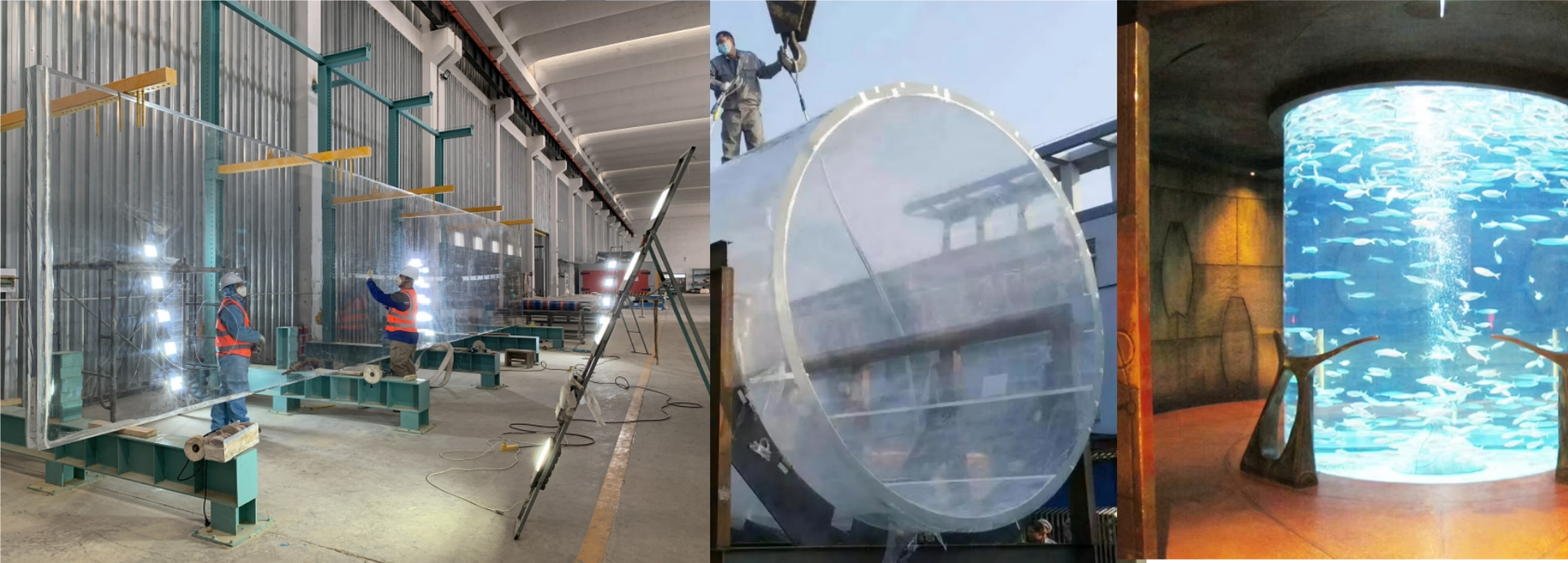
Worked example: a 2 m deep leisure pool
A hotel leisure pool, 2 m deep with an acrylic swimming pool panel spanning 3 m in the vertical wall, required a panel thickness in the 70 to 90 mm range once the frame restraint and a 1.5 safety factor were applied. RP River People cast that panel as a single piece, machined the perimeter, and pre-drilled the return line openings at the factory so the installer did no glass-site drilling that would have introduced stress risers.
Common mistakes that shorten panel life
The most common failure is specifying a panel thick enough for the depth but ignoring edge support, so the frame creates point loads that craze the acrylic. The second is drilling holes at the site without lubrication and correct tooling, leaving micro-cracks that later grow. The third is using a cleaner with ammonia or solvent on the surface, which attacks PMMA over time.
For the joining and sealing logic that also applies to tanks, our article on acrylic underwater tunnel sections covers the same edge and joint discipline used on larger runs.
Frequently Asked Questions
Q: Is an acrylic swimming pool panel safe for chlorine pools?
A: Cell cast acrylic is chlorine-tolerant when joints are properly made and the surface is cleaned with pH-neutral products; avoid ammonia and solvent cleaners.
Q: What thickness does a pool panel need?
A: It is a function of span, depth and edge support, typically from 50 mm for shallow spans to 90 mm and above for deep walls; provide your opening for a calculation.
Q: Do you pre-drill the panel for fittings?
A: Yes. RP River People machines perimeter and fixture openings at the factory so no site drilling introduces stress risers.
For a project-specific quotation on cast acrylic panels, email oversales@rpplexiglass.com with your opening size, water depth, support layout and drawing.