
The hardest part of a teller line is not the panel. It is the currency tray: a hole in a rated barrier is where the rating is lost, and most failed bank glazing inspections fail at that opening rather than at the glass.
The build for a standard branch
A four-position teller line in a mid-size branch used 25 mm clear polycarbonate rated to UL 752 Level 1, set in steel frames between positions, with a 300 mm × 150 mm deal tray at each station. Panels ran 1,200 mm wide × 1,100 mm high above a 900 mm counter.
Level 1 covers the 9 mm handgun threat that drives most branch risk assessments. Where the branch handles high-value transit or sits in a higher-risk district, Level 2 at 32 mm is the usual upgrade, and the frame has to grow with it.
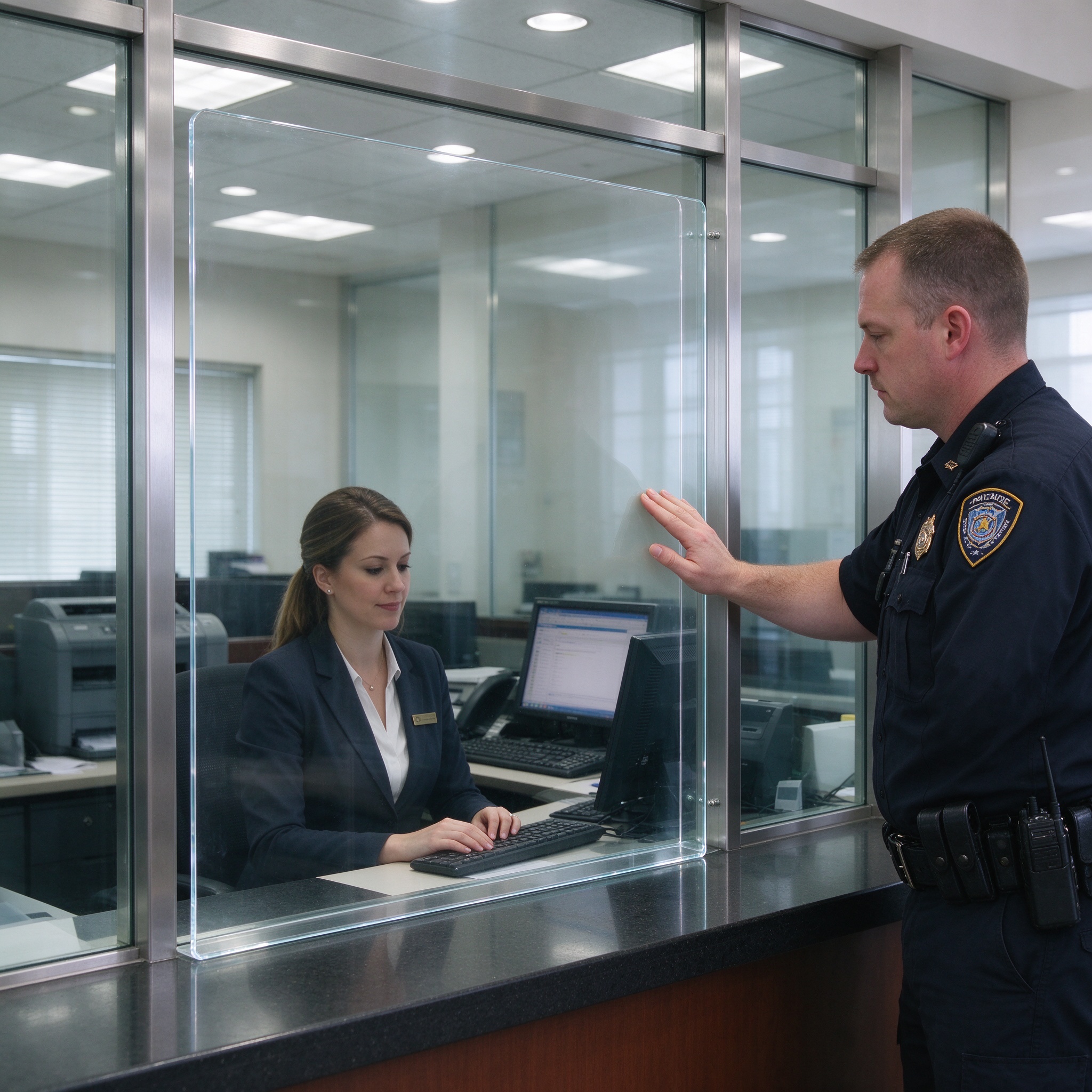
The tray is the weak point –>
A 300 × 150 mm opening removes about 15% of the panel area, and a plain cut hole also removes the structural continuity that made the sheet rated. The correct detail is a fabricated tray assembly: the polycarbonate is cut and the opening is fitted with a steel or reinforced tray that carries its own rated insert, with a rotating drum or a hinged pass-through that closes.
- Opening cut on a CNC with radiused corners, never square — a square corner is a crack origin.
- Tray body in 3 mm stainless with a 20 mm PC insert, sealed to the main panel.
- Gap between drum and frame held under 6 mm so nothing can be passed through.
- Speech holes at 8 mm with a 12 mm acoustic sleeve; larger holes defeat the barrier.
Keeping the branch open during install
Work was sequenced one position at a time over four nights. Each night: remove the old glazing, set the frame, fit the panel and tray, test the drum, then re-open the position in the morning. Doing all four at once would have closed the branch for a week and cost more in lost service than the glazing itself.
The general bank glazing case is covered in bulletproof window for bank, and the institutional variant in security glazing for courthouse.
Frequently Asked Questions
Q: What polycarbonate thickness is used for bank teller windows?
A:25 mm clear polycarbonate typically meets UL 752 Level 1 for a 9 mm handgun threat. Branches facing a higher risk assessment move to Level 2 at around 32 mm, which also requires a heavier frame.
Q: Does the currency tray reduce the ballistic rating?
A:It can, if it is a plain cut hole. A rated barrier needs a fabricated tray with its own rated insert and a closing drum, radiused corners and a gap under 6 mm, or the opening becomes the weakest point in the line.
Send the threat level, opening size and fixing condition to oversales@rpplexiglass.com for a rated polycarbonate panel quotation with UL 752 test backing.