
Four quotes for the same bank elevation, same size, same nominal “bulletproof polycarbonate”: USD 210, 340, 520 and 780 per sheet. Nothing in the drawings explains the spread, because the spread is not in the sheet. It is in the four decisions made before the sheet is cut.
Decision one: the level, which sets the thickness
- UL 752 Level 1 (9 mm handgun, 124 grain) — 19–25 mm polycarbonate laminate
- Level 2 (357 Magnum) — 25–32 mm
- Level 3 (44 Magnum) — 32–38 mm
- Level 5–7 — glass-clad or multi-layer builds, typically 38–50 mm total
Thickness is nearly linear in cost and highly non-linear in weight. A Level 3 panel on a 1,200 × 1,500 mm opening weighs about 82 kg against 54 kg for Level 1, so the frame, the anchors and the lifting method all change with the level.
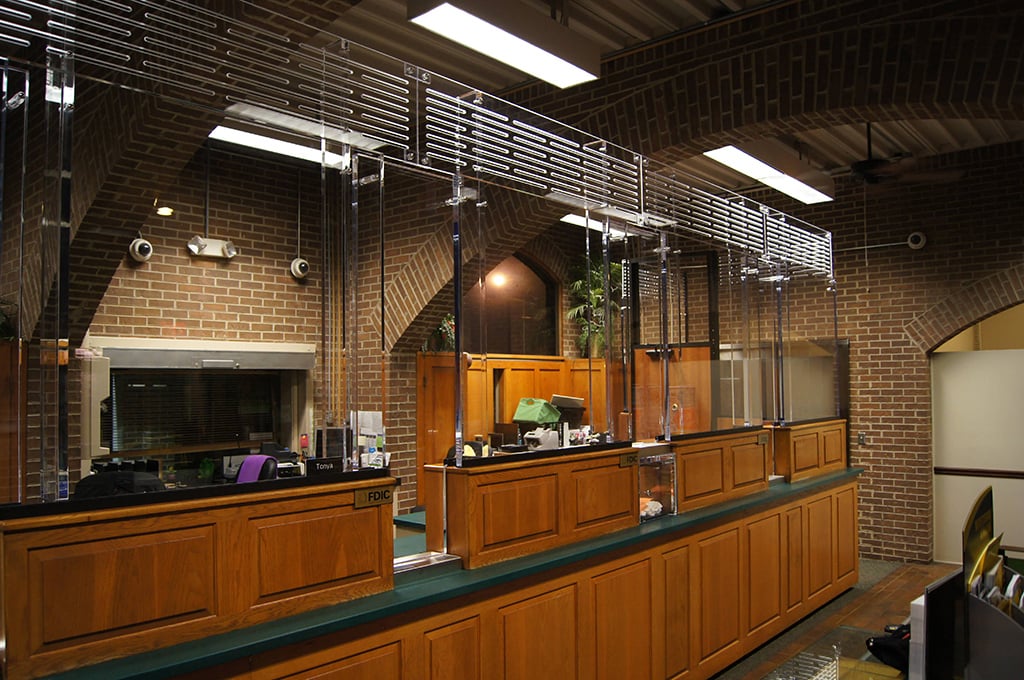
Decision two: the build, laminate or glass-clad
A laminated polycarbonate panel is several PC plies bonded with a thermoplastic interlayer; a glass-clad panel puts a glass facing on a PC core and buys scratch resistance and a harder first surface at the cost of weight and edge fragility. On a teller line the laminate wins because the panel is handled and cleaned daily; on a courthouse facade the glass-clad version wins because the surface must survive a decade of cleaning.
Decision three: edge and frame interface
Ballistic panels are not cut with a knife. Edges are routed, chamfered and sealed, and the seal matters because a delaminated edge loses its interlayer bond and the panel fails at the perimeter, not the centre. Edge work is typically 8–12% of the panel price and 100% of the failure mode.
Decision four: documentation
A test report naming the build, the level and the ammunition is the difference between the 210 quote and the 780 quote. If the quote does not name a report, ask for the report number and the panel build it covers before comparing price. The level-by-level rating breakdown shows what each report has to contain, and laminate build options cover the multi-layer route.
Frame cost moves with the panel, and the panel is usually quoted alone. A Level 3 build at 38 mm needs a deeper rebate, heavier anchors and a fixings pattern that can carry the weight without pinching the laminate. On a 20-opening bank branch that framing difference is often larger than the difference between the two panel prices, and it never appears in a per-sheet comparison.
Replacement is the other cost nobody prices. A ballistic panel can be damaged by a single impact event and a teller-line unit may need replacement within its service life; a spare panel in the stores costs less than an emergency airfreight from China. Ask for the spare price at the same time as the main order, because the second unit is always more expensive than the one on the original quotation.
Delivery format changes the quote more than the panel count. Ballistic panels above 1,500 mm cannot be shipped flat in a standard crate without a frame, so a small order carries a one-off crate and cradle cost that a 40-panel order spreads across the units. Ask what the crate costs separately before comparing a sample order with a production order.
For a per-sheet price against a real threat level and panel count, email oversales@rpplexiglass.com with the elevation and we will price the schedule, not a single sample.
Buyers comparing four quotes normally need one of these answers first.
Frequently Asked Questions
Q: Why do bulletproof polycarbonate quotes vary three-fold?
A: Because the quotes describe different levels, builds, edge treatments and documentation. The sheet is the same family; the specification behind it is not.
Q: How heavy is a Level 3 bulletproof polycarbonate panel?
A: A 1,200 × 1,500 mm panel at 32–38 mm weighs about 82 kg. Level 1 at 19–25 mm on the same opening is about 54 kg, which changes the frame and lifting plan.
Q: Is a test report included in the price?
A: Only if the quote says so. Ask for the report number and the build it covers; a panel priced without documentation is priced as an untested sheet.