
Extruded PMMA sheet is the workhorse of acrylic fabrication – the first choice when a project needs tight thickness tolerance, uniform optical clarity and controlled cost across large runs. Where cast acrylic wins on ultra-thick sections and clean laser edges, extruded PMMA sheet earns its place in lightboxes, LED light guides, retail panels and protective glazing. As a fabricator or importer, knowing what extruded PMMA sheet actually delivers – and where it falls short – prevents the two most expensive mistakes in acrylic buying: over-specifying the wrong process and under-specifying the finish.
Thank you for reading this post, don't forget to subscribe!A Real Project: Backlit Signage for a 120-Store Retail Chain
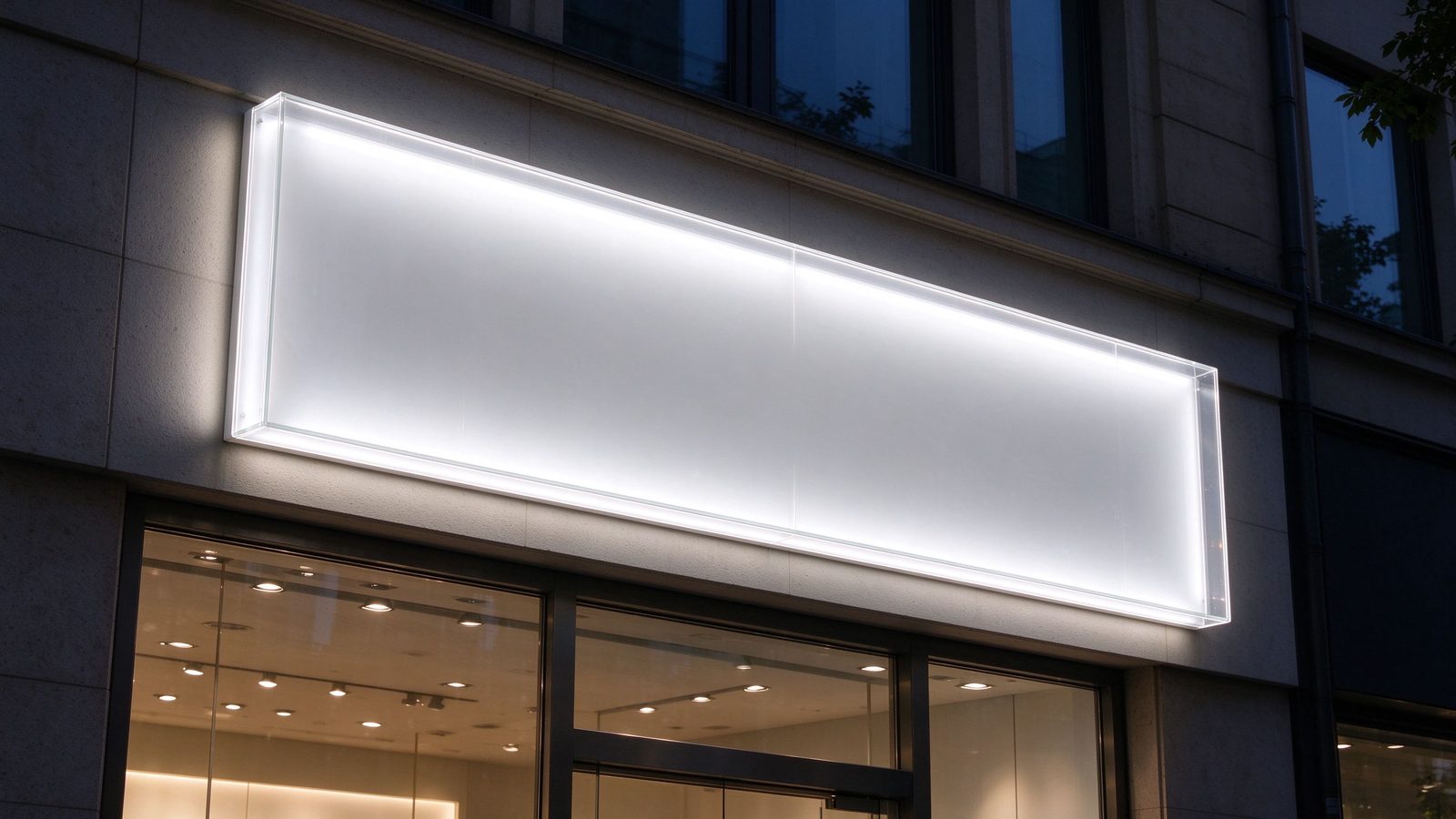
A global retail chain needed to replace the backlit brand panels in 120 stores at once. The spec called for one consistent face colour, even light distribution and a guaranteed outdoor life. Here is how the extruded PMMA sheet was specified and why the supplier landed on extrusion rather than cell-cast.
- Material: extruded PMMA sheet with a co-extruded UV-resistant layer, clear with a matte back-painted face for even glow.
- Sizes: 1250x2450mm sheets, 4mm thickness, cut to individual fascia panel sizes with CNC routing and drilled mounting holes.
- Tolerance: +/-0.2mm on 4mm, so every panel transmitted light at the same brightness – a real problem with thicker cast where gauge varies.
- Finishing: laser-cut edges, silk-screen back print, and a removable masking film shipped on to protect the face in transit.
The engineering lesson: for a uniformly illuminated, thin, repeatable panel across many stores, extruded PMMA sheet beat cast on both gauge consistency and unit cost. Cast was unnecessary at 4mm. Specifying the extrusion process saved roughly 20% on the panel budget while hitting the same optical target.
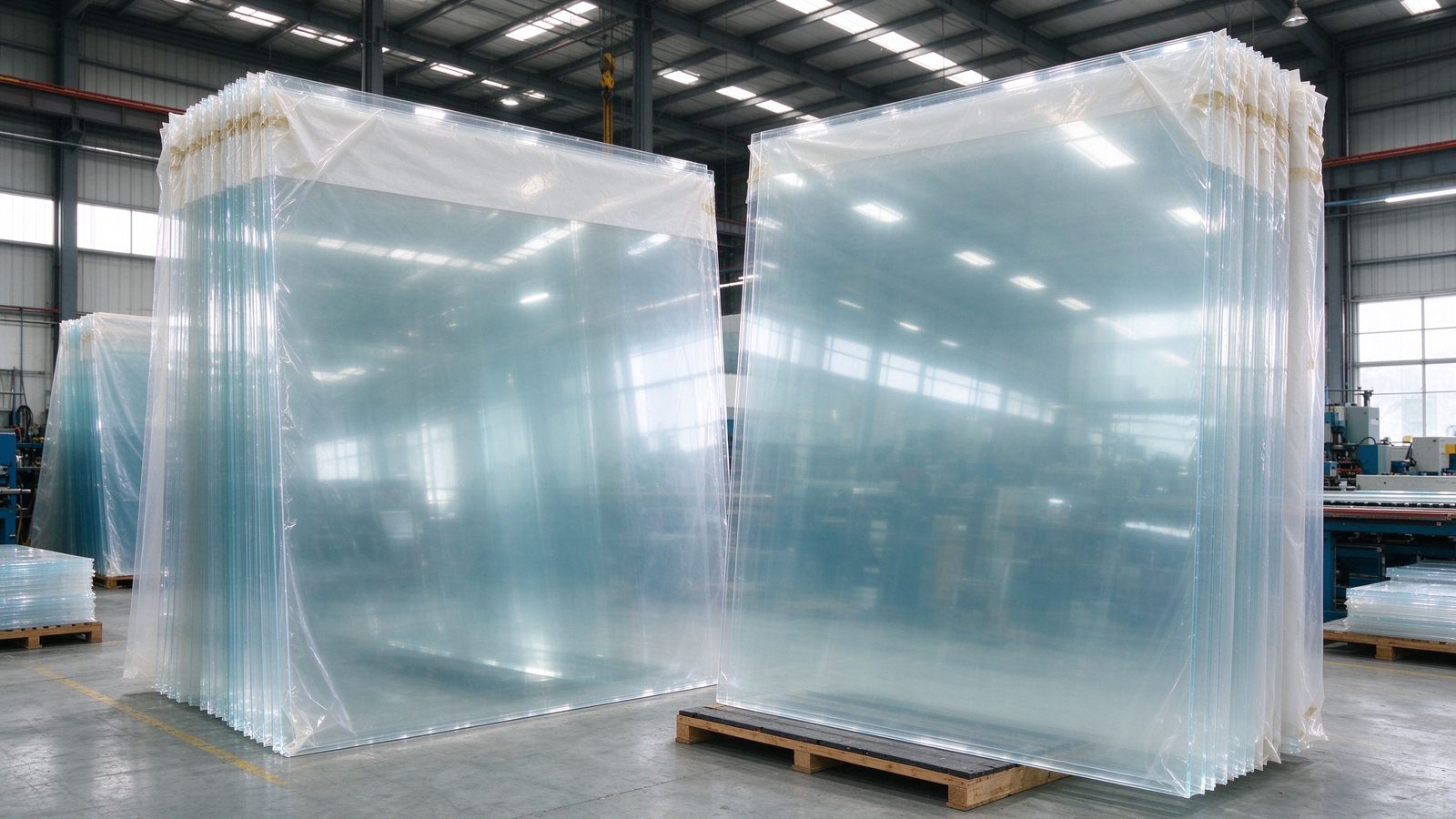
Extruded PMMA Sheet: Thickness, Tolerance and Sizes That Matter
Extrusion produces sheet in a continuous process, which is why thin and mid-range gauges come out flatter and more uniform than cast. That makes it the default for backlit and light-guide work. The numbers below are what importers actually order.
- Standard sizes: 1220x2440mm, 1250x2450mm, 1830x3660mm and 2030x3050mm are the stock formats; larger and custom cut-to-size panels are available on request.
- Thickness range: 1mm to 25mm in standard extrusion; the 3-6mm band covers most lightboxes, displays and machine panels.
- Thickness tolerance: typically +/-5% or +/-0.2-0.3mm on thin gauges – tighter and more consistent than cell-cast at the same thickness.
- Surfaces: clear, frosted, mirror and solid colours; a co-extruded UV layer can be added for outdoor duty.
When you order by size, give the exact finished panel dimensions and whether cutting, drilling, edge polishing or printing is included. This avoids surprises: a cut-to-size extruded PMMA sheet order should state the sheet grade, thickness, tolerance band and surface finish so the fabricator can quote correctly and deliver a panel that mounts first time.
The Two Mistakes That Cost Importers the Most
- Choosing the wrong process. Thin, large, backlit or thermoformed parts belong on extruded PMMA sheet; only go cast when you need ultra-thick sections (15mm+) or a specific laser-edge quality. Specifying cast for a 4mm lightbox pays for capability you never use.
- Ignoring UV and surface protection. An outdoor panel without a UV layer will yellow in 1-2 years. And if the masking film is left on through cutting, it can weld to the face and leave residue. Specify UV protection and plan when to remove the masking film.
RP River People Plexiglass manufactures and supplies extruded PMMA sheet alongside cast and specialty grades, with stock sizes, cut-to-size and export packing that protects the surface and edges for sea or air freight. We help importers and fabricators lock the right grade, thickness and finish before the order goes in, so the sheet arrives flat, uniform and ready to fabricate.
Frequently Asked Questions
What thickness of extruded PMMA sheet works best for a backlit lightbox?
For most illuminated signage and light guides, 3mm to 5mm extruded PMMA sheet is the practical range. Its tight thickness tolerance keeps light output uniform across a large panel, while staying light and easy to CNC. Go 6-8mm only when the panel is very large or needs structural rigidity.
Is extruded PMMA sheet UV resistant for outdoor use?
Not automatically. Standard extruded PMMA sheet can yellow and chalk after 1-2 years outdoors. Specify a co-extruded UV-resistant layer – the same acrylic grade with an added UV stabiliser cap – if the panel faces sunlight. It typically extends outdoor service life to 5-10 years depending on orientation.
What is the thickness tolerance of extruded PMMA sheet?
Extrusion gives a tighter and more consistent gauge than cell-cast on thin and mid sections. A common spec is +/-0.2mm to +/-0.3mm, or about +/-5% of nominal thickness. That uniformity is exactly why extruded PMMA sheet is preferred for light guides, backlit panels and thermoforming.
Ready to quote your project in extruded PMMA sheet? Contact RP River People Plexiglass at oversales@rpplexiglass.com for a fast, transparent quote with the right grade, thickness and finish for your application.