
A large acrylic aquarium viewing panel is one of the most demanding engineering jobs in the sheet business. It is not a stock cut – it is a cast, machined and site-installed structure that has to hold back metres of water for decades without creeping, crazing or cracking. For public aquariums, oceanaria and underwater tunnels, the material is overwhelmingly cast PMMA (cast acrylic), because only cast sheet delivers the thickness, optical clarity and dimensional stability that a big viewing window demands. This is the engineering reality buyers need before they send an RFQ.
Thank you for reading this post, don't forget to subscribe!A Real Project: The Viewing Tunnel at a Public Oceanarium
Take a typical public oceanarium display: a curved viewing tunnel carrying several metres of water over visitor walkways, built from cast acrylic rings. This is the same family of work as a large aquarium viewing panel, and it shows exactly why cast matters and why the thickness figures buyers hear are real engineering numbers, not marketing.
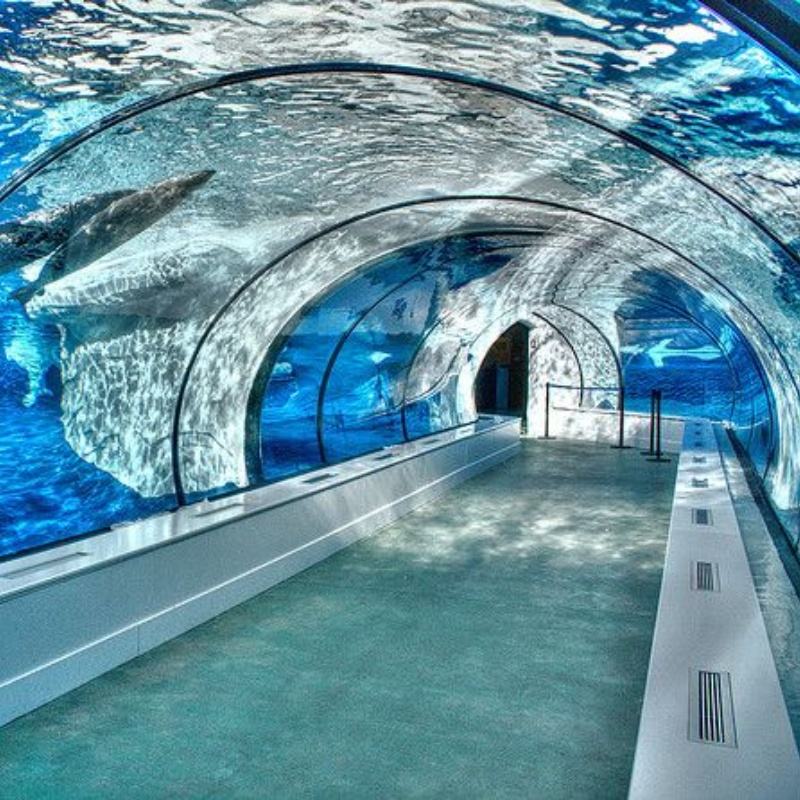
- Material: cast acrylic (cell-cast PMMA), optical grade, chosen over extruded sheet because thick sections only come from casting and because cast has better long-term creep resistance and optical stability under sustained load.
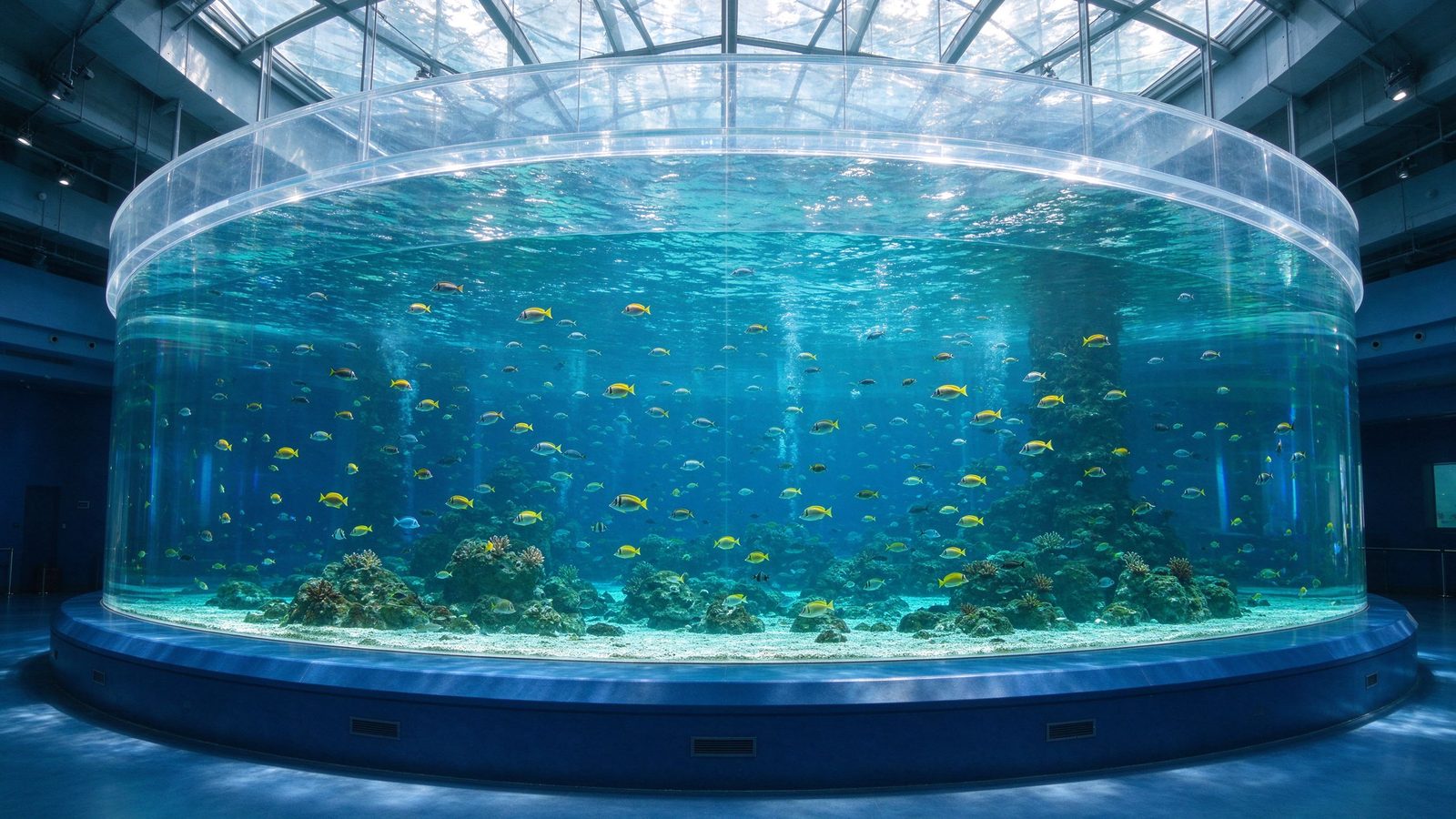
- Thickness: tunnel wall panels commonly run 100-200mm; large flat oceanarium windows at 2-3m water depth are typically 100-150mm, and can reach 200-300mm for deeper or larger spans.
- Sizes: flat viewing panels up to 3m x 10m and beyond, and tunnel segments formed to the required radius – the largest installations are assembled from multiple bonded sections.
How a Large Acrylic Aquarium Viewing Panel Is Engineered and Installed
Specifying a viewing panel correctly means looking at four things together: hydrostatic pressure from the water depth, the panel span and aspect ratio, the support and frame stiffness, and the optical requirement (low haze, high clarity). The thickness is then calculated so that deflection and stress stay within safe limits over the life of the window.
- Casting: thick sheets and curved segments are cast, then precision-machined to final dimensions with tight thickness tolerance across the panel.
- Fabrication: CNC profile machining, edge finishing and surface polishing give the optical face; mounting flanges and slots are machined to the frame detail.
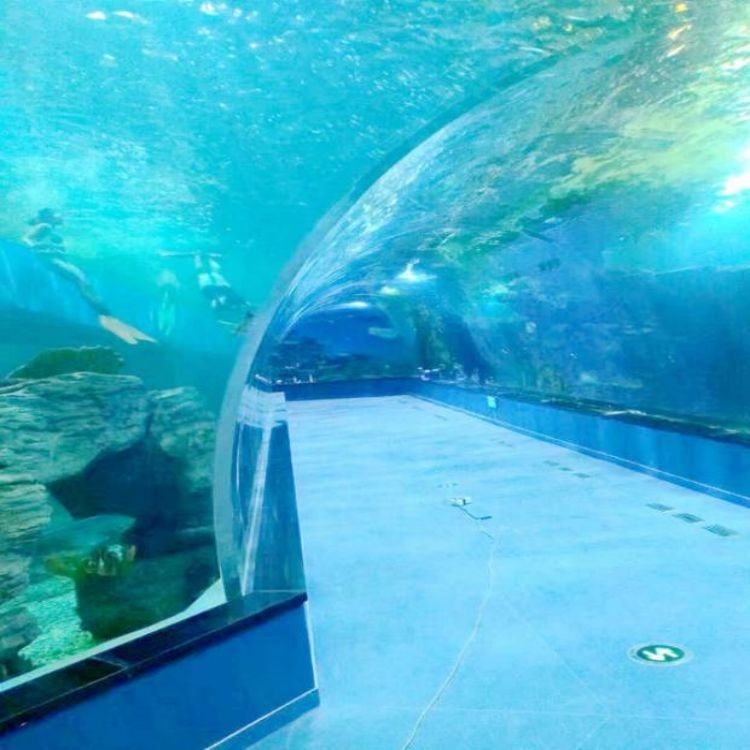
- Splicing: very large windows and tunnel rings are delivered as sections and bonded on site with structural acrylic adhesive; joints are load-tested before the tank is filled.
- Installation: panels are lowered into the prepared steel or concrete frame, sealed with compatible gaskets and bedding, and the support structure keeps the panel in slight compression.
The Two Mistakes That Fail Big Aquarium Windows
- Under-specifying thickness. A panel sized by ‘what looks thick enough’ or by budget instead of by a hydrostatic calculation will deflect, stress-craze or ultimately crack. Always send water depth and span to the supplier and let them calculate the safe thickness.
- Poor joint and support planning. Casting a beautiful panel is only half the job – the bonding seams, the frame stiffness and the gasket compatibility are what keep the window watertight for years. Overlooking these turns a great sheet into a leaking installation.
RP River People Plexiglass supplies cast acrylic for large aquarium viewing panels and underwater tunnel projects – thick, oversized cast sheets, curved sections, CNC machining, edge finishing and export packing that protects the optical face in transit. We work with oceanarium engineers and installers to confirm thickness, size, clarity and machining before production, so the panel arrives ready for site installation. If you are planning a viewing window or tunnel, send us the water depth, opening size and support detail and we will help you get the engineering right the first time.
Frequently Asked Questions
How thick should a large acrylic aquarium viewing panel be?
Thickness is set by water depth, panel span and support spacing – not by budget. In practice a panel at 2-3m of water with a 3m span commonly needs 100-150mm cast acrylic; deep oceanarium windows and tunnel segments can run 200-300mm. The calculation accounts for hydrostatic pressure and deflection, so the supplier needs the water depth and opening dimensions to recommend a safe thickness.
Can curved or tunnel panels be built from cast acrylic?
Yes. Large curved viewing panels and underwater tunnel segments are made by casting PMMA into the required curvature and radius, then precision-machining and bonding sections. Tunnel rings are often delivered in prefabricated segments and bonded on site with structural acrylic adhesive before load testing.
What information does a supplier need to quote an aquarium window?
Send the water depth behind the panel, the clear opening width and height, the frame or support geometry, and any structural load specification. With those figures a cast acrylic specialist can calculate thickness and give a real quote – a bare ‘per square metre’ price without this data is not reliable.
Planning a large acrylic aquarium viewing panel or underwater tunnel? Contact RP River People Plexiglass at oversales@rpplexiglass.com with your water depth, opening size and support detail for an engineering-first quote.