
How thick should an acrylic aquarium window be? It is the first question every buyer asks and the one most supplier quotes answer with a guess. The real answer is that the thickness is calculated, not chosen, and it depends on three numbers you control: the water depth at the window bottom, the width of the opening, and how the frame holds the acrylic.
The inputs that fix the thickness
- Water depth at the window base – the head of water pressing on the pane.
- Unsupported span – the widest dimension of the clear opening.
- Edge restraint – four-edge support lets the panel be thinner than two-edge.
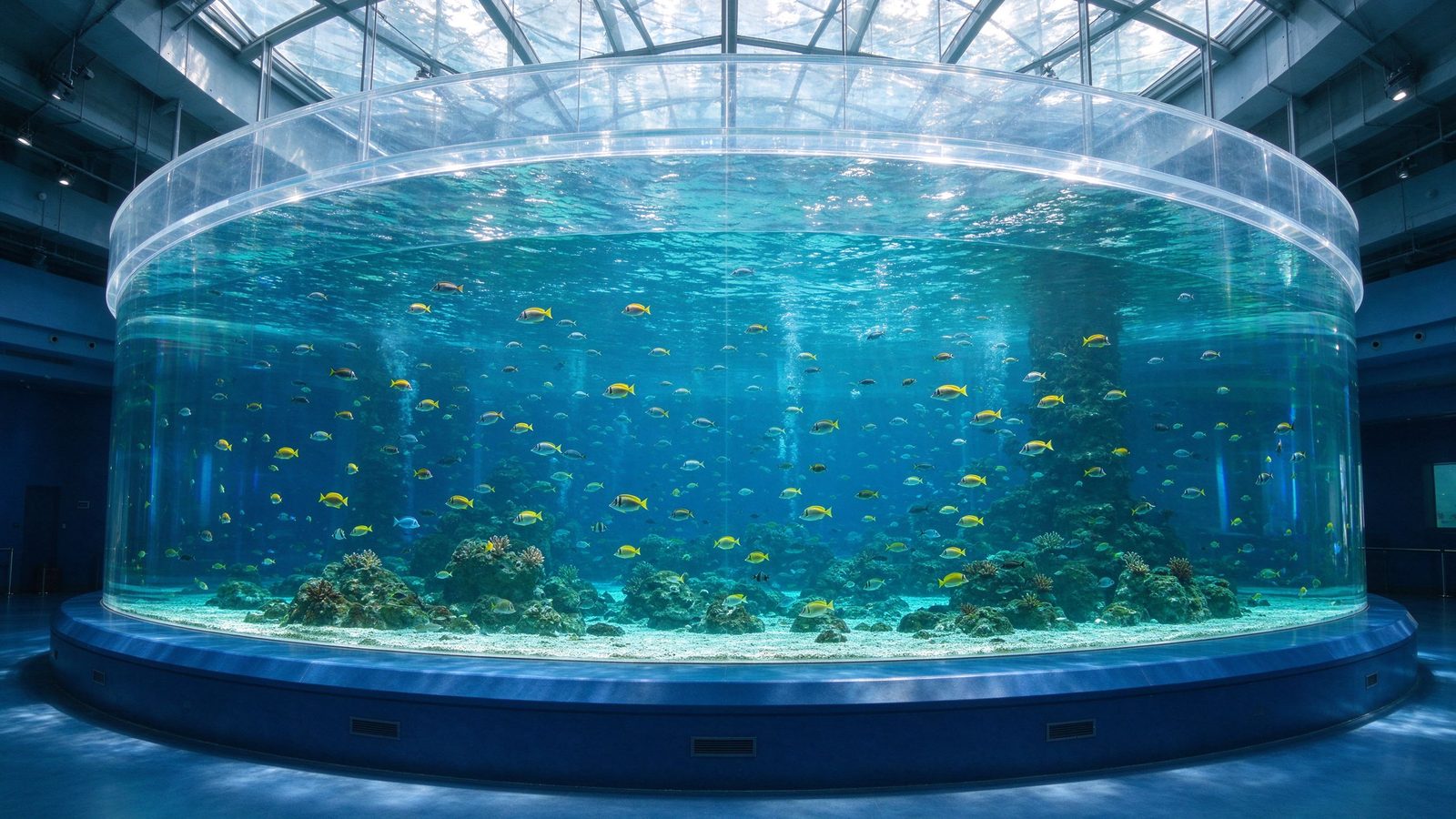
A typical calculation
For an aquarium viewing window 1.5 m wide, its bottom edge 2 m below the surface and supported on all edges, the calculated cast acrylic thickness lands in the 50 mm range. Deepen the water to 3 m or widen the opening, and the panel climbs toward 75-90 mm. RP River People runs this calculation for each opening, so the window is neither over-thick (wasteful) nor under-thick (unsafe).
The same span-and-depth logic is used across tanks; our article on large acrylic aquarium viewing panels explains the thickness calculation for public display windows.
Frequently Asked Questions
Q: Is 25 mm enough for an aquarium window?
A: Only for a small, shallow, well-supported opening; most windows need 40 to 90 mm depending on depth and span.
Q: Does edge support change the answer?
A: Yes; four-edge support significantly reduces the required thickness compared with a two-edge pane.
Q: What should I send for a calculation?
A: Opening width and height, water depth at the window bottom, and the frame support detail.
For a project-specific quotation on cast acrylic panels, email oversales@rpplexiglass.com with your opening size, water depth, support layout and drawing.