
Every week a buyer asks the same question in different words: how thick should acrylic be for my job? The honest answer is that thickness is set by three things — the span, the load, and how the panel is supported — not by a blanket number. A shelf, a window, a machine guard and an aquarium wall each want a different gauge.
The quick guide to picking thickness
| Application | Typical gauge |
|---|---|
| Display shelf / small sign | 3-6 mm |
| Machine guard panel | 6-12 mm |
| Sneeze guard / partition | 6-10 mm |
| Glazing panel (larger) | 10-25 mm |
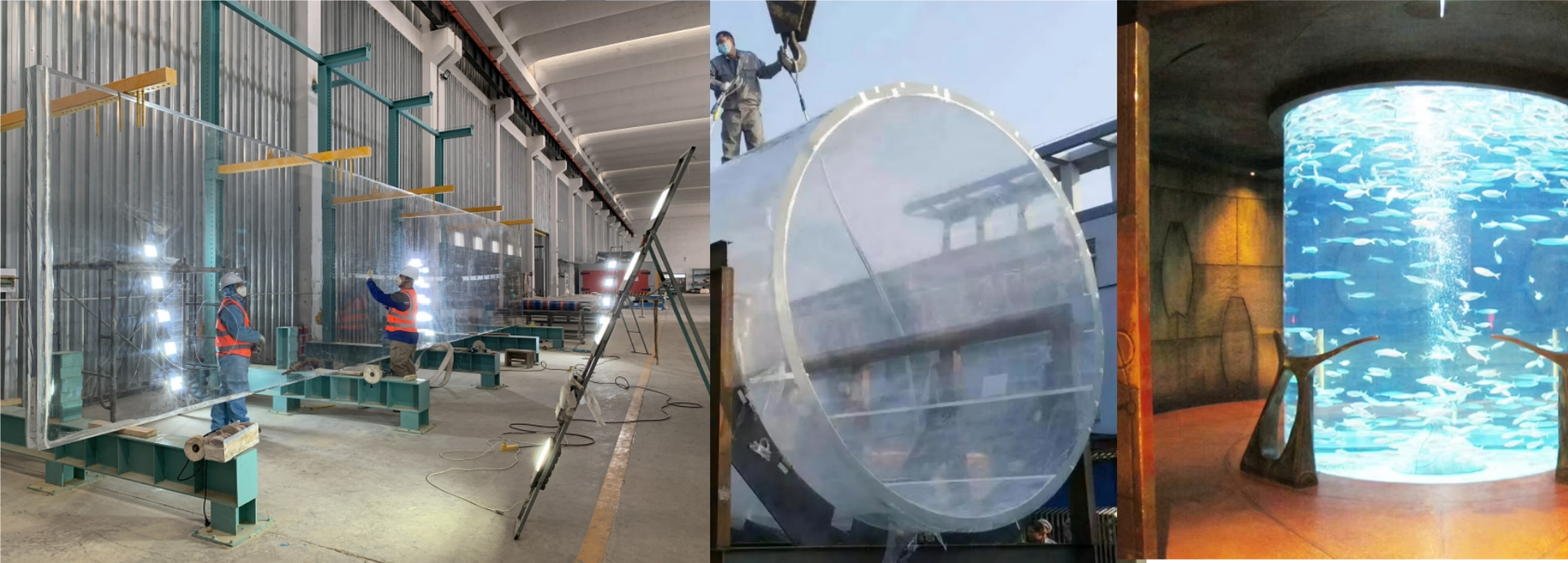
| Structural / water-bearing | 50-300 mm and up |
Why the number changes with the job
A small sign carries almost no load, so thin sheet is fine. A machine guard must resist impact, so it needs more gauge. A panel holding water or spanning a large opening must be calculated against pressure and deflection. The professional move is to let the application set the thickness, not to pick a number from a habit.
For the pressure side of the calculation, our guide on how thick an acrylic aquarium window should be walks through it, and for the size range, custom thickness cast acrylic sheets shows how gauge is cast to your need.
Frequently Asked Questions
Q: How thick should acrylic be for a simple display or sign?
A: For a small unloaded sign or display, 3-6 mm is typical; step up the gauge as the panel grows or takes load.
Q: How thick should acrylic be for a machine guard?
A: Machine guard panels commonly use 6-12 mm cast or PC sheet, sized against the impact risk and the panel span; confirm with a guard standard where required.
Q: How thick for a water-bearing acrylic panel?
A: Water pressure sets the gauge; aquarium and pool panels run from 50 mm up to 300 mm and beyond depending on depth and span.
For a project-specific quotation on thick cast acrylic sheets, email oversales@rpplexiglass.com with your thickness, sheet size and quantity.