
Whether is acrylic waterproof is the wrong question in the form most buyers ask it. The question arrives in almost every wet-area enquiry: is acrylic waterproof? The honest answer has two halves, and buyers who hear only the first half build bathrooms that fail.
Acrylic sheet does not absorb water, does not swell, does not rot and does not corrode. That is the first half. The second half is that a sheet is not a barrier system: water reaches the back of any panel through joints, fixings and capillary gaps unless the build-up is designed for it.
Is acrylic waterproof under constant immersion?
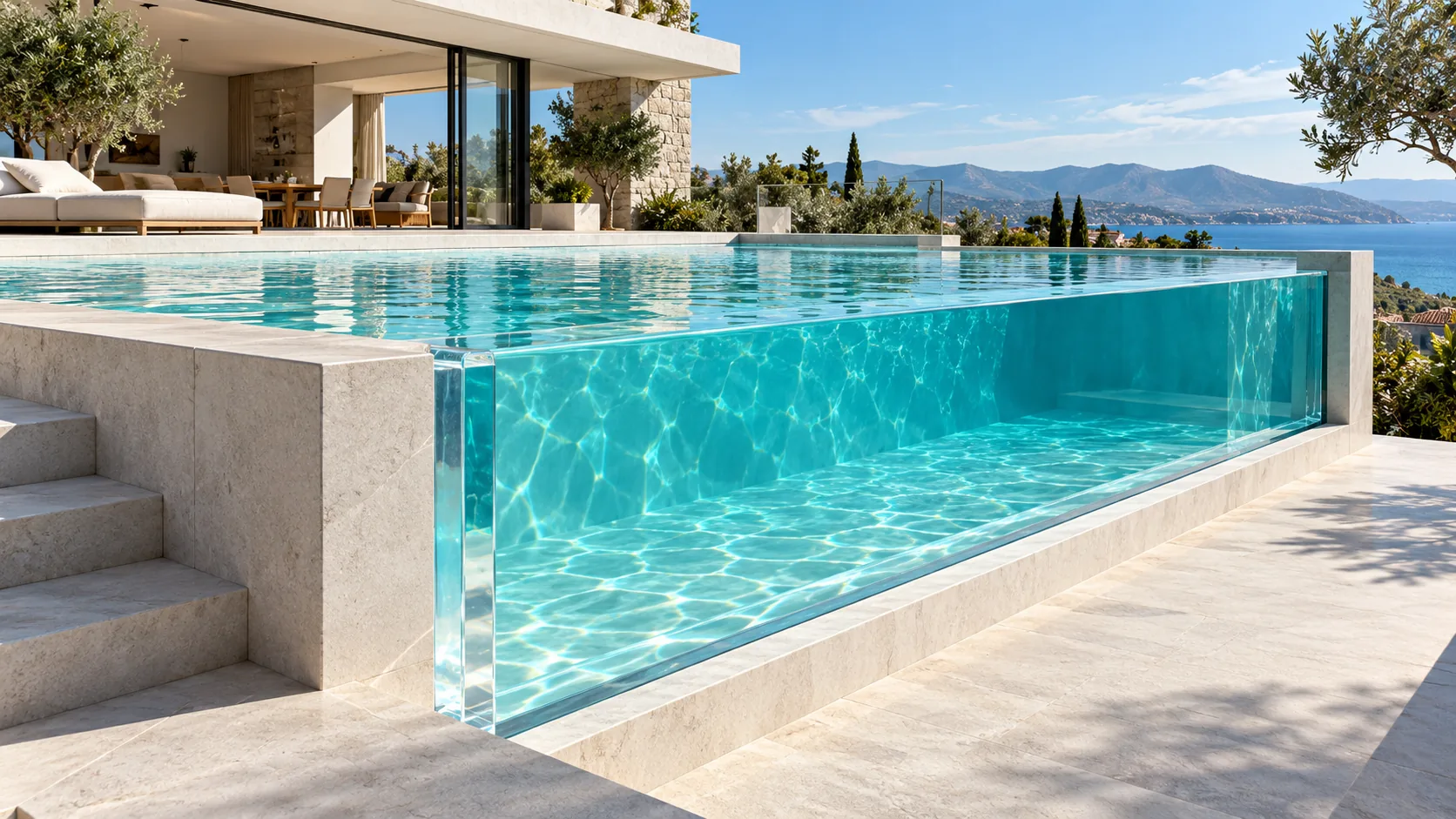
Immersion is not a problem. Cast acrylic is used for aquarium windows, pool viewing panels and underwater tunnels, where it sits under constant head pressure for decades. A 24-hour soak changes nothing measurable in thickness or clarity.
The two real effects are surface and stress. Prolonged contact with alkaline water, chlorine at high concentration or certain cleaning chemicals can dull the surface. And a panel held under differential moisture, warm on one face and cool on the other, will move; if it is over-constrained, that movement becomes stress and eventually fine crazing.
The joints are where water gets in
A waterproof material with a non-waterproof joint is a leaking assembly. In a shower enclosure, water reaches the panel back through the gap at the tray, through screw penetrations and through the silicone line if it is applied over a damp surface.
- Seal the wet side, not the dry side: silicone against the tile or tray, never against a painted wall.
- Keep fixings out of the wet zone, or use a gasketed fixing with a neoprene washer.
- Leave a 3 mm gap at the base for movement, filled with neutral-cure silicone.
- Never trap the panel between two rigid surfaces with no room to expand.
Where acrylic is the right choice in a wet area
Bathroom and shower panels, pool viewing windows, aquarium glazing, splashbacks in commercial kitchens and screens in car washes all work because the panel is supported, the wet face is sealed and the material is unaffected by the water itself.
Where acrylic is the wrong choice is as a substitute for a waterproof membrane behind tiles, or as a structural tank wall without a designed support frame. In both cases the material is fine and the assembly is not.
Temperature, chlorine and long-term clarity
Cast acrylic holds clarity in a pool environment for many years, but the surface does degrade if chlorine is maintained at spa levels and the panel is not cleaned. A monthly wipe with fresh water and a neutral detergent extends the life of the face considerably.
Thermal movement is the other long-term factor. A 2 m panel moving through a 15 degree swing grows by about 2 mm, so the frame must allow it. Pool and spa installations handle this with a compressible gasket rather than a rigid clamp.
For full immersion applications the engineering questions are pressure and thickness rather than water resistance; our note on underwater window pool panels covers the sizing side.
Testing a sample before you commit
If a buyer wants evidence rather than a claim, ask for a 72-hour immersion test on a finished joint, not on a bare sheet. The sheet will pass every time. The joint is what the project needs to know about.
River People supplies cast acrylic for wet-area and immersion work with the grade and thickness matched to the application, and can advise on joint and frame detail before the panels are cut.
Send the wet-area drawing, water temperature and cleaning regime to oversales@rpplexiglass.com and we will confirm the acrylic grade and thickness, and flag the joint details that need sealing on site.
Frequently Asked Questions
Is acrylic sheet waterproof?
Yes in the material sense: it does not absorb water, swell or corrode, and it is used for aquarium and pool windows under constant pressure. It is not a waterproofing membrane, so joints, fixings and the wall behind still have to be detailed correctly.
Can acrylic be used in a shower?
Yes, as a panel over a sealed substrate with neutral-cure silicone on the wet side and a movement gap at the base. The panel performs well; failures come from sealing the dry side and clamping the sheet rigidly.
Does chlorine damage acrylic?
At normal pool levels, no. At spa or high-chlorine levels the surface can dull over time. Rinse with fresh water and use neutral detergent rather than aggressive cleaners.