
A roadside charging hub is an unusual environment: direct sun on a large transparent area, stone chips from passing traffic, and a cleaning contractor using whatever solvent is on the van. A glazing specification written for a shop window fails there in about three years, in a predictable order.
Failure order on a roadside unit
- Year one — surface scratches from dry wiping, visible only under low sun
- Year two — yellowing at the top edge where UV dose is highest, if the sheet is not co-extruded
- Year three — stress cracks at fixing holes, from over-torque plus thermal cycling
- Year three to five — hazing of the display window from solvent attack, which no polish recovers
The glazing call: 6 mm or 10 mm
Solid PC at 6 mm is a display window and a vandal-resistant facing: it stops a thrown stone and a hammer blow. At 10 mm it becomes a canopy panel able to span 600–800 mm between rafters under snow load. The mistake is using one thickness for both functions, which either over-specifies the window or leaves the canopy sagging between supports.
UV protection is a layer, not an additive
Co-extruded PC carries a UV-absorbing cap layer on one face, typically 40–60 µm, and that cap is what delivers the 10-year light transmission warranty. An inline-UV additive protects the polymer but still allows surface yellowing, because the damage is at the surface. Specify co-extrusion, state which face goes outward, and keep the printing on the protected side.
Three specification lines that prevent the cracks
- Fixing holes 2 mm larger than the bolt, with EPDM washer both sides — PC moves 0.06 mm per metre per degree
- Edge distance of at least 2.5 times the hole diameter; anything closer cracks under thermal cycling
- Cleaning instruction in the O&M manual naming a pH-neutral detergent and banning alcohol and ketone solvents
Where the canopy also has to look right
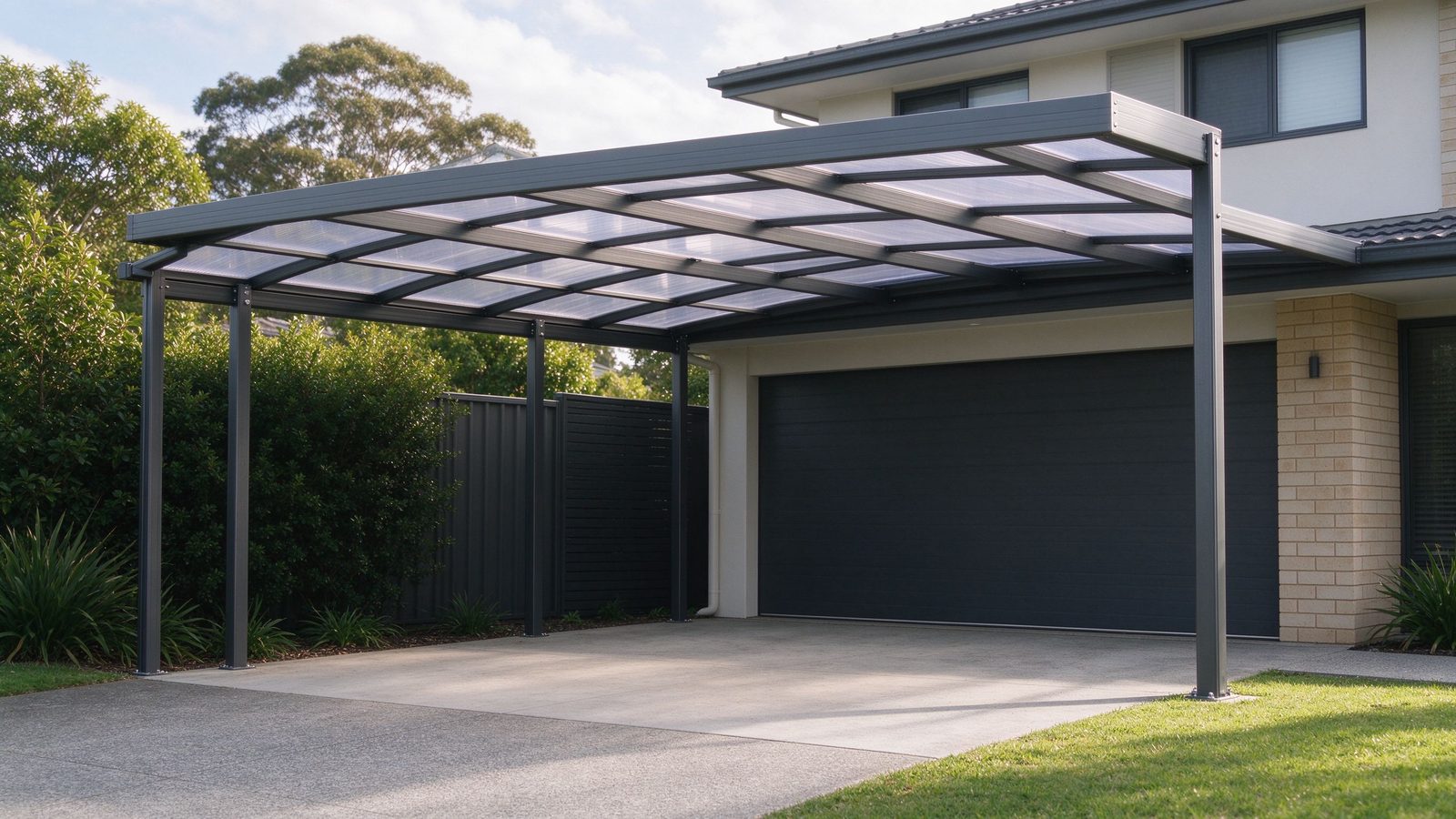
A charging canopy is a visible brand element, and a clear PC panel with visible rafters reads as industrial while a bronze or opal twin-wall reads as designed. Twin-wall at 10 mm gives insulation and diffused light at about a quarter of the weight of solid sheet, which reduces the rafter load and the crane time. For vehicle-side glazing detail, automotive and EV window components follows the same UV and impact logic.
Bird and stone impact are the two loads that actually crack panels in service. A 6 mm PC panel resists a thrown stone at 30 m/s, but the same panel cracks if the fixing hole is within 20 mm of the edge and the bolt is over-torqued, because the crack starts at the hole rather than the impact. Edge distance is cheaper than thickness.
Maintenance access matters too. A canopy panel that needs four people and a crane to replace will stay scratched for years. Specify a panel size that two technicians can lift, and keep spare panels in the maintenance store; the whole-life cost of a charging hub is dominated by access, not by the sheet price.
Charging canopy glazing needs a UV and impact spec, not a generic sheet: send the canopy drawing to oversales@rpplexiglass.com for a build recommendation.
These three points decide most roadside glazing specifications.
Frequently Asked Questions
Q: What thickness polycarbonate for an EV charging station canopy?
A: 6 mm is a display window and vandal facing; 10 mm spans 600–800 mm between rafters under snow load. Do not use one thickness for both functions.
Q: Does polycarbonate for EV charging stations need UV co-extrusion?
A: Yes. A co-extruded UV cap layer of 40–60 µm delivers the long transmission warranty; an inline additive protects the polymer but still allows surface yellowing.
Q: Why do fixing holes crack in outdoor polycarbonate?
A: Undersized holes plus over-torque. Drill 2 mm oversized, use EPDM washers, keep edge distance at 2.5 times the hole diameter, and allow 0.06 mm per metre per degree of movement.