
“We need a privacy screen” describes an outcome, not a product. The three questions that turn it into a specification are how much must be hidden, from what distance, and whether the space behind it needs light.
Layer one: what must be hidden
- Silhouette only — a light frost at 3 mm obscures detail but keeps the shape of a person
- Body hidden, movement visible — a denser frost or a 4 mm opal
- Nothing visible at 500 mm — opal PC at 4 mm or a tinted bronze at 5 mm
- Full obscurity plus light control — a 6 mm opal with a reflective backing
Layer two: whether the space behind needs daylight
An opal screen passes diffuse light and no image, which is why it is the standard choice for clinical and office partitions. A bronze or grey tint reduces glare and hides more at a lower thickness, but it also cuts the light reaching the space behind by 40–60%. If the room depends on that window, the tint choice is a daylight decision and should be made with the lighting designer, not at the panel supplier.
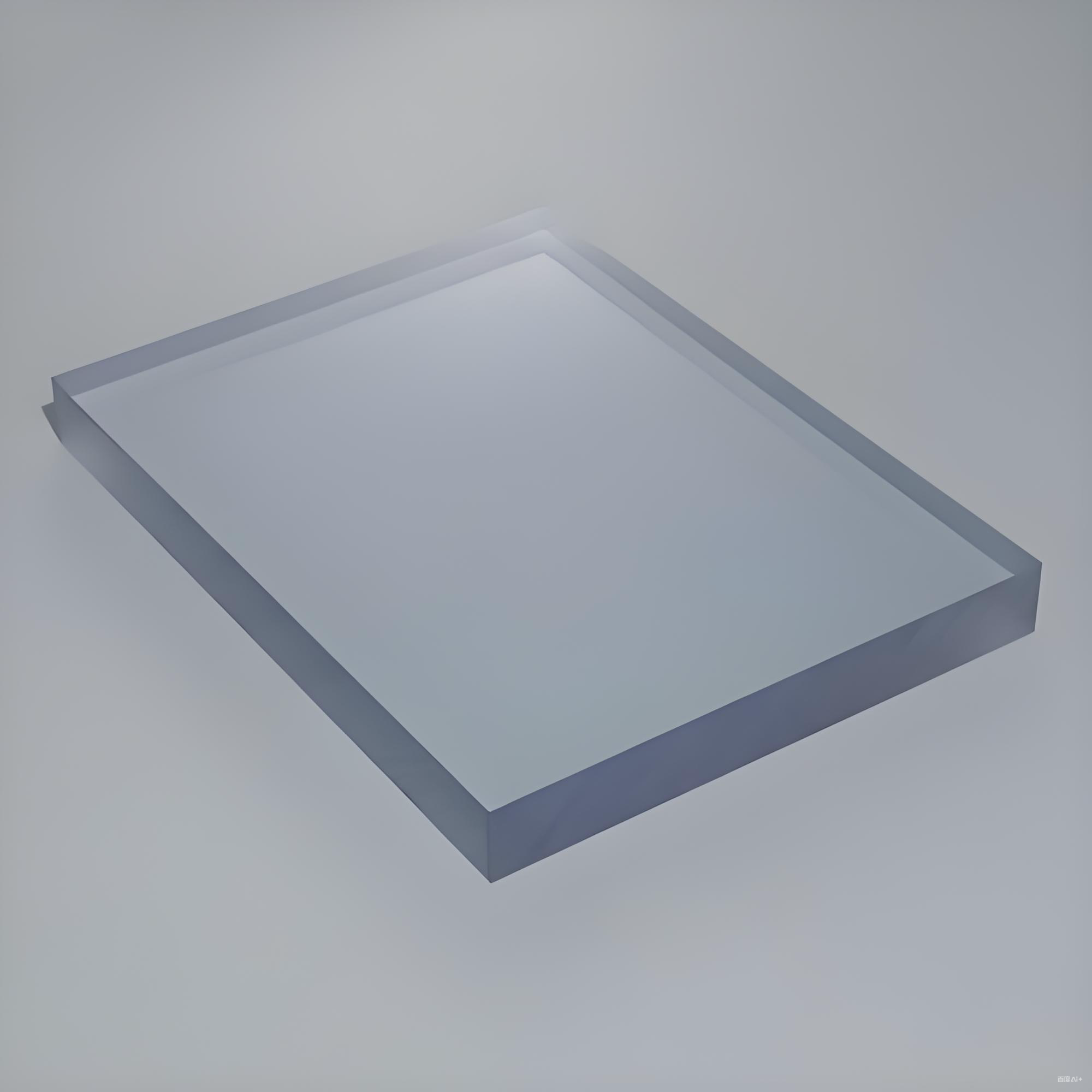
Layer three: impact and cleaning
PC is specified where the screen will be hit: changing areas in sports facilities, clinical rooms with trolley traffic, workshops. At 4 mm PC a trolley impact dents and recovers where 4 mm acrylic cracks. The trade is chemical resistance and surface hardness — PC is softer than acrylic and some disinfectants attack it. If the cleaning regime includes quaternary ammonium or high-alcohol wipes, confirm compatibility before ordering; a screen that crazes in six months is a specification error, not a material failure.
The fixing detail that stops the drumming
A large PC panel fixed only at its edges behaves like a drum and amplifies noise, which is the opposite of what a privacy screen in a quiet office is for. Fix at 300 mm centres with a gasket washer, leave 2 mm per metre for thermal movement, and keep the panel off the frame with a 3 mm EPDM tape. For a screen with a security function rather than a privacy function, security glazing specification covers the impact classes, and cut-to-size PC panels covers the edge and tolerance side.
Edge finish is the detail that separates a screen from a sheet. A routed PC edge with a 1 mm chamfer and a flame pass looks finished from both sides; a saw-cut edge reads as temporary. On a screen that is viewed from the corridor as well as the room, both faces are visible and both edges matter.
Acoustic performance deserves a mention because privacy screens are often bought for quiet rooms. A 4 mm PC panel with a 50 mm air gap to the frame will attenuate mid-frequency noise noticeably; a panel fixed hard to the frame transmits it. If quiet is part of the requirement, the gap and the gasket are as important as the thickness.
Colour stability is worth confirming on opal PC. Some opal grades shift toward yellow after two years under UV, which on a clinical partition reads as dirt. A co-extruded UV layer on the exposed face prevents it, and the question to ask is whether the opal pigment itself is UV stable or only the polymer.
For a privacy screen schedule with thickness, fixing and edge finish, write to oversales@rpplexiglass.com and we will return a panel-by-panel list.
Three decisions shape every privacy screen specification.
Frequently Asked Questions
Q: What thickness polycarbonate for a privacy screen?
A: 3 mm for silhouette-only obscurity, 4 mm opal where nothing should be visible at 500 mm, and 5–6 mm where the screen takes trolley or impact traffic.
Q: Does opal polycarbonate block daylight?
A: It passes diffuse light and no image, so a room behind it stays lit but not viewable. Tinted bronze or grey hides more but cuts transmitted light by 40–60%.
Q: Why does a polycarbonate screen rattle or drum?
A: Edge-only fixing on a large panel. Fix at 300 mm centres with gasket washers, leave 2 mm per metre of thermal movement, and isolate the panel from the frame with EPDM tape.