
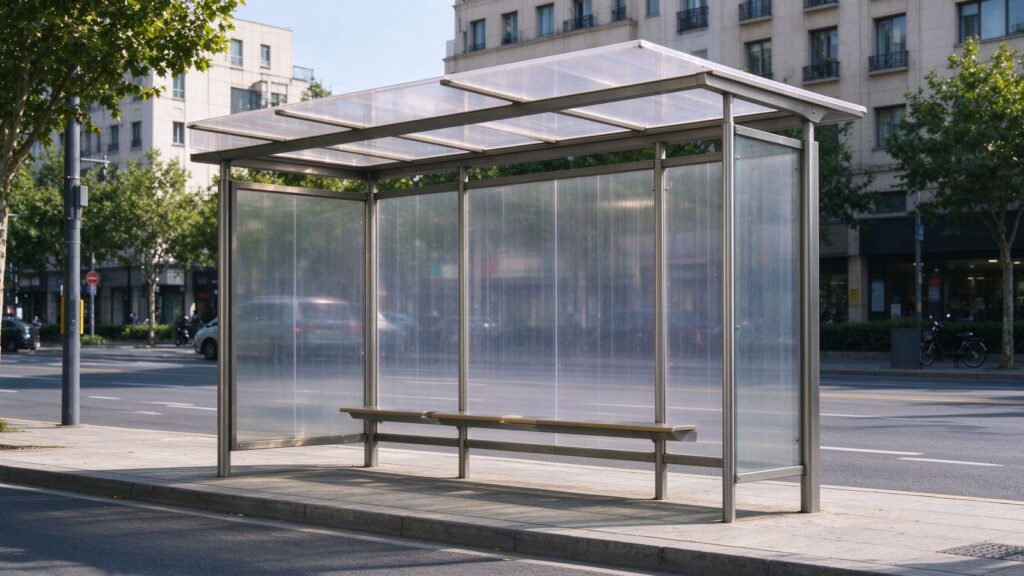
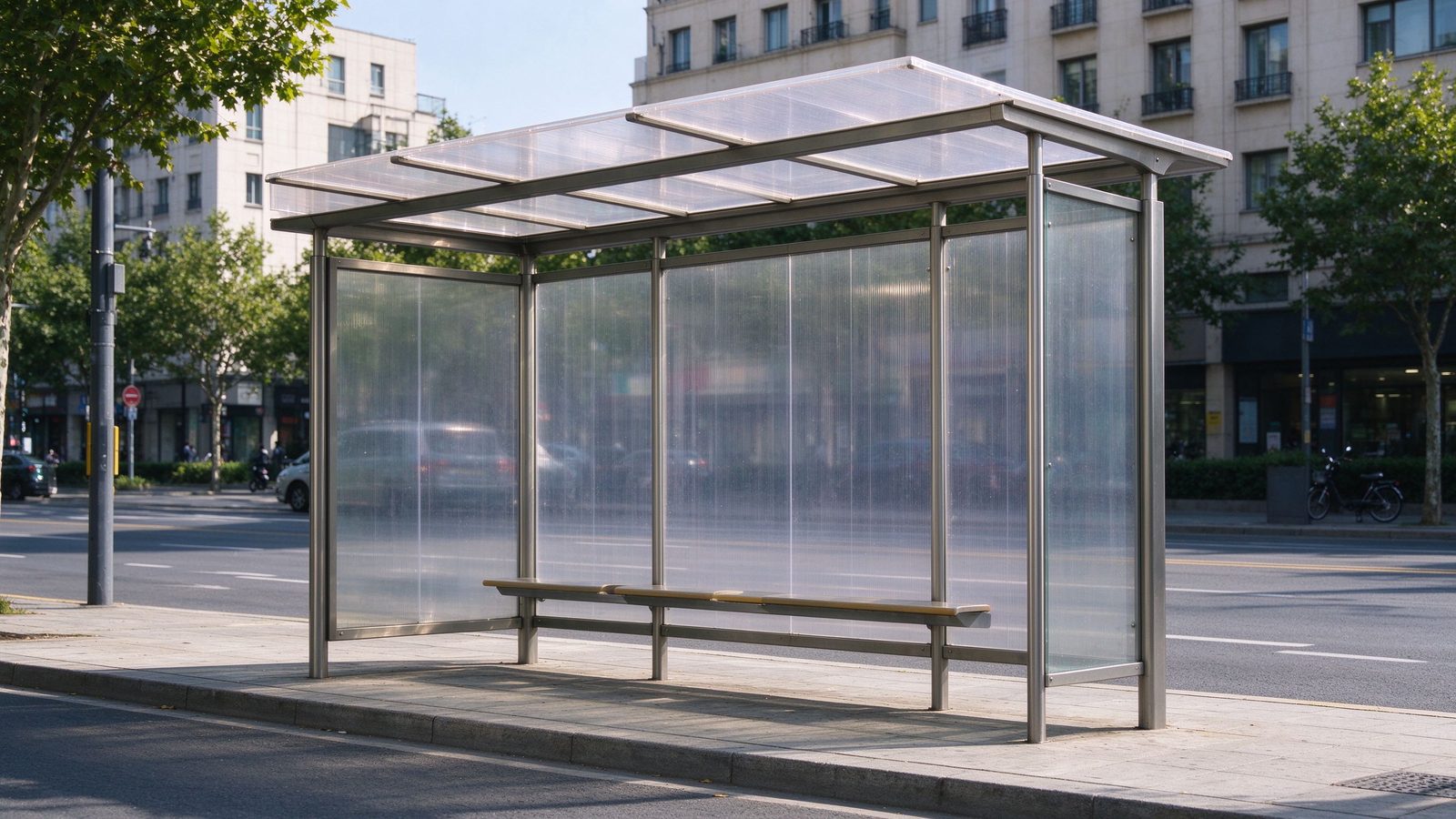
Bus shelters take constant abuse – impact, graffiti, weather and cleaning. Polycarbonate bus shelter glazing is specified because it survives what glass and acrylic cannot. This guide covers the real parameters for polycarbonate panels in shelters, and how RP River People supplies PC glazing for transit shelters.
Thank you for reading this post, don't forget to subscribe!A case worth following: the citywide shelter replacement
A city replaced its broken-glass shelters with polycarbonate. The spec used 6 mm solid sheet for the rear and side walls and a UV co-extruded top panel, mounted with concealed brackets and a drainage gap. Because the bus shelter polycarbonate was impact-resistant and UV-protected, the new shelters stayed graffiti-free longer, resisted hail, and let riders wait in dry, well-lit space through two winters.
Why polycarbonate for bus shelters
- Impact resistance – withstands hail, debris and abuse far better than glass.
- UV protection – co-extruded UV layer stops yellowing of the sheet and contents.
- Anti-graffiti – smooth face is easier to clean; hardcoat options resist marking.
- Light and strong – panels span the frame with less weight and structural load.
- Safety – shatter-resistant means no dangerous glass shards in public space.
What to specify: sheet type, thickness and UV
- Sheet type: solid sheet for walls; twin-wall where insulation and roof rigidity matter.
- Thickness: solid 4-6 mm for walls; twin-wall 8-10 mm for roofs.
- UV layer: always co-extruded on the exposed face, not a peelable film.
- Finish: clear or lightly tinted; matte or hardcoat where graffiti is a problem.
- Size: cut to shelter panel openings with allowance for fixing and drainage.
Installation notes for long service
- Leave expansion gaps – PC moves with temperature and must not be pinched.
- Use UV-stable gaskets and concealed brackets, not exposed fixings.
- Orient the UV-coated face outward and seal any cut edges.
- Detail drainage so water does not pool at the panel base.
- Use the manufacturer’s recommended sealing profiles to avoid leaks.
Market pain points – and our solution
Transit buyers struggle with sheet that yellows fast, panels that arrive scratched, UV layers on the wrong side, or sizes that don’t hit the shelter opening tolerance. RP River People, as a polycarbonate sheet manufacturer, supplies solid and twin-wall bus shelter glazing with co-extruded UV protection, in the thickness, finish and size your shelter drawings need, cut cleanly and packed for safe site handling.
Frequently Asked Questions
Q: Should bus shelters use solid or twin-wall polycarbonate?
Solid sheet suits walls and anti-graffiti panels; twin-wall suits roofs where insulation and rigidity matter. Confirm with the shelter design and climate.
Q: Does polycarbonate shelter glazing yellow?
Quality PC with a co-extruded UV layer resists yellowing for many years. The UV face must face outward; cheap sheet degrades quickly.
Q: Do you supply polycarbonate bus shelter panels cut to size?
Yes. We supply solid and twin-wall polycarbonate shelter glazing in the thickness and finish you need, cut to panel size with clean edges and export packing.
If you are specifying polycarbonate bus shelter guide for a project, send us your sizes and requirements. Contact us for a quote and we will confirm grade, thickness, tolerance and lead time: oversales@rpplexiglass.com.