
A polycarbonate cleanroom partition is specified by the cleaning regime before it is specified by thickness. A pharmaceutical facility in Ireland failed an audit on a detail nobody had thought about: the cleaning crew used an ammonia glass cleaner on the polycarbonate viewing panels, and after eight months the panels carried a fine craze pattern that the auditor read as surface contamination.
Three tests a polycarbonate cleanroom partition has to pass
Cleanability is first: a flat panel with sealed joints and no ledges. Chemistry is second: the panel must survive the cleaning agents the facility actually uses, not the ones the supplier imagines. Structure is third: the wall must hold pressure differentials without deflecting enough to break the seal.
- Panel: 6 to 8 mm clear, hard coat where scrubbing is frequent
- Framing: aluminium with a dry gasket, not a wet sealant alone
- Joints: silicone or EPDM, compatible with the cleaning regime
- Seal: continuous at floor, head and corners, no voids
Each of the three has a failure mode that appears months later, which is why they are specified rather than assumed.
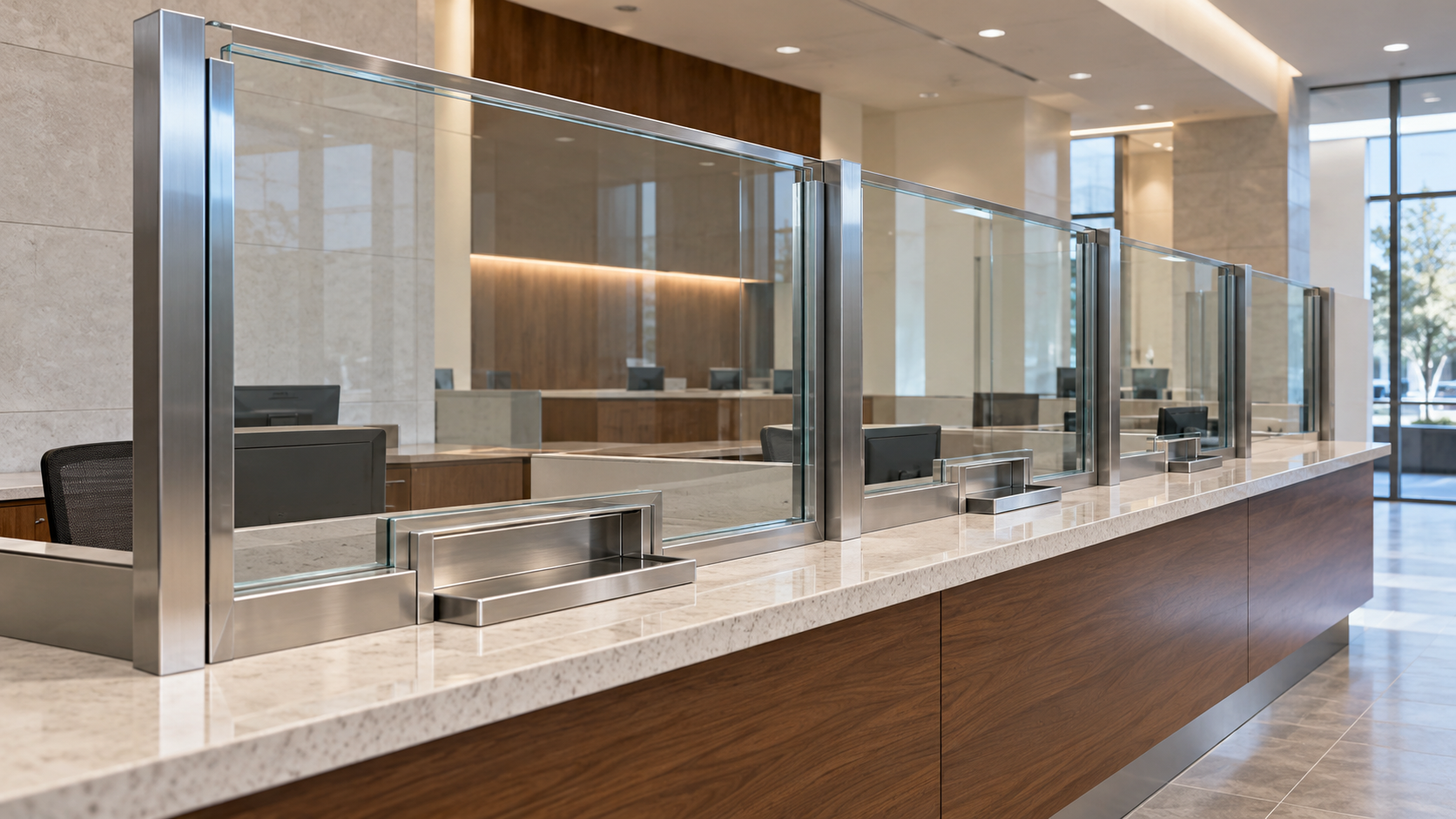
Cleaning agents that craze polycarbonate
Polycarbonate is sensitive to solvents under stress. Alcohols, ketones, ammonia-based cleaners and alkaline degreasers will craze a stressed panel, and the craze starts at fixing points and edges where stress concentrates.
Neutral detergents at the dilution the facility already uses for floors are safe. So are formulated plastic cleaners. The practical step is to ask the cleaning contractor for the chemical list before the panel is specified, not after the first audit.
Hard coat and the scrubbing question
A hard coat raises abrasion resistance and makes daily wiping practical, at about 15 to 25 per cent more per square metre. In a facility cleaned twice a day, that is the difference between a two-year panel and a ten-year one.
Hard-coated sheet must not be cut or drilled without protecting the edge; the coating does not extend into a fresh cut, and that edge becomes the starting point for crazing.
Framing, pressure and deflection
A partition between a class 7 room and a corridor may hold 10 to 30 Pa of differential pressure. That is small, but a 1.5 m span of 6 mm polycarbonate deflects visibly under it, and a deflecting panel works its gasket loose.
Add a mullion above 1.5 m span, or step to 10 mm. Both are cheaper than re-gasketing a wall.
The documentation auditors ask for
- Material data sheet with the UV and coating specification
- Cleaning compatibility statement naming the approved agents
- Thickness and flatness record for the delivered panels
- Gasket and sealant compatibility declaration
- Batch traceability for repeat panels
None of these is exotic. All of them are routinely missing from quotations, which is why the audit finds them.
Enclosure work in regulated environments follows the same rules; the medical device enclosure guide covers the panel and cleaning specification, and the hard-coated polycarbonate note explains what the coating does and does not survive.
Send the room layout, cleaning regime and class target to oversales@rpplexiglass.com for a panel and framing proposal.
Frequently Asked Questions
What thickness polycarbonate for a cleanroom partition?
6 to 8 mm for standard partitions, 10 mm where the panel spans more than 1.5 m without a mullion, and twin-wall where insulation is needed.
Which cleaners attack polycarbonate?
Alcohols, ketones, ammonia-based glass cleaners and alkaline degreasers can craze it under load. Neutral pH detergents and formulated plastic cleaners are safe.
Is polycarbonate acceptable in a cleanroom?
Yes, where it is specified with a compatible cleaning regime and a sealed frame. It is common in pharmaceutical and electronics facilities, and the documentation is what auditors ask for.