
A polycarbonate hunting blind window is judged by noise and reflection, not by data sheets.
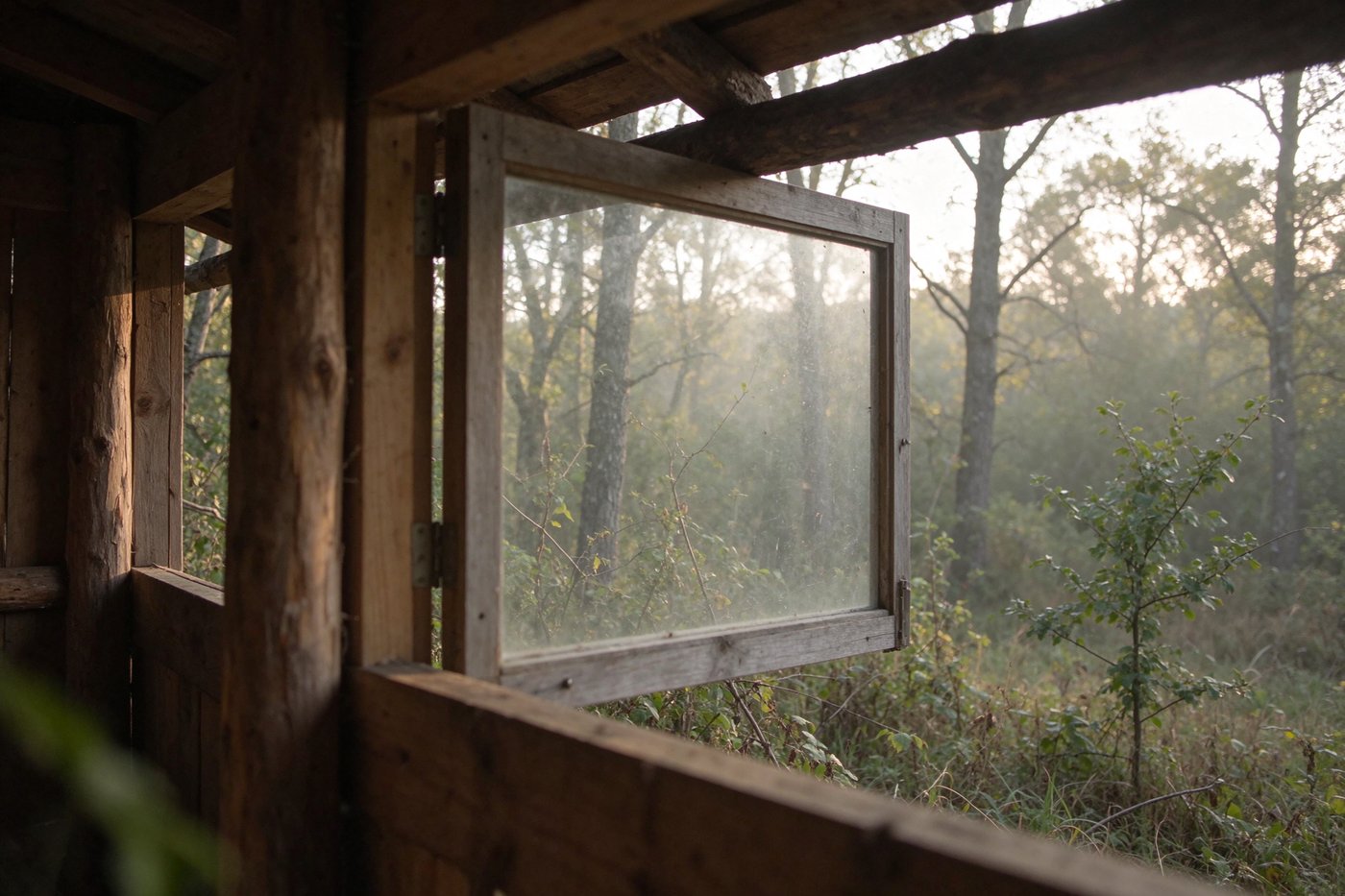
A deer management group in Wisconsin fitted clear polycarbonate windows to twelve box blinds. Three clients complained within a season: two about the reflection visible from the stand, one about a window that squeaked when it was opened. The panels were sound. The hinge and the finish were not.
A polycarbonate hunting blind window is judged by two things that never appear on a materials datasheet: how much noise it makes and how much light it throws back at the animal. Both are solved by the frame and the surface, not by the sheet alone.
Hinges that do not announce themselves
Use a continuous piano hinge with a rubber or nylon liner, mounted so the panel lifts clear rather than sliding across a gasket. A butt hinge with two screws will bind and squeak as the frame moves with the weather. Where the window slides, use nylon runners and a felt-lined track.
Four millimetre polycarbonate is stiff enough for an opening up to about 500 x 400 mm without a frame. Larger openings need a surround, because a panel that flexes will not seal against the gasket and will rattle in wind.
Reflection, tint and the animal eye line
- A matte or lightly textured face cuts reflection far more than a tint does
- A bronze or grey tint helps in bright sun but does not remove glare at low angles
- Keep the window aperture small and high enough that the occupant is below the animal eye line
- Avoid mirror-finish frames; a bright aluminium edge is visible from a long way off
The Wisconsin complaint about reflection came from a clear polished panel in a stand facing the afternoon sun. A matte-faced sheet, fitted with the textured side out, removed most of the glare without reducing visibility from inside.
Cold, condensation and the fit
Fit with 2 to 3 mm clearance per side and a foam gasket. A panel clamped tight in a timber frame will crack at the fastener when the first hard frost arrives, because timber shrinks while polycarbonate contracts less.
Interior condensation is normal in an occupied blind. A small vent above the window and a wipe with a soft cloth keeps it usable; never scrape frost off with a knife or a scraper, which will groove the sheet permanently.
RP River People Plexiglass cuts hunting blind windows to the opening, with matte or tinted options, polished edges and hinge-ready hole patterns. Send the opening dimensions and the frame detail for a quotation.
Send the window opening and frame section to oversales@rpplexiglass.com for a cut and drilled blind window quotation.
Low-reflection fitting is treated from another angle in our tugboat wheelhouse window guide.
Frequently Asked Questions
How do I stop the window reflecting?
Use a matte or textured face, fitted outward, and keep the frame dark. A tint helps but does not replace a matte surface at low sun angles.
What hinge is quiet enough?
A continuous piano hinge with a rubber or nylon liner, or nylon runners for a slider. Two-screw butt hinges bind and squeak as the frame moves.
Will the panel crack in a hard frost?
Only if it is clamped tight. Leave 2 to 3 mm clearance and a foam gasket so the panel can move against a shrinking timber frame.