
A plant replaced a cracked glass guard with a polycarbonate machine safety guard and forgot to check the impact class. The new guard stopped the chip it was meant to catch, but the next one bent it because the thickness was under-specified for the machine’s kinetic energy.
Match the guard to the machine’s energy
A machine safety guard has to absorb the energy of a thrown workpiece or a broken tool, not just stop a gentle bump. That energy sets the thickness and the impact class of the polycarbonate. Thickness alone is not enough — the panel also has to be fixed so it cannot be pushed out of its frame, and its edges must be clean so stress does not concentrate at a cut and crack on impact. The drawing and the fixing decide whether the guard is real or decorative.
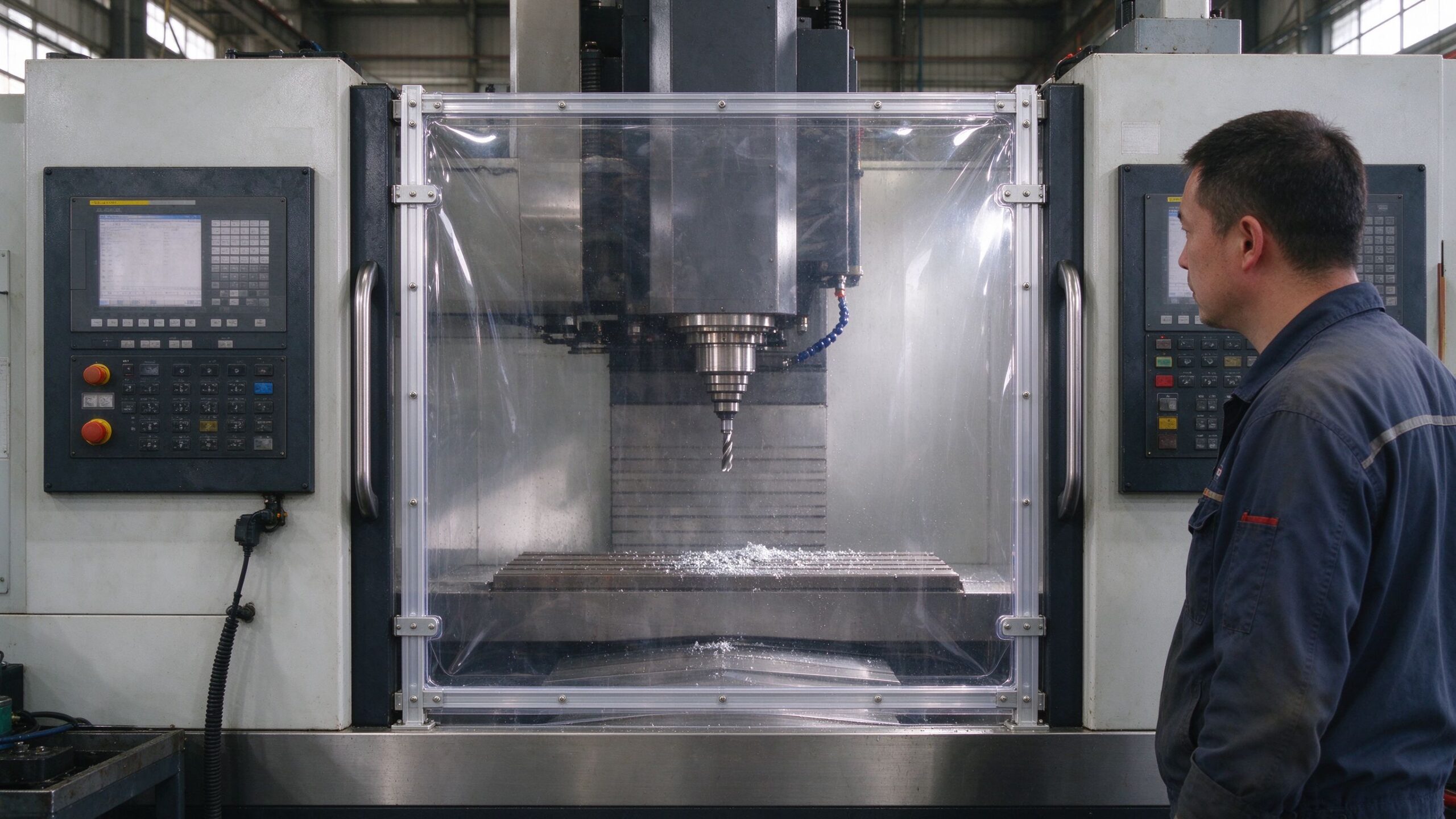
Specify the whole guard, not just the sheet
- Impact class and thickness for the machine’s energy.
- Edge fixing that holds the panel in its frame.
- Burr-free, stress-free cut and drilled holes.
- Hard coating if the guard is cleaned and handled often.
How PC compares with acrylic for CNC guards is covered in the acrylic vs polycarbonate for CNC machine guards guide, and the wider safety barrier picture in polycarbonate in machine guards and safety barriers.
Frequently Asked Questions
Q: What sets the thickness of a polycarbonate machine safety guard?
A:The kinetic energy of the machine’s thrown workpiece or broken tool sets the impact class and thickness. The guard also has to be fixed in its frame with clean edges so stress does not concentrate at a cut.
Q: Why is polycarbonate used for machine safety guards?
A:Polycarbonate absorbs strong impacts without shattering and stays clear so the operator can watch the process. It is tougher than glass or acrylic for thrown-chip and tool-impact protection.
For polycarbonate or acrylic machine guard sheet cut and drilled to your frame and drawing, email oversales@rpplexiglass.com with the panel dimensions, thickness, hole positions and coating requirement.