
A CNC window scratched out in eight months, and the replacement came with a clear sheet that scratched in six. The problem was not the machine — it was that the CNC machine replacement window skipped the coating the original had.
Match what the machine actually had
A replacement window has to match three things: the exact dimensions so it seals in the existing frame, the thickness so it keeps the impact rating, and the coating so it survives coolant, chips and repeated cleaning. A hard-coated surface resists the fine scratches that turn a clear window milky. The edge finish matters too, because a rough cut concentrates stress and can crack around the fixings. Get the dimensions, thickness and coating right and the replacement lasts; skip any one and it fails early.
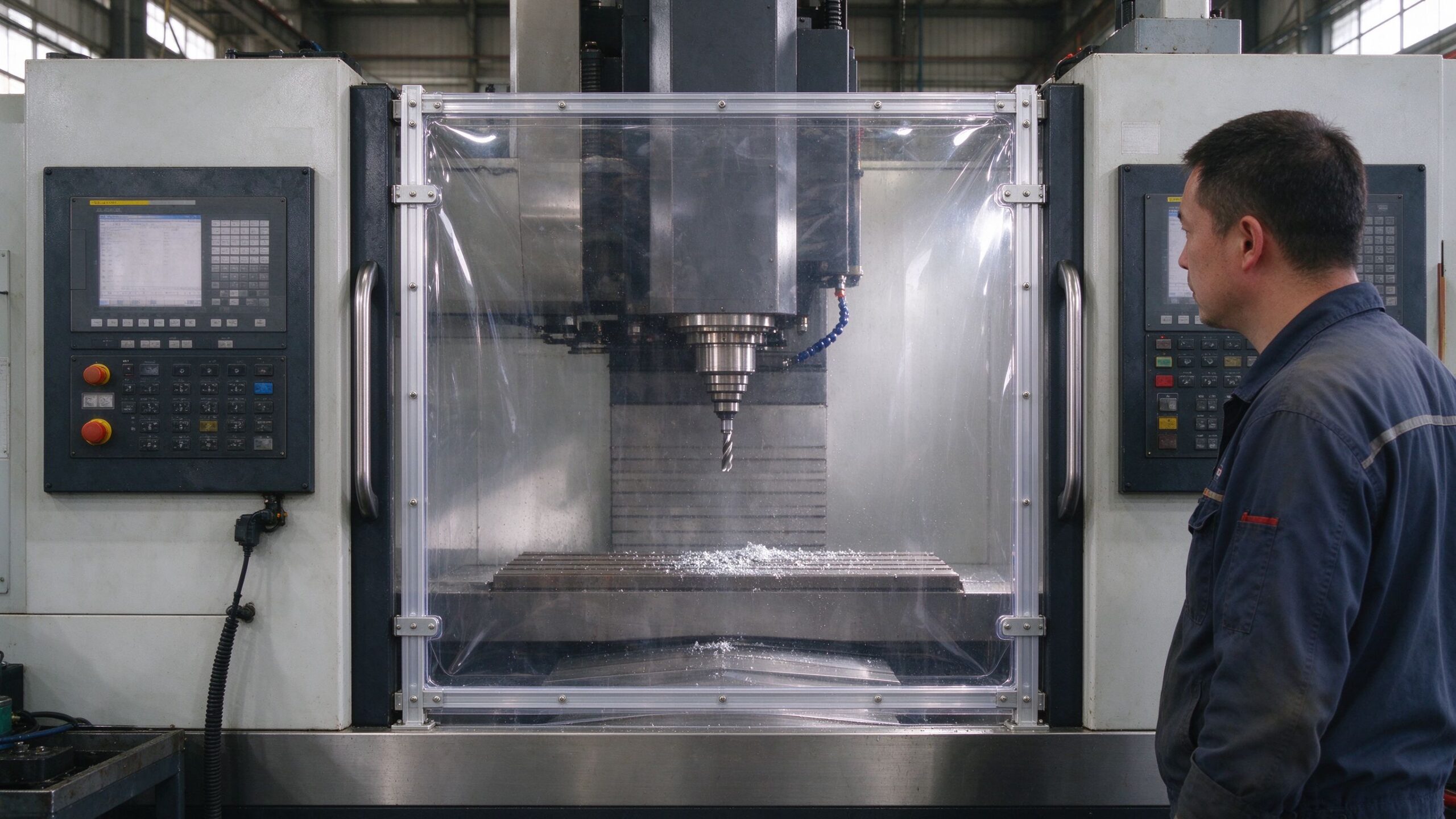
The three must-match inputs
- Exact dimensions and fixing hole positions for the frame.
- Thickness that keeps the original impact rating.
- Abrasion-resistant coating for coolant and cleaning.
- Burr-free, stress-free edges around the fixings.
How replacement windows are fitted is covered in the polycarbonate in machine guards and safety barriers guide, and the hard-coated option in hard coated polycarbonate sheet for machine guards.
Frequently Asked Questions
Q: What must a CNC machine replacement window match?
A:Exact dimensions and fixing holes for the frame, the thickness that keeps the impact rating, and the abrasion-resistant coating that survives coolant, chips and cleaning. Edges must be stress-free around the fixings.
Q: Why does a CNC replacement window scratch out so fast?
A:Usually because it skipped the hard coating. A coated surface resists the fine scratches from chips and cleaning that turn a clear window milky, so an uncoated replacement fails early.
For polycarbonate or acrylic machine guard sheet cut and drilled to your frame and drawing, email oversales@rpplexiglass.com with the panel dimensions, thickness, hole positions and coating requirement.