
A polycarbonate pontoon boat window lives with spray, sun and a canopy frame that moves under load.
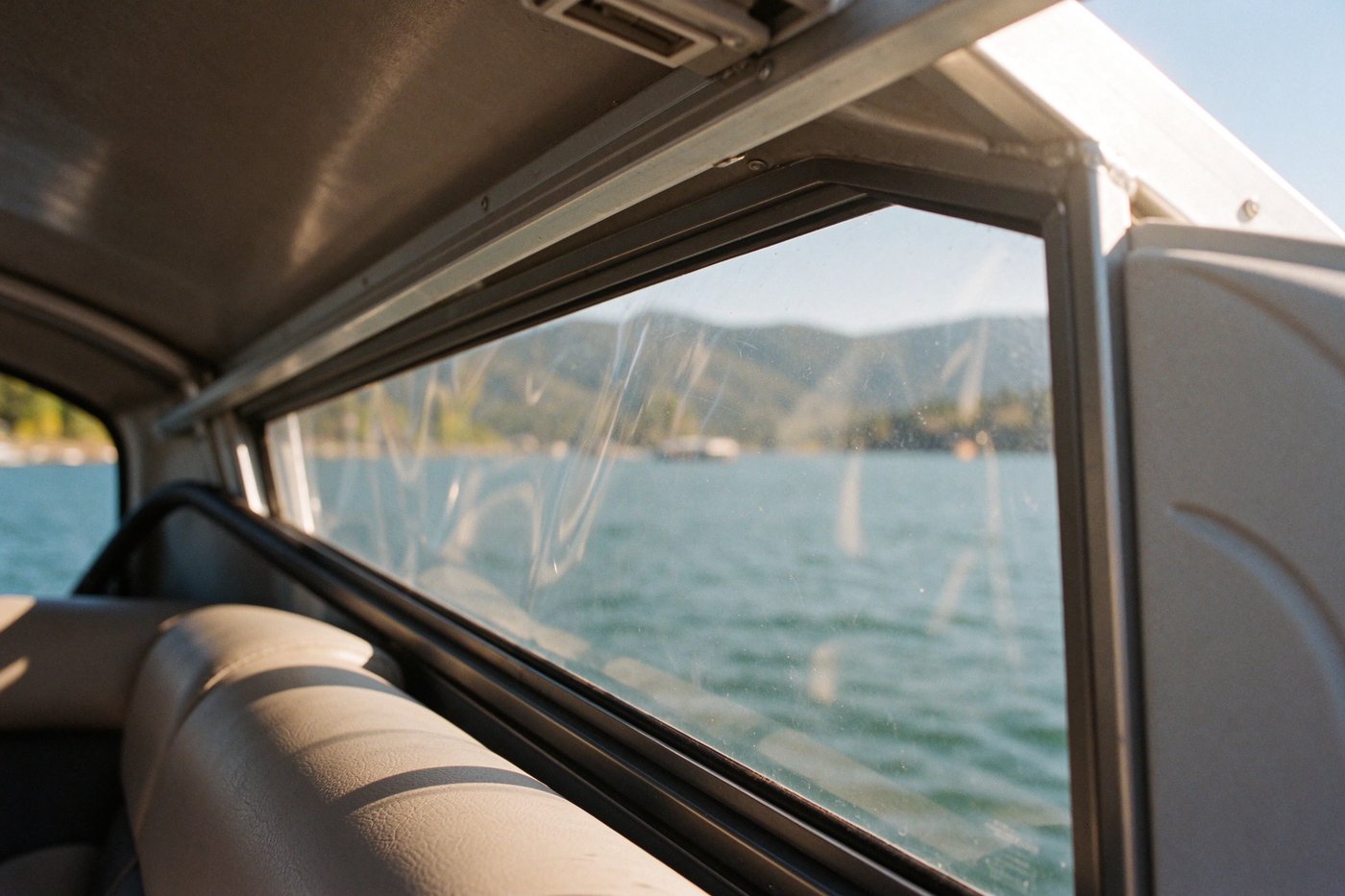
A marina on Lake Windermere replaced acrylic side windows on nine pontoons with 6 mm polycarbonate after a season of cracking. Two of the new panels cracked in the first month, both at a fastener within 12 mm of an edge, both on the side that took the afternoon sun.
A polycarbonate pontoon boat window is a different problem from a windshield. It is a flat or lightly curved side panel clamped into a canopy frame, exposed to spray and to the frame moving as passengers lean on the rail. Polycarbonate handles the impact; the fixing pattern decides whether it survives the movement.
Thickness and frame clearance
Six millimetre polycarbonate suits most pontoon side windows up to about 1.2 m long. It is stiff enough to resist a knee or a cooler box without deflecting into the interior, and light enough that the canopy frame does not need reinforcement.
Allow 3 mm per metre of length for thermal movement and 2 mm at each edge in the frame channel. A panel fitted with zero clearance will buckle in the sun and pull out of the channel at the corner, which is exactly what happened on two of the Windermere boats before the clearance was changed.
Fasteners that do not start a crack
- Keep every fastener at least 25 mm from an edge, and further from a corner
- Drill 2 mm oversize, deburr both faces, and use a washer with a rubber face
- Do not countersink polycarbonate for a flat-head screw; the cone puts hoop stress around the hole
- Where the frame is aluminium, isolate the panel with a rubber or EPDM tape to stop galvanic staining
The two cracked panels had countersunk holes at 12 mm from the edge. Countersinking is the single most common cause of a star crack in a boat window, because the head wedges the sheet outward while the frame holds the edge.
Sun, spray and winter storage
Polycarbonate yellows under UV unless it is stabilised or coated. On a lake boat that sits out all season, specify a UV-stabilised or hard-coated sheet; a standard grade will show a yellow cast in two to three summers. Rinse the salt or lake water off after each trip, and clean with mild soap only.
For winter storage, do not shrink-wrap directly against the panel. Wrap contact traps moisture and, with a freeze-thaw cycle, produces a haze that looks like crazing. Leave an air gap and store the boat with the canopy vented.
RP River People Plexiglass cuts pontoon windows to a paper or plywood template, drills the fastener pattern to your drawing and ships with protective film. Send the template and the frame section for a quotation.
Send the window template and canopy frame section to oversales@rpplexiglass.com for a cut and drilled pontoon window quotation.
Smaller craft use the same fastener logic, covered in our polycarbonate boat windshield guide.
Frequently Asked Questions
Can polycarbonate replace acrylic on a pontoon?
Yes, and it is the usual upgrade where acrylic has cracked. Polycarbonate is tougher and less brittle, but it scratches more easily, so a coated grade is worth specifying.
Why do boat windows crack at the screws?
Countersunk holes close to an edge are the usual cause. The head wedges the sheet while the frame holds the edge, and a star crack forms in the first cold night.
Will the window yellow?
Standard polycarbonate will yellow outdoors within a few summers. A UV-stabilised or hard-coated sheet holds clarity much longer.