
The phrase polycarbonate security glazing covers a wide range of real threats — from a smash-and-grab brick through a storefront to a rifle round through a government window. The same material family handles both, and the job of the specifier is to match the build to the level the site actually faces rather than guess high or low.
Matching the build to the threat
For a retail or school opening facing tools and vandalism, an impact-resistant PC panel gives forced-entry protection. Where a firearm is a real risk — a bank counter, a courthouse, an embassy — the same polycarbonate is built and tested to a UL 752 level, with laminated or glass-clad options stepping up the grade. Confirming the threat up front is what stops you over-buying for a storefront or under-buying for a checkpoint.
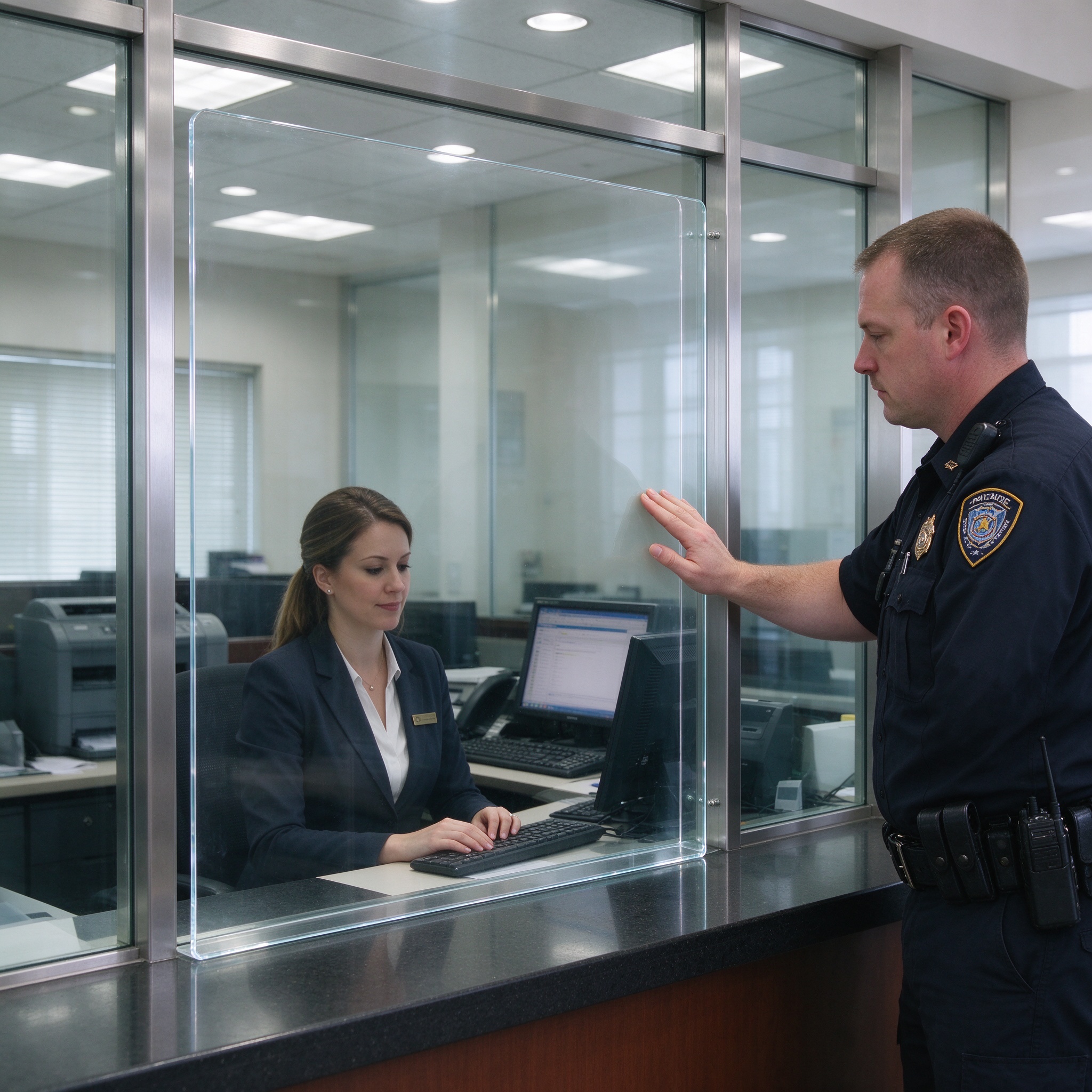
Choosing the level for your opening
- Tools and vandalism: forced-entry impact PC.
- Handgun threat: a UL 752 handgun level.
- Rifle threat: a higher UL 752 level.
- Ask the manufacturer to size the build to the threat.
For the material overview, see polycarbonate for bullet-resistant and anti-riot glazing, and for the level-to-panel map, UL 752 ratings explained.
Frequently Asked Questions
Q>What threats does polycarbonate security glazing stop?
A: The range runs from forced entry against tools and vandalism up to UL 752 ballistic levels against firearms; the build is matched to the threat the site faces.
Q: How do I choose the security glazing level?
A:Assess whether the risk is tools, a handgun or a rifle, then match the panel build to that threat; a manufacturer can size the build once you confirm the risk.
For a project-specific quotation on bullet resistant polycarbonate or security glazing, email oversales@rpplexiglass.com with your threat level, panel size and frame detail.