
A polycarbonate skylight is only as good as the sheet behind it. Specify the wrong wall, miss the UV co-extruded layer, or undersize the thermal allowance and the roof will leak, yellow or blow. This guide is a spec overview for architects and contractors choosing polycarbonate skylight sheets, with the real parameters and how RP River People supplies PC roof glazing.
Thank you for reading this post, don't forget to subscribe!A case worth following: the factory roof retrofit
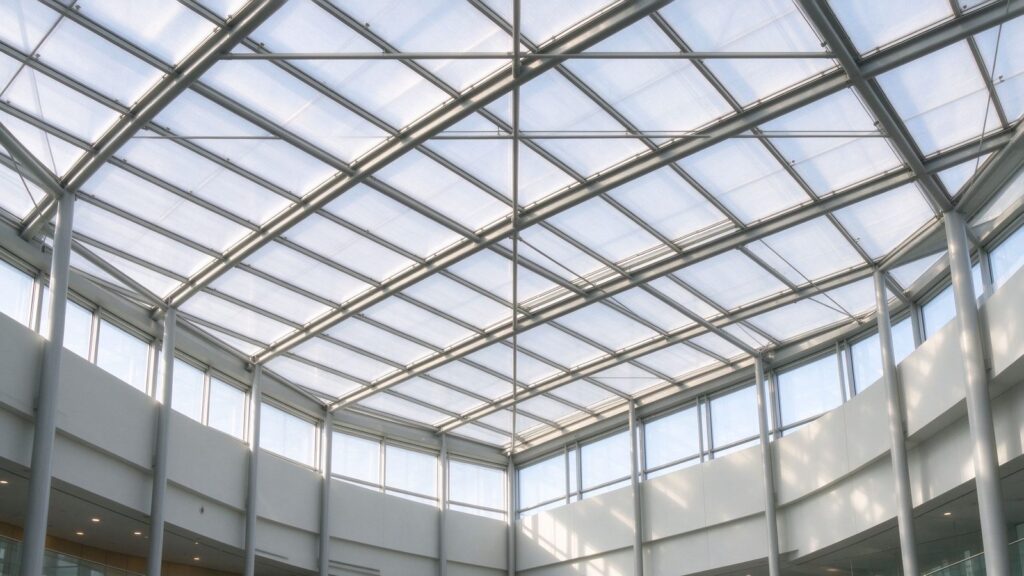
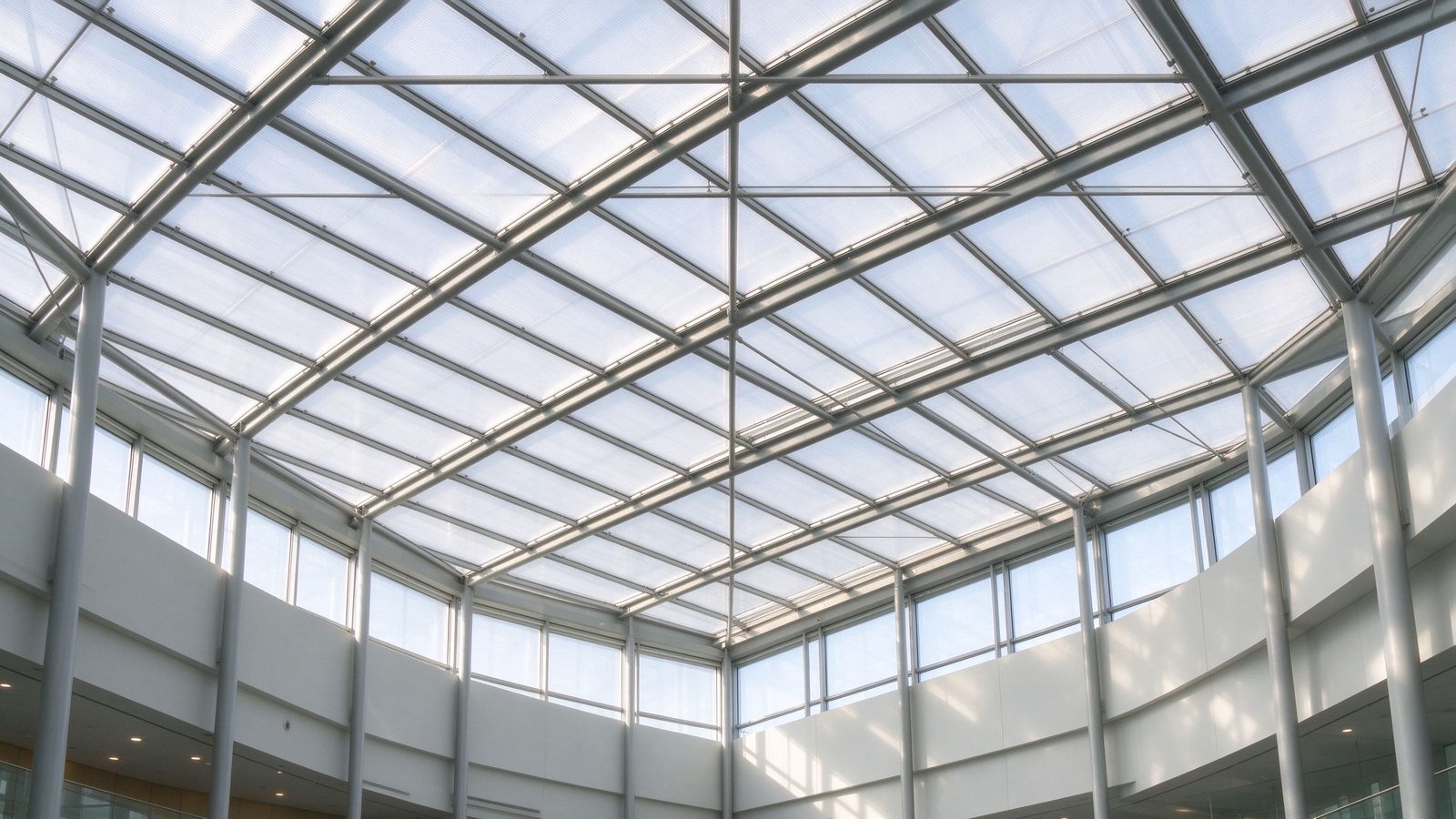
A distribution centre replaced its failing glass roof with a multi-wall polycarbonate skylight. The spec called for 16 mm twin-wall sheet, UV co-extruded on the top face, spanning the steel purlins with proper thermal gaps. Because the polycarbonate skylight sheet was flat, UV-protected and correctly cut for the expansion allowance, the roof let in even daylight, stayed cool and did not leak through its first winters.
Why polycarbonate for skylights
- Impact resistance – far stronger than glass or acrylic under hail and debris.
- Weight – multi-wall PC is a fraction of the weight of glass, easing structural load.
- Insulation – twin-wall structure cuts heat loss and summer gain.
- UV protection – co-extruded UV layer blocks degradation of the sheet and contents.
- Light transmission – glazing grades pass high, even daylight.
What to specify: wall type, UV layer, thickness and light
- Wall: twin-wall (multi-wall) for insulation and strength; solid sheet for maximum clarity and glazing.
- UV layer: always co-extruded on the exposed face, not a film that can peel.
- Thickness: twin-wall typically 6-20 mm; solid glazing sheet thicker where span demands.
- Light transmission: glazing grades range roughly 60-90% depending on wall and tint.
- Size: cut to purlin spacing with the right thermal expansion gap.
Installation notes that prevent leaks
- Leave an expansion allowance on length – PC moves more than glass with temperature.
- Use UV-protected edge profiles and gaskets, not bare contact.
- Orient the UV-coated face outward; drilling and cutting leave exposed edges to be sealed.
- Support at correct intervals to avoid flutter under wind.
- Use the manufacturer’s recommended sealing tape, not generic silicone.
Market pain points – and our solution
Roofing buyers get burned by PC that yellows fast, sheets that arrive with the UV layer on the wrong side, no thermal allowance in cutting, or a supply that cannot hit size tolerance on long panels. RP River People, as a polycarbonate sheet manufacturer, supplies twin-wall and solid polycarbonate skylight sheet with co-extruded UV protection, in the thickness, size and light-transmission grade your glazing spec needs, cut cleanly and packed for safe roof-site handling.
Frequently Asked Questions
Q: Should I use twin-wall or solid polycarbonate for a skylight?
Twin-wall (multi-wall) suits insulated, strong, even-light skylights; solid sheet suits maximum clarity and simpler glazing. Confirm with span, load and insulation targets.
Q: Does polycarbonate yellow over time?
Quality PC with a co-extruded UV layer resists yellowing for many years. The UV layer must face outward; cheap sheet without it degrades quickly.
Q: Do you supply polycarbonate skylight sheet cut to size?
Yes. We supply twin-wall and solid polycarbonate skylight sheets in the thickness and light-transmission grade you need, cut to size with clean edges and export packing.
If you are specifying polycarbonate skylight spec guide for a project, send us your sizes and requirements. Contact us for a quote and we will confirm grade, thickness, tolerance and lead time: oversales@rpplexiglass.com.