
The brief for a polycarbonate zoo viewing panel usually arrives from a curator rather than an engineer, and it says something like: the old glass was replaced three times and we want to stop doing that. The engineering version of that sentence is a panel with a defined impact load and a defined deflection limit.
Two recent enclosures, a primate house and a small cat exhibit, show how the numbers differ.
Load, span and the polycarbonate zoo viewing panel thickness
- Small cats and otter: 12 mm at 1.5 m span
- Primates up to 40 kg: 15 mm at 2 m span, 20 mm at 3 m
- Large bears: 20 mm at 2 m, with a steel sub frame
- Deflection limit: span divided by 200 under the design load
- Coating: anti scratch on the visitor face only
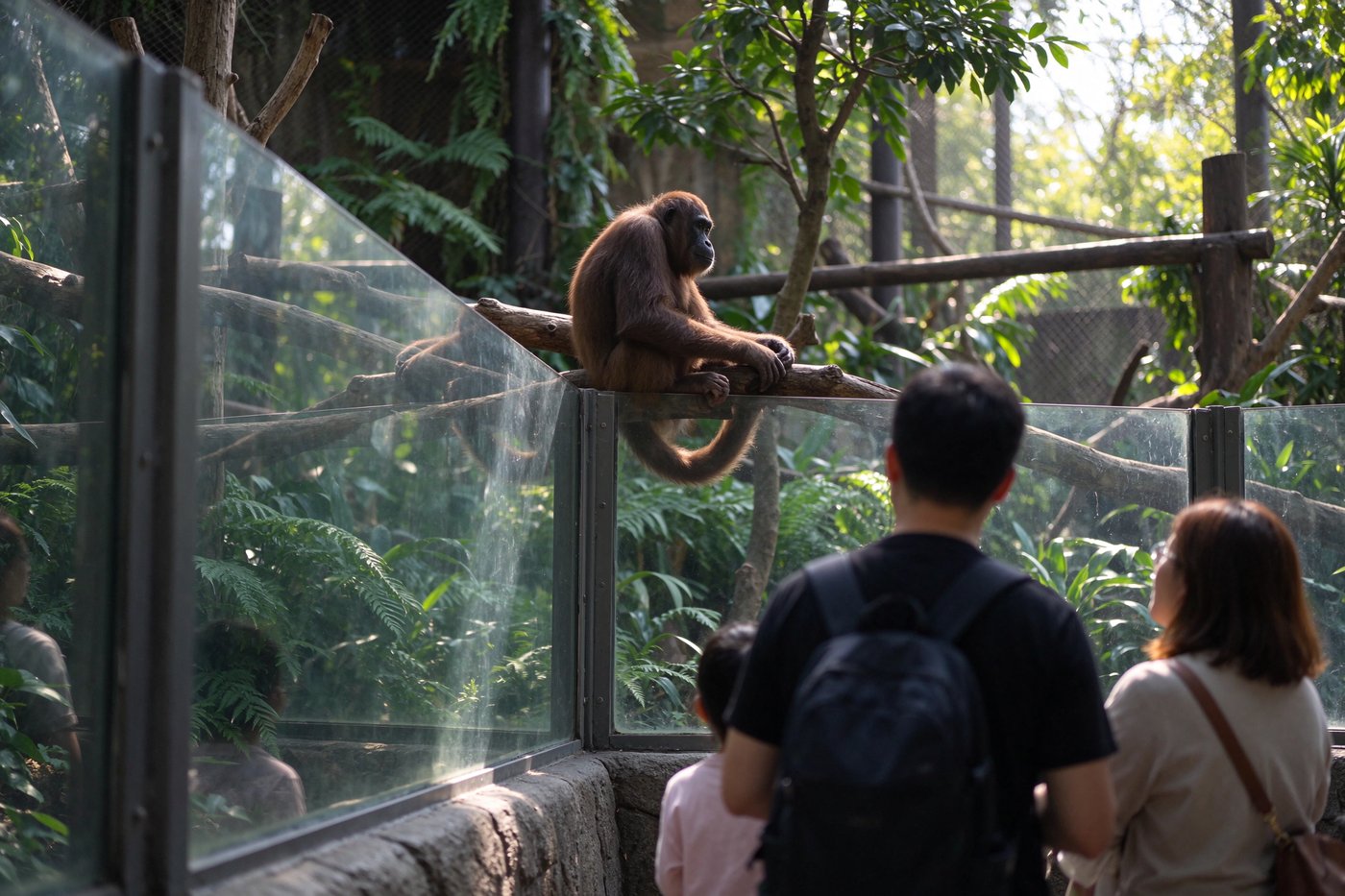
The primate house had a 3 m opening and originally used 15 mm. Under a charge the panel deflected about 30 mm, which was inside the material limit but outside what the frame gap allowed, and the panel contacted the frame and cracked at the edge. Twenty millimetres brought deflection to 12 mm and the frame gap stayed open.
Gasket, frame and the polycarbonate zoo viewing panel seal
An enclosure panel sits in a wet environment and behind an animal that tests every edge. The frame should be a continuous aluminium channel with an EPDM gasket compressed 3 mm, and the panel should never be bolted directly to concrete. Thermal movement on a 2 m panel over a 25 C swing is about 1.5 mm, and a rigid bedding transfers that movement into stress at the bolts.
Ammonia, washing and the polycarbonate zoo viewing panel surface
Ammonia from urine is the hidden failure in indoor exhibits. Left standing at the base of a panel, it crazes the surface within a season and the craze reads to visitors as a dirty window. Coating helps, but the real fix is a wash-down routine and a panel base that sits above the standing water line. We detail a 20 mm upstand in the frame so the sheet never touches the floor wash.
Panels are cut to an enclosure drawing with the coated face marked, and a spare panel is worth stocking for any exhibit with a large animal.
Send enclosure dimensions, species load and frame detail to oversales@rpplexiglass.com for a panel and fixing quote.
Large animal panels and aquarium windows fail at the same place, the frame interface, and the aquarium case documents the thickness and deflection calculation in full. large acrylic aquarium viewing windows covers that part of the specification.
Frequently Asked Questions
Which side needs the coated face?
The visitor side, because that is the face that gets wiped and touched. The animal side is washed down and rarely abraded, so coating there adds cost without benefit.
Does urine damage polycarbonate?
Sustained ammonia contact will craze an unprotected face over months. A coated sheet plus a wash-down routine handles it, and the panel should not be left with standing urine at the base.
Why 15 mm rather than 10 mm?
A large primate or bear can deliver a load that deflects a 10 mm panel into the frame gap. Fifteen millimetres keeps deflection inside the design allowance at typical enclosure spans.