
A single cast acrylic sheet has a practical maximum size. When a project needs a surface beyond that — a long aquarium wall, a wide display screen — the engineering answer is seamless splicing acrylic: chemically bonding cast sheets so the joint is optically invisible and structurally continuous.
How seamless splicing works
Edges are machined square and flat, the faces are prepared, and a solvent-based weld fuses the panels into one continuous surface. Because the material welds rather than glues, the seam carries load like the parent sheet and stays invisible. That matters on aquarium walls under water pressure, on large display panels, and anywhere a visible frame line would ruin the surface.
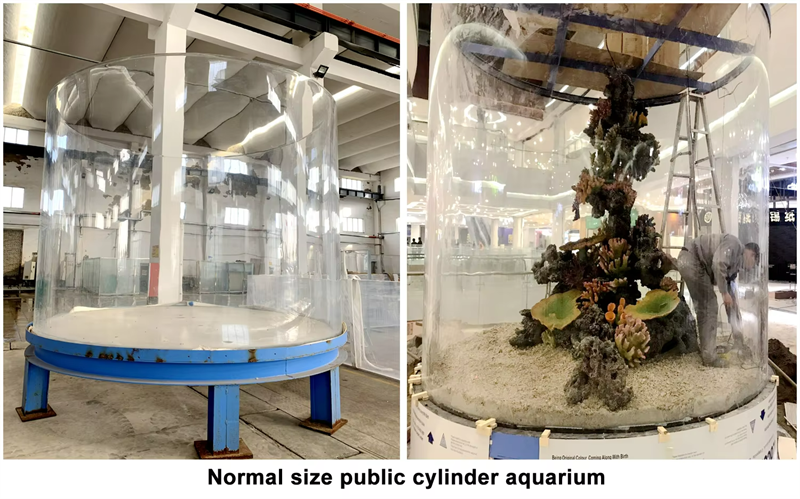
Spliced vs monolithic: how to choose
- Monolithic: one sheet, no seam, limited by maximum cast size.
- Spliced: chemically welded panels, invisible seam, larger surface.
- Bond strength: weld matches the parent material.
- Optics: prepared seams stay clear and invisible.
For the bonding service that makes this possible, see large acrylic panel bonding for aquariums and displays, and for the tank engineering, casting and bonding acrylic aquarium tank panels.
Frequently Asked Questions
Q>What is seamless splicing acrylic?
A: It is the chemical welding of cast acrylic sheets so the joint is optically invisible and structurally continuous, used when one sheet cannot cover the surface.
Q: Is a spliced seam as strong as a single sheet?
A:Yes, a proper chemical weld carries load like the parent material; that is why it is used for aquarium walls and large display panels.
For a project-specific quotation on thick or oversized cast acrylic sheets, email oversales@rpplexiglass.com with your thickness, sheet size and quantity.