
Security glazing is more than a bullet rating. A bank counter, a checkpoint booth and a facility enclosure each need a transparent panel that resists impact, resists forced entry and keeps sightlines. Security glazing polycarbonate is the common thread: a transparent material used in security glazing constructions. Ballistic resistance, forced-entry resistance and spall behavior must be verified separately for the specified construction.
What security glazing has to do in a real facility
The panel protects staff and assets behind it, but it also has to keep the space usable: it must stay clear for monitoring and daylight, resist the daily wear of a busy counter, and not fail into sharp fragments under an attack. Confirm optical quality, surface durability, panel weight and attack resistance against product-specific evidence. Material choice alone does not establish the performance of the complete window.
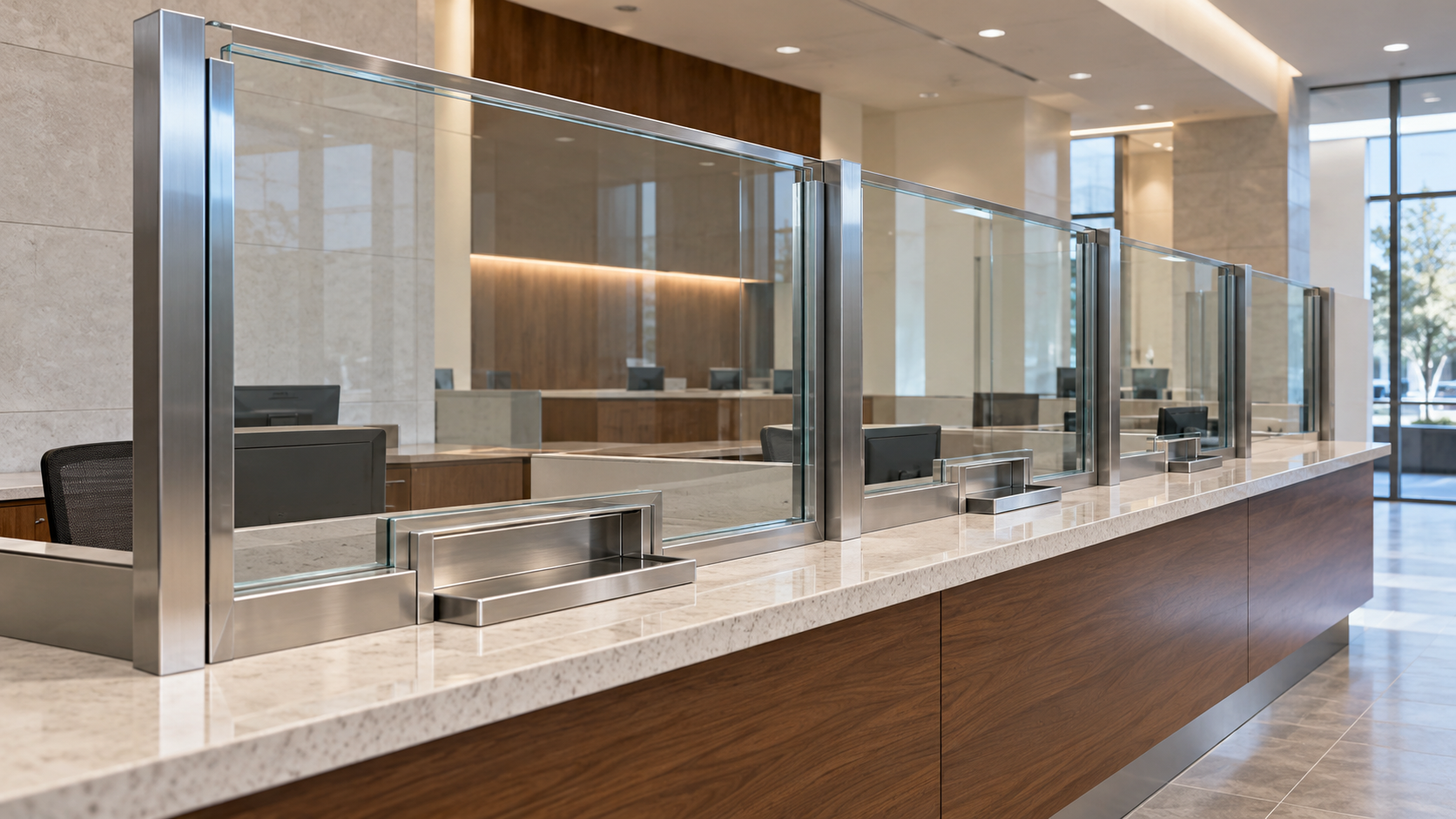
Matching the glazing to the site
For a counter, specify the required surface finish, cleaning method and optical acceptance. For a checkpoint, identify the required threat classification and obtain a matching laboratory report before approving the glazing. Review panel dimensions, edge engagement, frame, fixings and installation as part of the complete system.
For the ballistic level selection, see how to choose a UL 752 level, and the composite build in laminated polycarbonate glazing.
Frequently Asked Questions
Q: What makes polycarbonate good for security glazing?
A: Polycarbonate can be considered where transparency and impact performance are required. Confirm the proposed grade, construction, optical quality and applicable test evidence for the intended use.
Q: Does security glazing need to be laminated?
A: The required construction depends on the specified threat and the tested system. Neither lamination nor sheet thickness alone establishes a ballistic or spall classification. Request the report for the exact proposed construction.
For a project-specific quotation on bullet resistant polycarbonate, email oversales@rpplexiglass.com with your threat level, panel size and frame detail.
Security glazing procurement checklist
- Identify the required threat classification and intended application.
- Match the laboratory report to the panel construction, thickness, dimensions and stated scope.
- Review frame, fixings, edge engagement and installation responsibilities.
- Agree optical acceptance, cleaning, traceability and delivery inspection.
Review bullet-resistant panel technical resources and the test submission checklist.