
Ask a road authority for a list of everything that can go wrong with a transparent noise barrier and you will get a long reply. Panel that yellows in three years. Fittings that fret the edge and spread hairline cracks. A glazing line that meets the acoustic target on paper but leaks noise at every joint. This guide is a buying checklist I use when a client sends over a project brief, written the way a specifier actually checks a panel before it earns a place in the corridor.
The first check is not the decibel figure
Everyone starts by quoting a sound reduction index. That is the wrong first question. The transparent noise barrier panels market is full of sheets that pass an acoustic lab test yet fail on UV stability, on the stress concentrations drilled into the edge, or on the frame that squeezes the panel under wind. I start with three things: the panel material, the edge detail, and the test documentation.
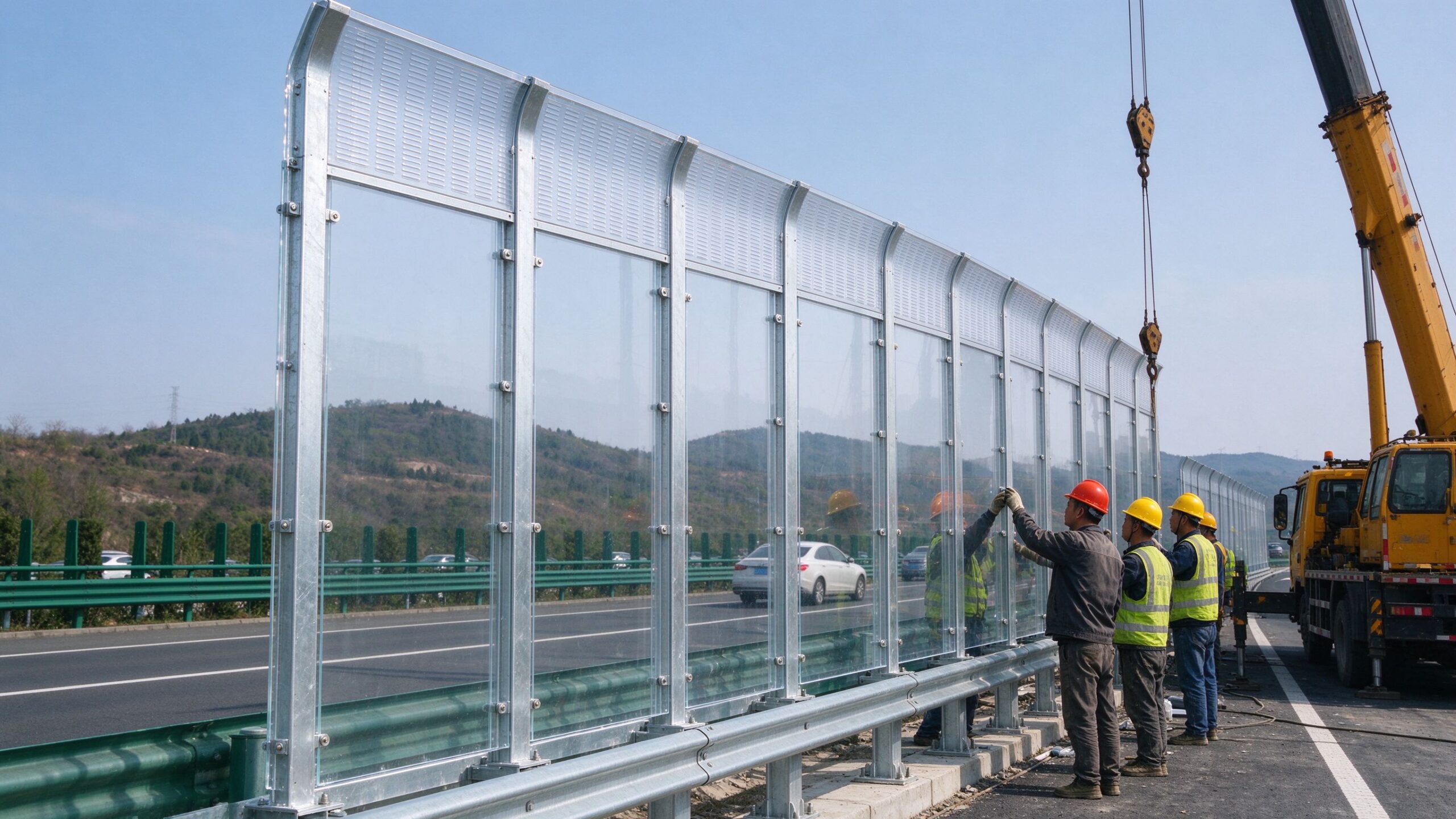
What I put on the checklist for transparent noise barrier panels
- Material: cast acrylic carries low internal stress and stays clear; polycarbonate is tougher but needs a UV cap layer. Match the material to the corridor, not to habit.
- Acoustic spec: confirm the required weighted sound reduction index and the target absorption, then ask which standard the figure was measured to.
- Edge machining: holes and edge cutouts must be dressed to remove saw stress, or the wind-load cyclic fatigue starts at the drill hole.
- UV and colour stability: request a weatherability statement and a colour hold target, because a transparent barrier that turns yellow fails its purpose as clearly as one that falls over.
- Fixing detail: the frame must transfer load to the panel edges, not pinch local points under gust.
For the mechanical behaviour under real load and the joining logic, our guide on acrylic underwater tunnel sections shows the same discipline of edge restraint applied to water pressure, and the safety logic of fragment retention acrylic noise barriers explains what happens to a panel that is overstressed.
Frequently Asked Questions
Q: What is the difference between acrylic and polycarbonate transparent noise barrier panels?
A: Cast acrylic stays clearer and carries lower internal stress for large glazing; polycarbonate is tougher against impact but needs a UV cap layer. The right choice depends on the corridor, the impact risk and the acoustic target.
Q: Do transparent noise barrier panels need a test report?
A: Most road and rail projects require an acoustic test report plus a structural assessment; confirm the standard your authority specifies before purchase.
For a project-specific quotation on transparent noise barrier panels, email oversales@rpplexiglass.com with your corridor width, required sound reduction, panel size and fixing detail.