
A laboratory instrument maker ordered abs sheet cut to size for 60 enclosures and received 480 panels that were all dimensionally correct and completely unidentifiable. The kit sat for four days while two technicians matched panels to drawings by eye. The cutting was right; the information was missing.
Six fields an abs sheet cut to size list needs
- Part number and the drawing revision it belongs to
- Material grade, colour and texture
- Dimensions with the tolerance band, not just the nominal
- Edge condition: saw, routed, deburred or taped
- Grain or colour direction, where appearance depends on it
- Assembly and position reference for kitting
A cut list missing any of those becomes a conversation, and the conversation happens after the sheet is already cut.
Tolerance, edge and the cost step
Saw cutting holds about plus or minus 0.5 mm on panels under 500 mm, and about plus or minus 1 mm above. CNC routing holds plus or minus 0.2 mm with a cleaner edge, at roughly double the part cost. Most enclosure panels are saw-cut then deburred, because the joint hides the edge.
Where a panel is visible on a finished machine, the edge is part of the product and routing or edge taping is worth the step.
Grain and colour direction
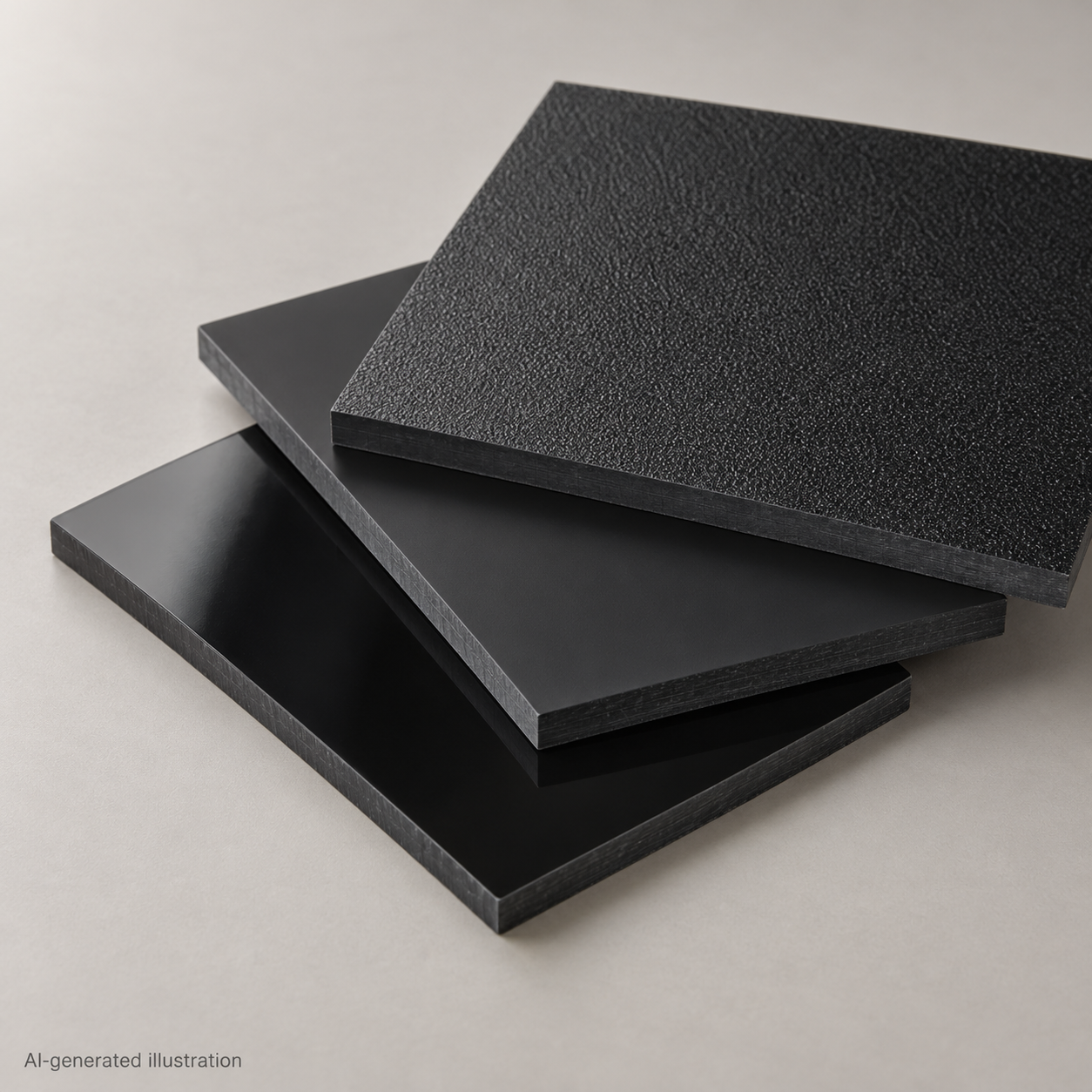
Textured ABS has a subtle direction, and panels cut across it will read differently under grazing light. On a bank of enclosures that is a visible defect even though no dimension is wrong. Mark the direction on the drawing, and cut all parts from one sheet orientation.
Kitting and numbering
Numbering each panel to an assembly and a position turns a pile into a kit. It costs a label and a minute per part and removes the sorting step that produces most site errors. For a 200-part order the labels are usually the cheapest line in the invoice.
Packing follows the same logic: one bag per assembly, in assembly sequence, with the drawing revision on the outside.
Thickness and what the part will do
Enclosure walls are typically 2 to 4 mm, internal brackets 3 to 5 mm, and load-bearing bases 5 to 8 mm. Going up a millimetre because the panel feels thin usually adds weight and cost without fixing the real problem, which is often a fixing detail.
Where the enclosure also needs a rating, the grade choice matters more than the thickness; the equipment enclosure note covers the grades and the assembly details.
Weight, freight and the arithmetic check
ABS at 3 mm weighs about 3.2 kg per square metre, at 5 mm about 5.4 kg. Weigh one panel from each stack at arrival: a short thickness shows up immediately, and it is easier to raise before assembly than after. The ABS weight note gives the full table.
For repeat orders, keep the approved first part as a reference and measure against it rather than against the drawing. Drawings drift; physical references do not.
Send the cut list with drawing references to oversales@rpplexiglass.com and we will confirm tolerance, edge finish and packing before the first cut.
Frequently Asked Questions
What tolerance should a cut ABS panel hold?
Plus or minus 0.5 mm on dimensions up to 500 mm and plus or minus 1 mm above that is normal for saw cutting. CNC routing holds plus or minus 0.2 mm, at roughly double the cost per part.
Which ABS grade suits an enclosure?
High impact grade for anything that will be dropped or vibrated, flame retardant where a rating is required, and general purpose for interior trim panels. Texture and gloss are separate decisions.
Can ABS panels be delivered kitted per assembly?
Yes, and it is the cheapest quality measure available. Numbering each panel to an assembly and a position removes the sorting step that causes most site errors.