
A kiosk manufacturer ordered abs sheet wholesale in three custom shades and paid three colour setups on a single container. The unit price per sheet looked reasonable, the landed price per part did not, and the reason was a line item nobody had asked about.
Stock colours and custom runs in abs sheet wholesale
Black and natural-white ABS at 1.5 to 6 mm in standard textures are stock items at most plants, which means a short lead time and no setup. Custom shades, high-gloss finishes and thicknesses above 8 mm become production runs with a minimum quantity.
Knowing which line an order falls on is most of the negotiation. Buyers who ask first usually pay one setup instead of three.
What a colour run actually costs
- Line cleaning between shades, which consumes material and time
- Pigment masterbatch, usually a minimum purchase per colour
- Purge scrap until the shade stabilises, often 20 to 50 kg
- Approval of a chip before the run, and a second approval at the end
Four costs, and only the pigment appears in a per-kilo quote. The other three are the reason a small custom order can cost twice a stock colour at the same thickness.
Texture and gloss change more than appearance
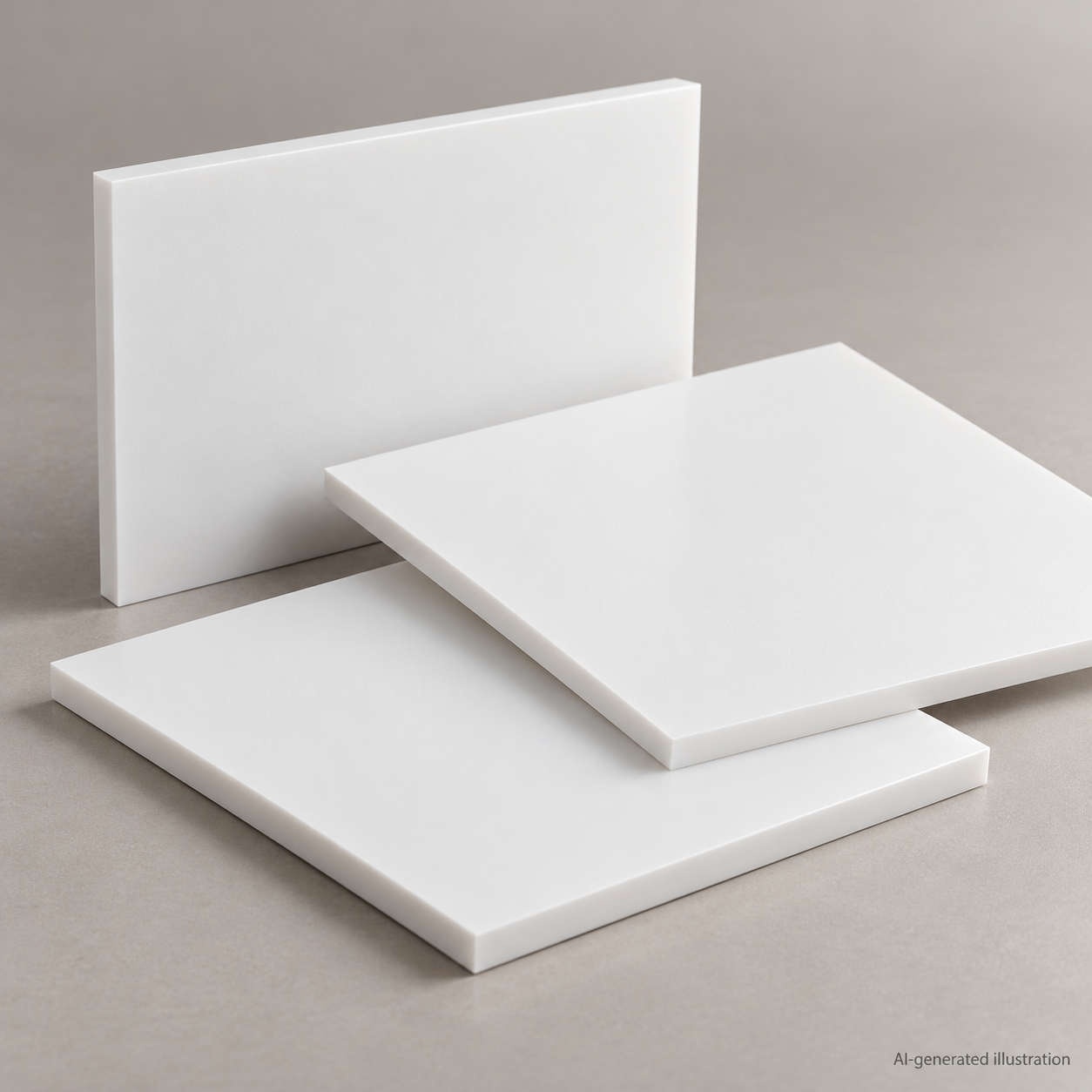
A fine matte texture hides handling marks and reads as moulded plastic; a high gloss shows every scuff and needs film protection in transit. Velvet textures hide scratches best and cost more per sheet.
Texture also affects assembly: adhesive bonds differently to a matte face than to a gloss face, and a textured panel needs a wider bond line to hold. Specify both sides if only one is visible; a single-sided texture is usually cheaper.
Holding colour across a program
The only reliable method is a retained physical chip plus a pigment batch record. Approve the chip on the first run, quote the chip number on every subsequent order, and measure incoming panels against that chip under the same light.
Two to three Delta-E units is the drift most plants achieve between runs, and it is invisible on a single panel and obvious on a stack. Buyers running a multi-site program should hold two chips, one at each end of the accepted range.
Structuring a mixed container
Consolidate shades around stock colours where the design allows, group custom shades into one run rather than three, and fill the remaining volume with black or white. That structure typically recovers most of the setup cost without changing the product.
Then check the arithmetic: ABS at 3 mm is about 3.2 kg per square metre, so the container weight should be predictable before the deposit. A shortfall means a thickness issue, not a freight issue.
For price benchmarking, the price per sheet note shows what each line should cost, and the UL and manufacturer note covers the grade documentation that goes with a flame retardant run.
Ask for the setup cost separately on any custom shade. A supplier willing to break it out is a supplier who knows what the run costs.
Send your colour list, thicknesses and annual volume to oversales@rpplexiglass.com and we will quote stock colours and custom runs separately.
Frequently Asked Questions
Are black and white always stock colours?
At 1.5 to 6 mm in standard textures, usually yes. Above 8 mm and in specialty textures they become production runs with a minimum quantity, often one to two tonnes.
What is the minimum for a custom colour?
Typically 500 kg to one tonne per shade, because the line must be cleaned between colours. Below that, colour matching from stock shades or a tinted top layer is the practical route.
How do I hold colour across repeat orders?
Approve a physical chip, record the chip number and the pigment batch, and quote both on every repeat order. Without them a second run drifts by two to three Delta-E units, which is visible on adjacent panels.