
A tier two automotive supplier sent a batch of thermostat housings back to its molder with a flange flatness report: 0.9 mm out over a 120 mm face, against a 0.3 mm drawing limit. The mold had not changed. The resin lot had. The fix was drying and a grade change, and the case is a good illustration of why an abs thermostat housing is a material decision before it is a molding decision.
Grade and wall in an abs thermostat housing
- Wall: 2.5 mm nominal, 2.2 mm at the flange
- Grade: heat resistant ABS, Vicat above 100 C
- Glass filled option: 10 percent for sustained 110 C service
- Drying: 80 C for 4 hours before molding
- Flange flatness: 0.3 mm over 120 mm
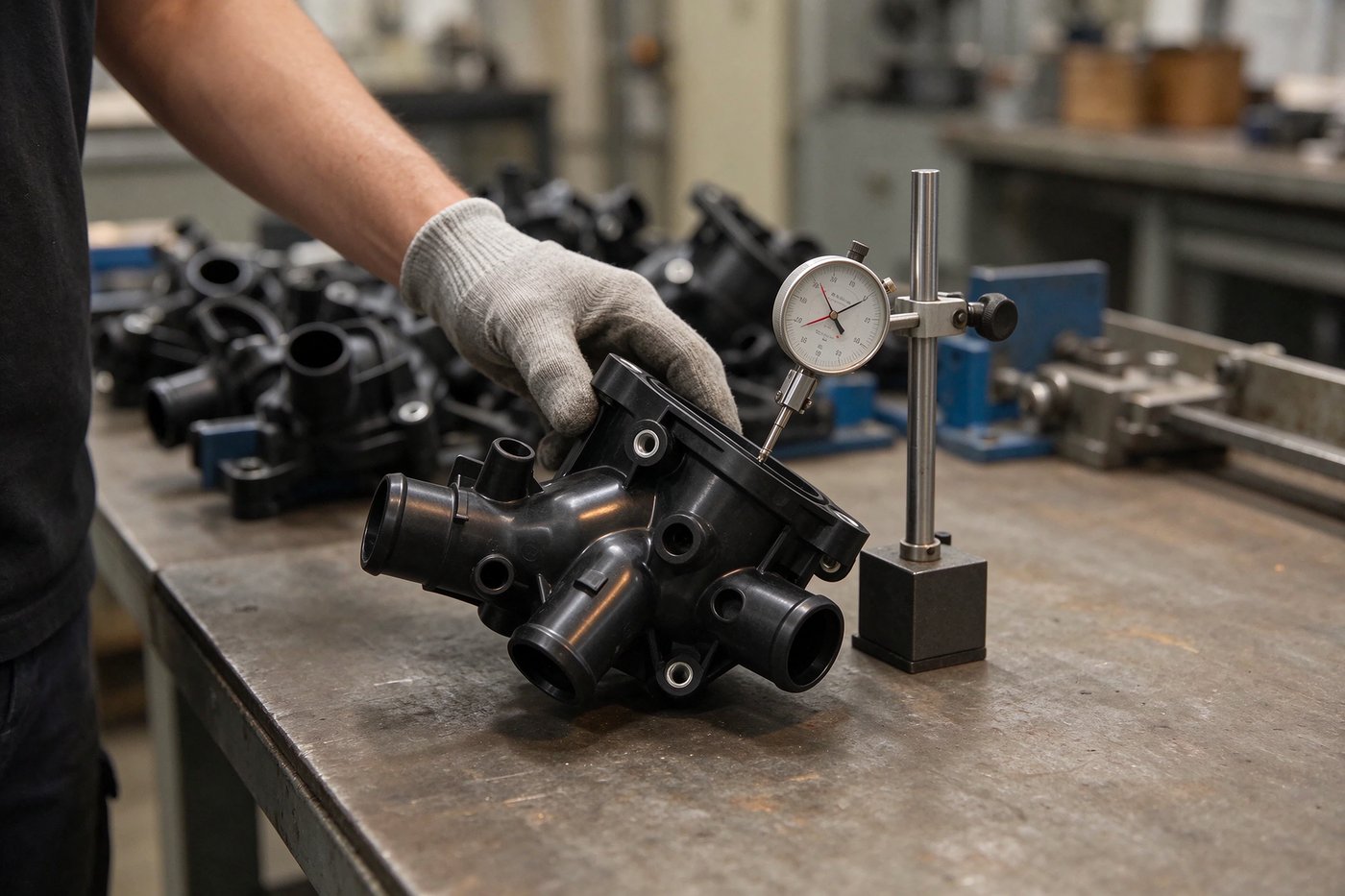
Wall thickness and flatness are linked. A flange at 2.2 mm cools faster than the body at 2.5 mm, and that differential is what pulls a face out of flat. The gate position and the packing pressure matter more than the grade at that point, which is why a resin change alone did not fix the batch.
Coolant exposure and the abs thermostat housing
Ethylene glycol at 90 C is within the range of a heat resistant ABS grade. At 110 C, sustained, it is not: the material loses about 40 percent of its tensile strength over 2,000 hours, and a housing that carries clamp load at the flange will creep. A 10 percent glass filled grade holds far better, and at that point the part is usually specified in a different polymer altogether.
Our role on these projects is honest material advice at the quotation stage. We supply ABS sheet in general purpose, heat resistant and glass filled grades, with thickness from 1.5 to 6 mm, and we will say when the service temperature puts the part outside ABS.
Send drawing, cavity count and coolant specification to oversales@rpplexiglass.com for a material recommendation and sheet quote.
Appliance housings use the same grade logic, set out in the ABS appliance housing note covers that part of the specification.
Frequently Asked Questions
Which ABS grade suits a thermostat housing?
A heat resistant grade with a Vicat softening point above 100 C, not a general purpose grade. General purpose ABS at 95 C creeps at the flange under clamp load.
Can ABS be used at 110 C coolant temperature?
Not continuously on its own. Heat stabilized ABS handles short excursions; for sustained 110 C service a glass filled grade or a different polymer is the correct choice, and we say so at quotation rather than after a field failure.
Why did the parts warp?
Wet resin. ABS absorbs moisture, and a lot that has not been dried at 80 C for four hours forms with surface silvering and internal stress that shows as warping after assembly.