
The engineering manager at a bakery described the problem as a cleaning issue, and it was. The polycarbonate guards on the packaging line were being washed with a caustic detergent twice a shift, and within a month the edges had gone white and the panels had a web of cracks. The replacement petg food machine guard has run fourteen months on the same wash sheet.
Wash chemistry and the petg food machine guard
Before a guard material is chosen on a food line, three things are checked.
- Caustic: 0.5 to 1.5 percent sodium hydroxide at 45 C
- Acid: phosphoric rinse at pH 2 to 3
- Frequency: two washdowns per shift, five days a week
- Guard service: fixed covers plus hinged access panels
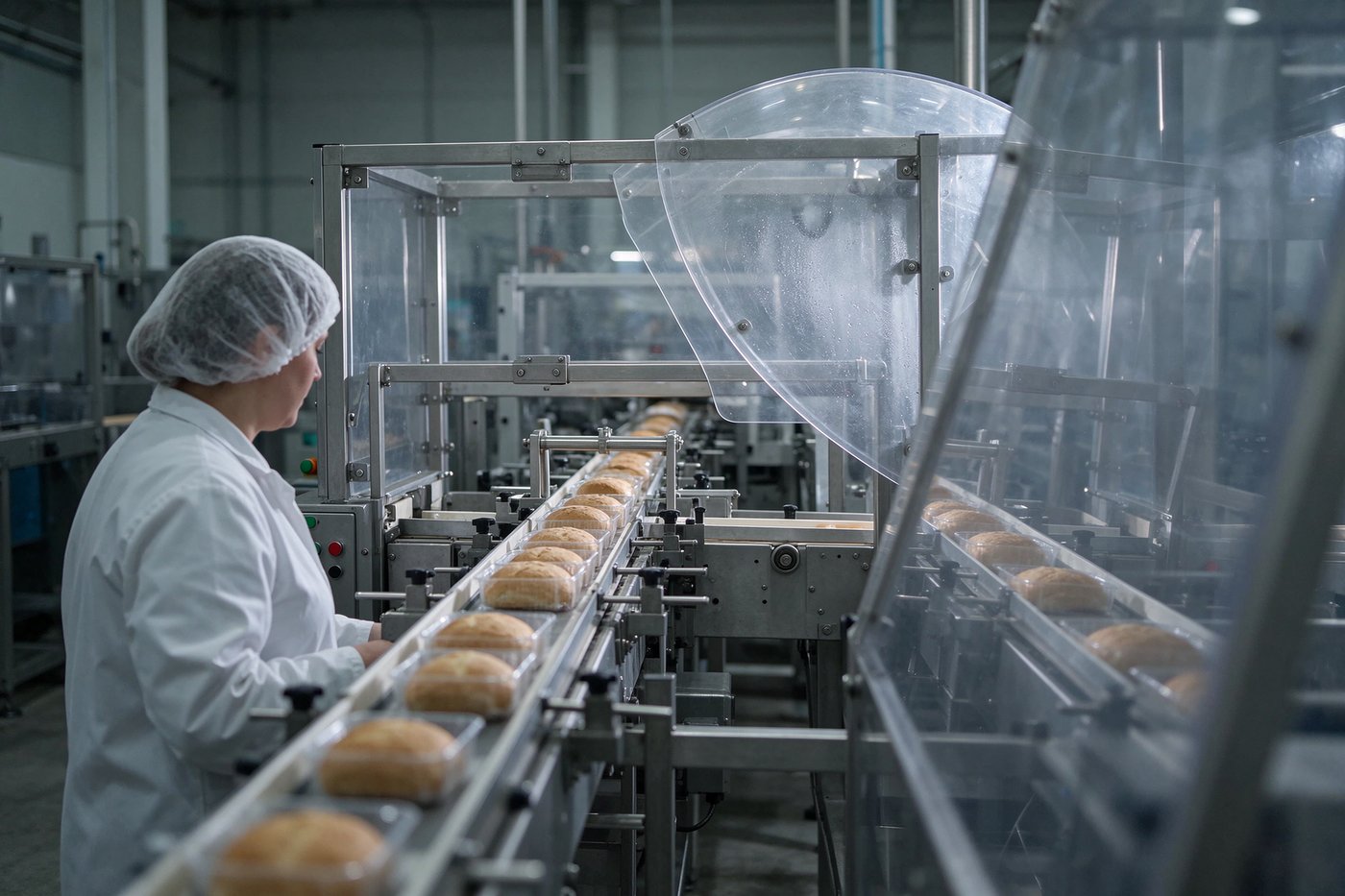
PETG absorbs far less of the caustic attack than polycarbonate at those concentrations and temperatures, and it does not craze at machined edges. That edge behaviour is the difference in service, because a polycarbonate panel rarely fails in the middle, it fails where it was cut.
Changeover and the petg food machine guard
Guards that come off the machine have to come off cleanly. Hinged access panels at 4 mm with a quick release catch mean the operator lifts the panel rather than removing it and laying it on a wet floor, which is where most guards get scratched and where most guards get left off.
One design rule applies across food plants: no flat ledge inside the guard envelope. A 4 mm pane fitted with a slope of 5 degrees drains and cannot hold product residue, and a cleaning check at the end of a shift passes without a re-wash.
Guards are supplied cut and formed to the line layout, with a declaration of compliance for food contact and a wash chemical review before order.
Send line layout, wash chemicals and guard sizes to oversales@rpplexiglass.com for a material check and quote.
Food area fixtures share hygiene constraints with the PETG food tray guide covers that part of the specification.
Frequently Asked Questions
Does PETG resist caustic wash?
It resists the dilute caustic and acid detergents used in food plants far better than polycarbonate, which stress cracks at the edges after repeated cycles. Concentrated caustic at high temperature still attacks PETG, so the wash sheet is checked first.
Is PETG food contact approved?
The grade we supply is made to food contact specification and comes with a declaration of compliance. It is used for guards and covers, not for direct contact with hot food.
Why not use acrylic?
Acrylic crazes under alkaline wash and is brittle if a guard is dropped during a changeover. A 4 mm PETG guard survives being set down on a wet floor.