
A collector brought us a cabinet of 60 graded coins and asked for one change: he wanted to stop cleaning the cases. Every acrylic coin display case in the cabinet had a lid that had crept out of alignment, and the seam gap let dust onto the slabs within a month of a show.
The coin was never the problem. The case was. That project set the specification below, which we now use as a starting point for numismatic work.
Lid geometry and the acrylic coin display case seam
- Wall and base: 5 mm cast, solvent cemented with a capillary seam
- Lid: 3 mm cast, hinged on a 1.5 mm brass pin
- Seam gap: 0.3 mm maximum at the front, checked with a feeler gauge
- Tray: 2 mm cast platform with a sulphur-free insert
- Base pad: 1 mm cork, cut 2 mm inside the wall line
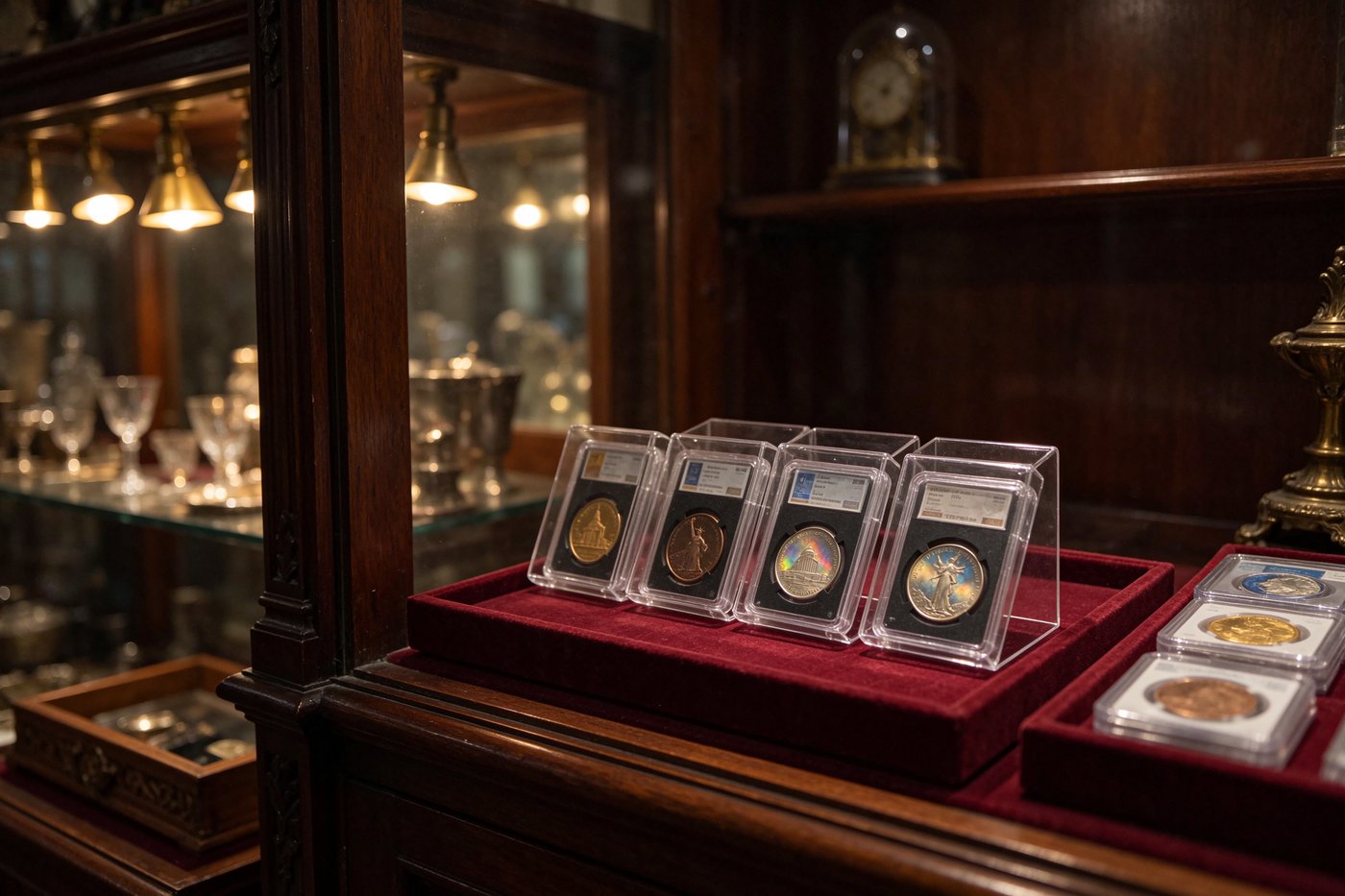
A 2 mm lid across a 300 mm case bows about 1.5 mm under its own weight plus a hand. That bow opens the front seam and the case stops being a dust barrier. Three millimetres holds flat, and the extra cost per case is small against the value of what sits inside it.
Light, tone and the acrylic coin display case interior
Copper and bronze tone under UV and under sulphur. Two decisions follow. The acrylic should be a UV filtering cast grade if the cabinet faces a window, and the insert should be sulphur free. We specify a needled polypropylene insert for silver and a plain matte acrylic platform for slabbed coins, where the slab already provides the protection and the case only needs to look clean.
What went wrong in the first cabinet
The original cases used a butt joint at the front corner with cement applied after polishing. Cement shrank over two seasons, the joint opened, and the fix attempted by the owner was a strip of tape that discoloured the acrylic. The rebuilt cases use an interlocking corner: one wall laps the other by 6 mm and the joint is cemented from inside, so the visible face is one continuous surface.
Details like this are what a six figure collection actually rests on. We can cut a trial case at your tray dimensions so a cabinet can be checked before a full set is ordered.
Send tray count, coin diameters and cabinet dimensions to oversales@rpplexiglass.com and we will quote cases with a tray sample.
Collectors who display more than coins usually face the same seam problem on model cases, where the dust proofing detail is worked through in more depth. acrylic model cases for collector display covers that part of the specification.
Frequently Asked Questions
Does the acrylic block UV?
Standard cast passes most UV below 380 nm. A UV filtering grade absorbs above 98 percent at 340 nm and is the grade museums specify for paper and textile, and it is worth having for toned copper.
Is felt safe for silver?
Untreated wool felt releases sulphur over years and tones silver. Specify a sulphur-free insert, or an inert foam, and keep the lid closed.
Why 3 mm and not 2 mm?
A 2 mm lid bows visibly across 300 mm and lets dust past a magnetic closure. At 3 mm the lid stays flat and the seam stays tight.