
A retail fixture that scratches in a month or bends at the wrong angle is a sheet selection problem. An acrylic display stand sheet has to cut and bend cleanly, carry the product, and keep a scratch-free finish where customers handle it daily.
Thickness, bend and finish set the stand
The thickness of the acrylic decides whether the stand holds its shape under the product’s weight — too thin and it flexes, too thick and it looks heavy and costs more. The bending radius and edge finish decide whether the fixture looks crisp or shows stress marks at the bends. Cast acrylic bends and polishes better than extruded, which is why fabricators use it for visible fixtures. A display stand that survives the shop floor needs a sheet that carries the load, bends cleanly and resists the fine scratches of daily handling.
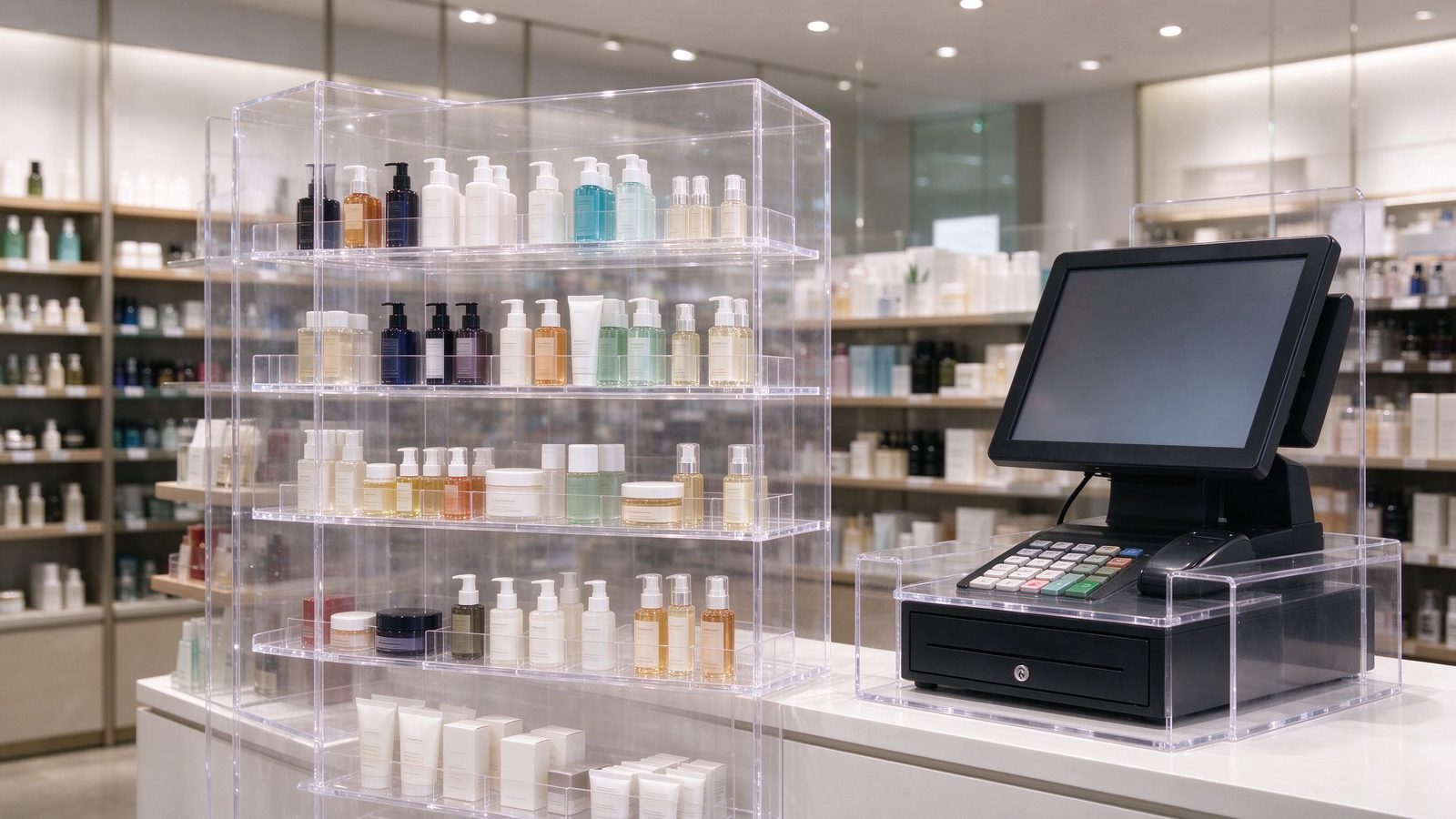
Build a fixture that survives the floor
- Thickness that carries the product without flexing.
- Bending radius and edge finish that look crisp.
- Cast acrylic for clean bends and polish.
- Surface finish that resists shop-floor scratches.
How display and POS fixtures are built is covered in the acrylic display rack and POS stand guide, and how the material is chosen for retail in acrylic for retail signage and displays.
Frequently Asked Questions
Q: What thickness should an acrylic display stand sheet be?
A:Enough to carry the product without flexing but not so thick that it looks heavy or costs too much. The load and the stand design set the right balance.
Q: Why do some acrylic display stands show stress marks at the bends?
A:Usually because the bending radius is too tight or the sheet is extruded. Cast acrylic bends and polishes more cleanly than extruded, so it is the better choice for a visible retail fixture.
For an acrylic signage or display sheet quoted to your project, email oversales@rpplexiglass.com with the sheet type, thickness, dimensions, colour and edge-finish requirement.