
A backlit sign with hot spots and dark edges is usually a sheet problem, not an LED problem. An acrylic sheet LED signage panel has to diffuse the LED light evenly, hold it across the face, and be finished so the edges stay bright instead of leaking or going dark.
How the sheet shapes the light
Cast acrylic diffuses and carries light more evenly than extruded sheet, so a backlit face looks uniform rather than showing the individual LEDs. The thickness and the surface treatment spread the light across the face, and a polished edge lets the light enter and travel. For edge-lit signs, an optical light-guide sheet carries the light across a large face with low loss. The result is a bright, even sign face that keeps its clarity because cast acrylic resists yellowing better over a long outdoor life.
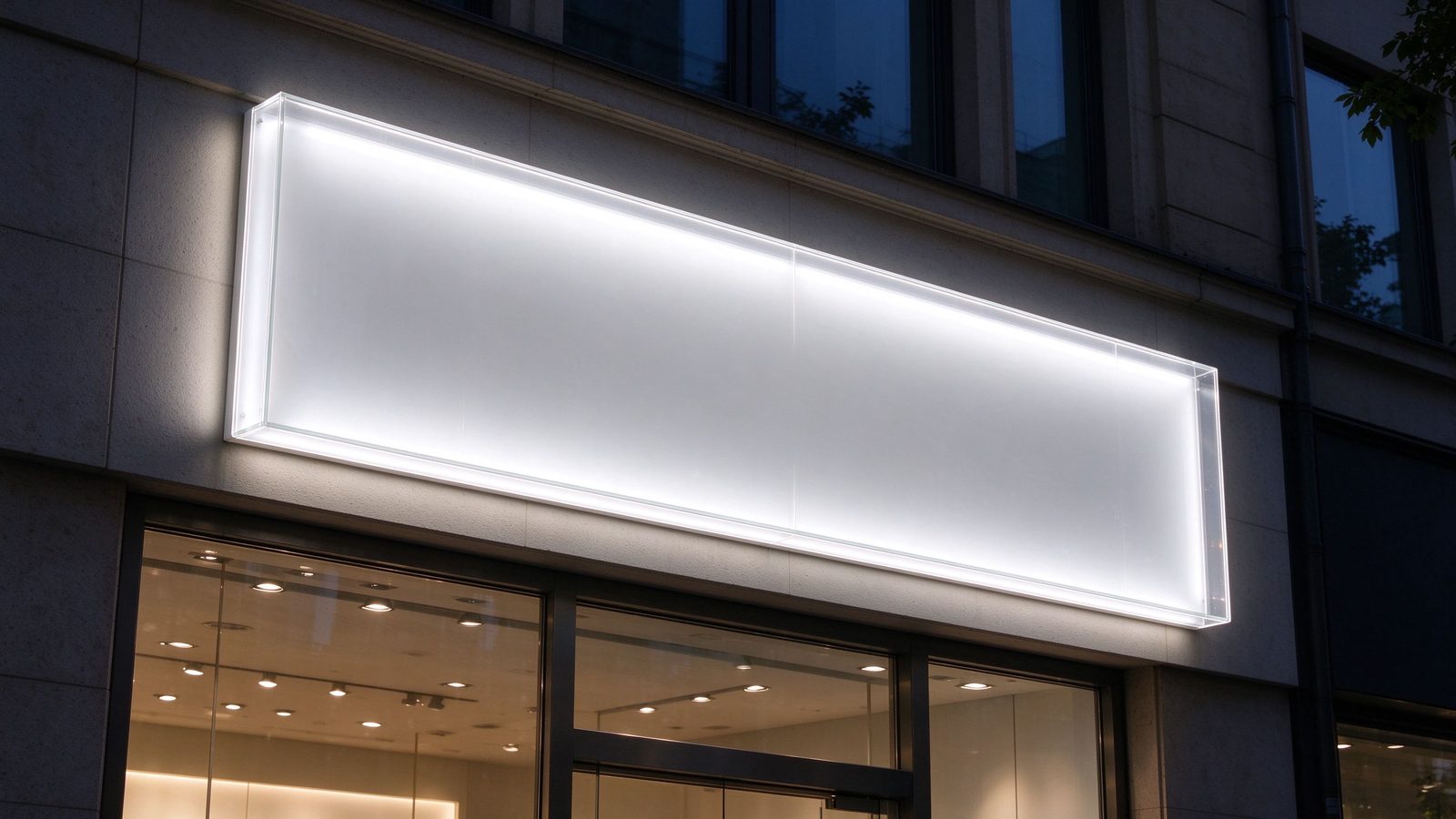
Build the light path right
- Cast acrylic for even diffusion and lower yellowing.
- Thickness that spreads the light across the face.
- Polished edges for entry-lit and edge-lit signs.
- Optical light-guide sheet for large edge-lit faces.
How backlit signage is built is covered in the acrylic light box sheet guide, and the light-guide option in optical acrylic for LED light guides.
Frequently Asked Questions
Q: Why does an acrylic LED sign face look uneven?
A:Usually because the sheet does not diffuse the light evenly or the edges are not finished for entry. Cast acrylic spreads LED light more evenly than extruded sheet and resists the hot spots and dark edges that ruin a sign face.
Q: What acrylic sheet suits LED signage?
A:Cast acrylic diffuses and carries light evenly with a polished edge for entry, and an optical light-guide sheet carries light across a large edge-lit face. Cast acrylic also resists yellowing better outdoors.
For an acrylic signage or display sheet quoted to your project, email oversales@rpplexiglass.com with the sheet type, thickness, dimensions, colour and edge-finish requirement.