
An acrylic fishing lure display case is a hook load problem before it is a display problem.
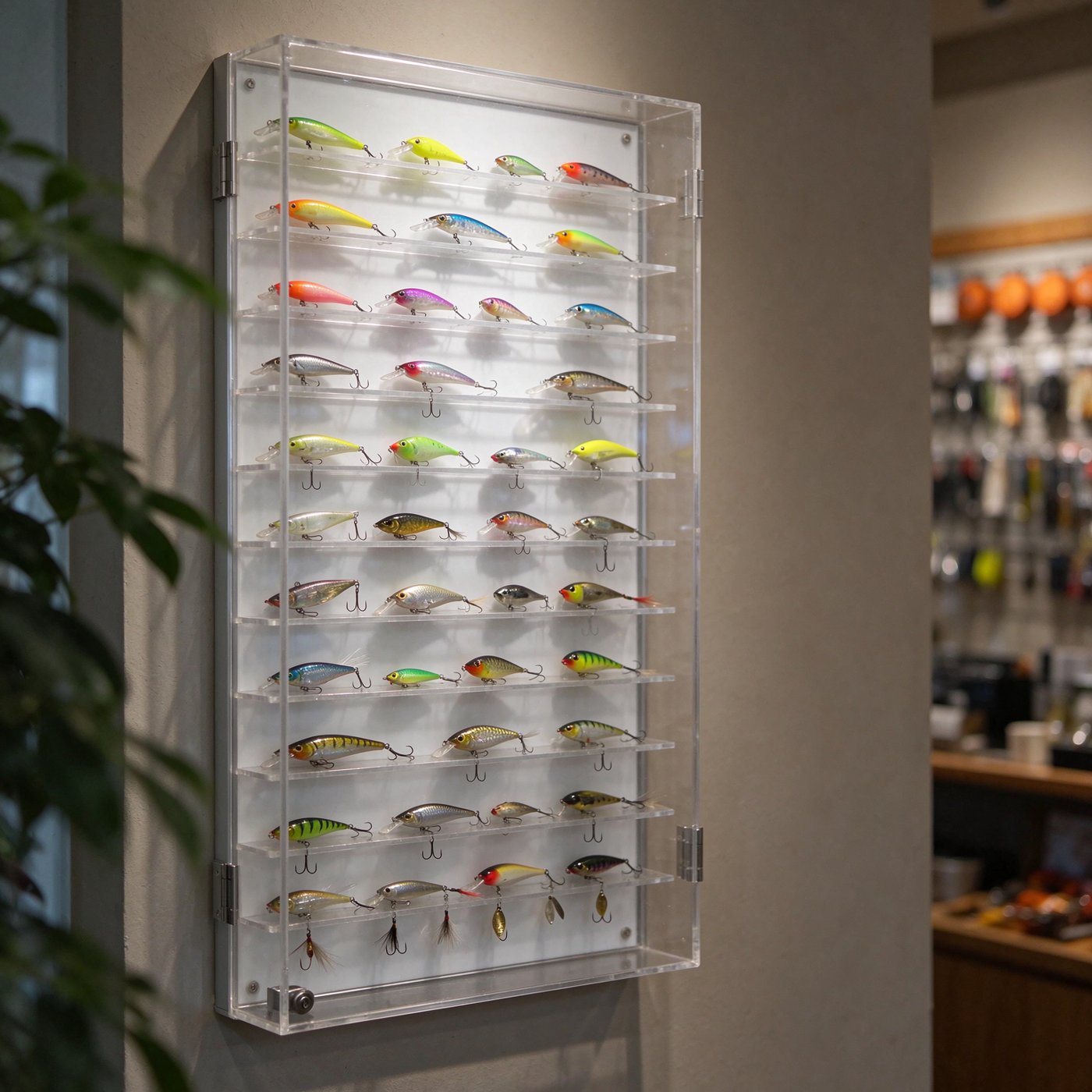
A tackle shop in Bergen wanted forty lures on one wall and had thirty eight hooks torn out of the backing in the first season. The lures were fine. The case was not: 3 mm acrylic shelves had been fixed with a single screw at each end, and every time a customer pulled a lure off a treble hook, the shelf flexed and the next hook caught the gap.
A lure case is a hook load problem
Treble hooks on a 60 g sea lure can carry a 3 kg pull when a customer is impatient. That load arrives at one point on a shelf edge, and a 3 mm acrylic shelf spanning 600 mm with two fixings deflects visibly. The workable detail is a 3 mm shelf on a 12 mm pitch, each shelf seated in a routed groove in the side panels rather than screwed to them, so the load goes into the panel instead of into the shelf.
Three millimetre is the right thickness for shelves at that pitch. It is stiff enough at a 200 mm span, keeps the case light, and leaves enough visual depth for a lure to read. Going to 5 mm shelves closes up the display and doubles the weight of a 40 lure wall case for no gain.
acrylic fishing lure display case: compartments that hold a treble
- Shelves: 3 mm cast, 200 mm deep, seated in a 3.2 mm routed groove at 12 mm pitch.
- Hook gap: 15 mm clear behind each shelf so a treble cannot catch the shelf below.
- Front: 3 mm cast sliding panel with a 10 mm finger pull, not a hinged door that swings into the lures.
- Side panels: 5 mm cast, because they carry the shelf load and the case weight.
- Backing: 3 mm white acrylic with a matte face, so a dark lure reads against it.
From a Bergen tackle wall to a charter boat cabinet
The rebuilt Bergen case uses 5 mm side panels with routed grooves, 3 mm shelves and a 15 mm hook gap. Four seasons on, with lures being pulled off daily, no shelf has moved and no hook has caught. The shop also moved the backing from clear to matte white, which lifted the perceived brightness of the display without changing the lighting.
A second installation on a charter boat needed a different answer. The cabinet is only 350 mm wide and is opened in a seaway, so the shelves are 3 mm with a 20 mm lip on the front edge, and the case is fixed to the bulkhead at four points with rubber washers. The lip stops lures sliding out when the boat heels; the washers stop the case rattling loose.
Both cases share one detail worth noting: no shelf sits closer than 15 mm to the one below at the front edge. That gap is what allows a treble to hang free and a finger to reach in without levering the shelf.
Ordering a lure wall to a lure count
Count the lures by size class, give the wall or cabinet width, and note whether the front is sliding or fixed. Shelf pitch follows the lure height, and the side panel thickness follows the case width. River People PLEXIGLASS cuts 3 mm and 5 mm cast acrylic shelves and panels, routes grooves to your pitch and supplies matte white backing in the same order. Send the lure count by size and the case width and we will quote shelves, panels, grooves and packing.
Send lure counts by size class and the case width and we will quote the 3 mm shelves, routed side panels and matte backing: oversales@rpplexiglass.com.
Wall cases are often stepped back to keep the top row in view, and the proportions are set out in our display riser note.
Frequently Asked Questions
What thickness should acrylic lure display shelves be?
Three millimetre cast at a 12 mm pitch and a 200 mm span is stiff enough for a 60 g sea lure, provided the shelf sits in a routed groove rather than on two screws. Side panels go to 5 mm because they carry the shelf load.
Why do treble hooks tear out of a lure case?
Either the shelf deflects under the pull and opens a gap to the shelf below, or the hook gap is under 15 mm. Seating the shelf in a groove and leaving 15 mm clear behind it removes both causes.
Should the front be a sliding panel or a hinged door?
Sliding. A hinged door swings into the lure row and catches hooks; a 3 mm sliding panel with a 10 mm finger pull opens without touching the display.