
An acrylic mirror sheet manufacturer is judged on backing and flatness, not on the reflection in a photograph. A fit-out contractor in Dubai replaced a hotel lobby’s glass mirrors with acrylic after a shipping breakage, and the second batch arrived with a reflection that made the columns look bent. The sheet was flat; the backing had been applied under uneven tension, and the bow showed only in a long vertical panel.
Backing choice at an acrylic mirror sheet manufacturer
Three backings dominate, and they are not interchangeable. Silvered backing gives the highest reflectance, typically 92 to 95 per cent, with a neutral colour. Aluminium gives about 88 to 92 per cent with a slightly cooler cast, and it tolerates humidity better because the layer is less reactive.
Dielectric or coated backings sit behind a hard coat and survive aggressive cleaning chemicals, at a higher price and slightly lower reflectance.
- Silver: brightest, neutral, best for retail and interior feature walls
- Aluminium: moisture tolerant, cheaper, good for bathrooms and signage
- Dielectric or hard-coated: chemical resistant, for labs and clean rooms
A supplier who cannot name the backing on the quotation is passing a generic sheet through a trading desk.
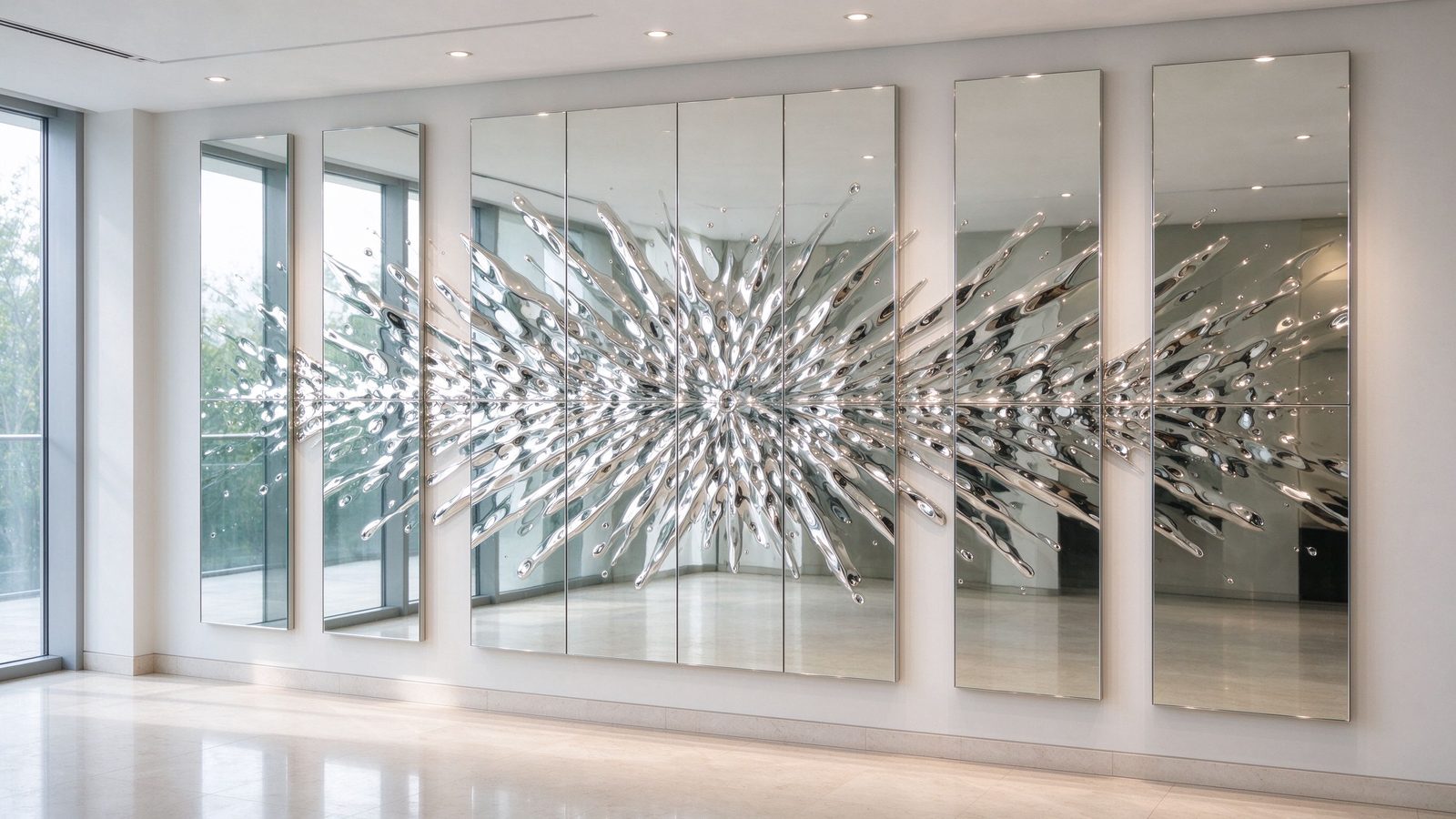
Flatness: the spec that separates mirror from shiny plastic
Distortion is measured as deviation across a length. Interior mirror work normally specifies 1 to 2 mm per metre; security and signage work tolerates more. Below 1 mm per metre is optical grade and priced accordingly.
The practical test needs no instrument: stand a 1 m panel vertically, look along its surface at a straight horizontal line three metres away, and watch whether the reflected line stays straight. A bowed sheet shows it immediately.
Thickness and where it matters
Mirror acrylic is commonly 2 to 3 mm for signage, 3 to 4 mm for wall panels, and 5 to 6 mm for large feature surfaces where flatness has to survive handling. Thicker sheet is flatter out of the box, but the backing quality still decides the result.
Above about 2.4 m in one dimension, a single panel becomes difficult to keep flat in service. Two panels with a deliberate shadow gap read better than one bowed sheet.
Edge sealing, and the failure it prevents
The backing layer is the mirror’s weak point. Moisture reaching it from a cut edge oxidises the reflective layer, and the damage appears as black spots growing inward from the rim over months.
Sealing the edge with a compatible lacquer or a UV-cured edge coat stops it. So does keeping the panel out of humid zones with the edge protected. This is a two-minute operation at fabrication and a two-year problem if skipped.
Questions that identify a real acrylic mirror sheet manufacturer
- Which backing, applied at what tension, on which PMMA grade
- Flatness measured how, and on what sample size
- Edge treatment offered as standard or as an option
- Batch traceability for colour consistency across repeat orders
- Ability to quote formed or curved mirror panels
A factory answers all five with numbers. A trader answers two and deflects the rest.
For curved or column wraps, forming a mirror without cracking the backing is a specific skill; ask for a sample of the curvature before committing. The mirror acrylic guide covers the forming limits, and the mirror versus glass comparison sets out the weight and safety case.
Send sizes, thickness and backing preference to oversales@rpplexiglass.com for a sample pair and a per-sheet price.
Frequently Asked Questions
Which backing is best for an acrylic mirror?
Silver gives the brightest reflection and the truest colour; aluminium is more resistant to moisture and cheaper; dielectric coatings suit harsh cleaning chemicals. Most interior work is silver.
How flat does a mirror acrylic sheet need to be?
Within 1 to 2 mm deviation per metre for undistorted reflection. Above that, straight lines in the reflected image bow visibly, which is the first thing a customer notices.
Can acrylic mirror be cut and drilled?
Yes, but the edge must be sealed afterward or moisture enters the backing layer and the mirror black-spots from the rim inward.